
Shekerinska: The lack of political will in Belgrade and Pristina to constructively engage in the normalization process is concerning
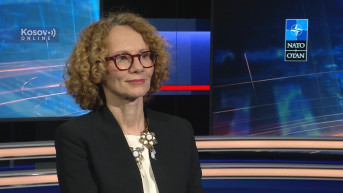
We encourage the Institutions in Kosovo to demonstrate flexibility and progress in the normalization process with Serbia. That is where the focus should be. And this will be key for any progress towards Euro-Atlantic aspirations, and towards long-term security across the Western Balkans region, NATO Deputy Secretary General Radmila Shekerinska said in an interview with Kosovo Online.
By: Veljko Nestorovic
In an interview with our portal, the NATO Deputy Secretary General also spoke about security in the Western Balkans, the situation in Kosovo and the role of KFOR, the Belgrade–Pristina dialogue, as well as, as she noted, some worrying trends in the region.
Shekerinska agrees with the assessment of European officials that there can be no security in Europe without a stable Western Balkans.
“Absolutely, and this point was reiterated at the meeting of NATO Foreign Ministers, in Brussels, earlier this month, as well as in March, this year, when I visited KFOR and our NATO Liaison and Advisory Team (NALT), together with the NATO Secretary General and all NATO Allies and partner countries contributing troops to our mission. The Western Balkans remains high on NATO’s agenda. It is a region of strategic importance for the Alliance. NATO works to promote stability, security, and cooperation in the region. Our commitment to the region’s stability is steadfast and we will not allow a security vacuum to emerge,” Shekerinska said, and continued.
“We see some concerning trends in the Western Balkans: secessionist threats in Bosnia and Herzegovina; a fragile security situation in Kosovo; and a lack of political willingness from Belgrade and Pristina to constructively engage the normalization process. Authoritarian states like Russia seek to interfere in and undermine democracies and use internal vulnerabilities in the region to sow divisions. Any outside interference in domestic democratic processes is unacceptable. This includes hacking, information threats, intimidation, and other destabilisation activities. We fully respect every nation’s sovereign right to choose their own political and security arrangements. This is a fundamental principle of European security that we have all signed up to, including Russia. We will continue to enhance our political dialogue and practical cooperation with our partners in the Western Balkans to support reforms, regional peace and security, and counter malign influence, including disinformation and cyber threats posed by both state and non-state actors. Democratic values, the rule of law, domestic reforms, and good neighbourly relations are vital for regional cooperation and for Euro-Atlantic integration. This requires political leadership and courage. We urge all actors to continue progress in this regard for the benefit of all communities living in the region,” our interlocutor said.
How do you assess the role of KFOR in Kosovo?
KFOR is the longest and currently biggest mission in the history of the Atlantic Alliance. It continues to provide a fundamental role, in support to lasting security across Kosovo and to regional stability, by fulfilling its mandate - under UN Security Council Resolution 1244 of 1999 - to help maintain a safe and secure environment for all people in Kosovo, as well as freedom of movement, at all times and impartially. KFOR operates in close coordination with the Kosovo Police and the European Union Mission on Rule of Law in Kosovo (EULEX), in their respective roles as security responders. In the wake of violence in 2023, we deployed up to 1,000 additional troops to Kosovo and increased KFOR’s posture in northern Kosovo. This was the largest reinforcement of our mission in a decade. KFOR continues to make a difference, through a range of daily activities, including patrols, engagements with representatives of all local communities, support to reconstruction and economic development projects, and training, including with EULEX and personnel from the security organisations in Kosovo, such as the “Golden Sabre 2025” exercise, conducted earlier in the fall. Decades of hard-won peace must not be jeopardised.
“NATO strongly supports the EU-facilitated Dialogue”
KFOR’s presence and daily activities across Kosovo create space for political dialogue. Stability in the region ultimately depends on all sides choosing diplomacy over violence. The path to long-lasting peace is political. That’s why NATO – including through KFOR’s efforts on the ground - continues to strongly support the EU-facilitated Dialogue as the framework to solve pending issues with respect for the rights of all communities. We expect Belgrade and Pristina to engage in good faith. To this effect, we are in close contact with the EU Special Representative for the Belgrade-Pristina Dialogue, Peter Sorensen. While for now we do not see a direct impact of the current political stalemate on the security situation, we encourage parties to find a constructive and inclusive way forward. For this, it is important that Belgrade and Pristina implement existing agreements. Both sides must show flexibility to make the necessary compromises.
During 2025, there have been numerous media reports about alleged incidents near the administrative line, as well as claims by representatives of Kosovo's technical government that Serbia has endangered security in the Western Balkans with its actions. How do you view this?
We are aware of these reports. Based on our information – collected through a whole range of activities on the ground – including via more patrols, especially in northern Kosovo and on Kosovo’s side of the Administrative Boundary Line (ABL), we have not seen indicators towards a worsening of the local security situation. Furthermore, KFOR has a good level of cooperation with both the security organisations in Kosovo and the Serbian Armed Forces. In the latter respect, let me emphasise two points. First: KFOR personnel and personnel from the Serbian Armed Forces conduct synchronized patrols on both sides of the ABL, on a regular basis. Second: we have a well established line of communications and dialogue between the KFOR Commander (currently, Major General Ozkan Ulutas, from Turkiye) and the Chief of Staff of the Serbian Armed Forces (General Mojsilovic). Major General Ulutas met General Mojsilovic recently, in Belgrade.
“The situation is calm, but overall still fragile”
This kind of personal and institutionalized contacts and relations definitely help. To increase situational awareness and to share information. And this, ultimately, contributes greatly to safeguard security in Kosovo and stability in the region. Of course, as the KFOR Commander has consistently said – and we agree – the situation is calm, but overall still fragile, as a result of several unresolved issues. So, we cannot afford to be complacent. Having said that, KFOR has a visible and flexible presence across Kosovo. It is well postured to address and tackle any potential significant security developments, in accordance with its long-standing UN mandate.
For the first time in history, we have a KFOR commander serving the role in two mandates: Turkish General Ozkan Ulutas is once again at the head of NATO's mission in Kosovo. Your comment?
Indeed, we are delighted that Major General Ulutas is at the helm of our mission, for the second time. This attests to Major General Ulutas’ professionalism, leadership and expertise. And it is a tangible demonstration of our Ally Turkiye’s long-standing commitment to KFOR and to regional stability.
Kosovo President Vjosa Osmani has repeatedly emphasized that Kosovo's ultimate goal is membership in NATO. How realistic is this option?
NATO and Kosovo have worked together for many years to preserve peace and stability, including through KFOR and the NATO Advisory and Liaison Team. Becoming a member of the Alliance requires consensus by all NATO Allies. We encourage the Institutions in Kosovo to demonstrate flexibility and progress in the normalization process with Serbia. That is where the focus should be. And this will be key for any progress towards Euro-Atlantic aspirations, and towards long-term security across the Western Balkans region.
Do you think all Western Balkan countries should be in NATO, including Serbia?
NATO’s door remains open to any European country in a position to undertake the commitments and obligations of membership, and contribute to security in the Euro-Atlantic area. This is clearly stated in Article 10 of the Washington Treaty, NATO’s Founding Treaty. The Open Door policy has been a historic success. Finland and Sweden were the last countries to join in 2023 and 2024 respectively. Many countries in the Western Balkans have also joined and today effectively contribute to Allied collective security and the stability of the region. NATO respects the sovereign decision of any country to decide for themselves what sort of relationship they want to have with NATO. The same applies for partnerships. Serbia has a long-standing partnership with NATO and we respect Serbia’s stated policy of military neutrality. Together, we have developed wide-ranging cooperation over the past 19 years, since Serbia joined NATO’s Partnership for Peace. For instance, we have worked together for the past 10 years through NATO’s Science for Peace and Security Programme, including on energy, environmental security, and cyber defence. NATO also helps Serbia train its forces for their deployments to international peace-keeping operations led by the EU and the UN, and to further develop its defence education system. NATO has also invested millions of euros to help Serbia destroy more than 800 tonnes of obsolete ammunition.
“We count on Serbia to play a constructive role in the region”
Allies believe that strengthening our relations with Serbia is mutually beneficial and strategically important for the stability of the Western Balkans. We want to develop this partnership on the basis of mutual trust and respect. We count on Serbia to play a constructive role in the region. We also count on Belgrade to engage constructively and in good faith in the EU-facilitated dialogue with Pristina. This is the only way to resolve outstanding issues and reach solutions that respect the rights of all communities. NATO Allies remain concerned about the increase in violence in Kosovo in 2023, including attacks against KFOR personnel, the violent attack in Banjska, and the large weapon caches found. We have noted the recent arrest carried out by the Institutions in Kosovo, in relation to the unjustified and unacceptable violence perpetrated against KFOR peacekeepers in 2023. We welcome all steps to uphold the rule of law. We continue to call for accountability and for the perpetrators of the attacks in Zvecan and Banjska in 2023 to be brought to justice. This was reiterated by the NATO Secretary General in his meeting with President of Serbia Aleksandar Vucic in October. We count on the Serbian authorities to play their part in this respect. More stability means greater prosperity for Serbia and enhanced security across the whole region.

0 comments