
Solioz: Belgrade and Pristina negotiations trapped in a labyrinth, the European Union needs Serbia
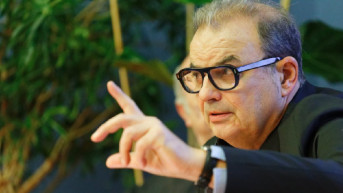
Christophe Solioz, an expert from Switzerland in the field of transition and democratization, and a specialist in Southeast Europe, in an interview for Kosovo Online, assesses that a new compass is needed to find a way out of the labyrinth in the negotiations between Belgrade and Pristina because it is time to acknowledge the end of the Westphalian order.
The process of negotiations between Belgrade and Pristina on the normalization of relations is ongoing. Do you expect this process to end soon?
Unless there is a change in the personnel and in strategic thinking, this negotiations process will go nowhere. In my view, the negotiations are entrapped in the wrong ‘software’ and a ‘conceptual tsunami’ is required here. The way out of the labyrinth requires a new compass which allows a fresh focus on the changes, rifts and key issues which mark today’s societies.
In particular, it is high time to acknowledge the end of the Westphalian Order. Politics is driven less by state initiatives and more by social dynamics – and this is the case everywhere, including in the Balkans. Russia, Serbia and, to a lesser extent, the EU have all failed to acknowledge that conflicts nowadays are no longer an expression of power, but the exact opposite. As Bertrand Badie – one of the most renowned French specialists in international relations – highlights: for the first time, war is no longer the result of competing powers but proceeds entirely from weakness, breakdown and defects. Against this background, considering the cases of Afghanistan, Iraq, Syria, Somalia, Libya, the Central African Republic, Mali and Kosovo, the Western powers are not in control of this new conflictual world where power has become powerless, while weakness has given rise to power to the point of destabilizing the agenda of the strongest. This is precisely what is happening today in Gaza and explains the strategy implemented by Hamas.
And what about Kosovo?
Kosovo is surfing on the same wave. You may observe here also a twofold rush characterizing the new international relations: first, a haste toward self-rule, thus toward autonomy; and, second, to compete – not for power, but in acquiring or regaining status and recognition. The problem is that old-fashioned politicians and political advisers, and not only in Serbia, have not acknowledged that we now live in another era.
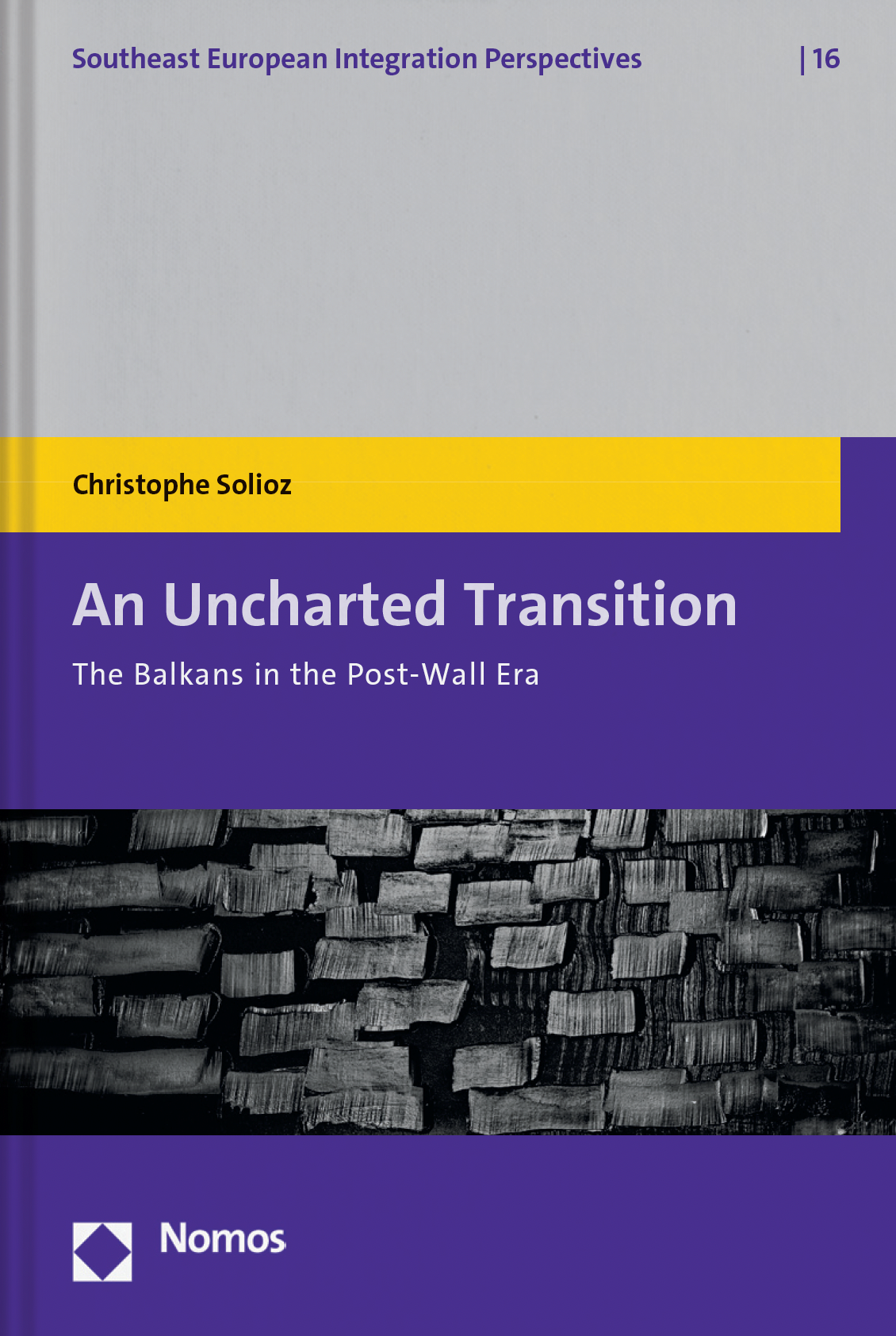
Your book An Uncharted Transition about transition and democratization in south-east Europe will shortly be published. Where is the Western Balkans today in this matter?
Actually, I develop what some may view as an unconventional approach reconsidering the centrality of Europe. First, I consider as a major geopolitical shift the current rolling recomposition of Central Europe. More than in the late 1980s, we are now witnessing a formidable acceleration of history: Central Europe is back and Europe’s centre of gravity is shifting eastwards, towards the centre. Of course, the current Russia-Ukraine war makes this obvious. Second, I consider the Western Balkans and Central Europe in an integrated approach. Consequently, the natural European anchorage for the post-Yugoslav states is Central Europe – naturally, I am viewing this in the framework of the European Union. As a matter of fact, Slovenia and Croatia, previously often mentioned in the scholarly literature as south-east European countries, are now regularly presented as Central European ones. What is noteworthy is that Serbia is increasingly being mentioned in the same way.
Do you expect that the countries of the Western Balkans could soon become members of the EU and what will this depend on the most?
The recent institutional, thus formal, progress on the long and winding road of EU integration should not distract from the real prospect of accession to the Union having considerably lost credibility both in the region and in EU capitals where ‘Balkan fatigue’ has proved to be stronger than Covid-19. In the current geopolitical process, neither Serbia nor Kosovo will obtain the privilege that Great Britain and Ireland benefited from in receiving EU membership in 1973 while the Troubles (from the late 1960s until 1998) devastated Northern Ireland.
While the EU has become more assertive in insisting that European integration is incompatible with preserving close ties to Russia, Serbia’s President Aleksandar Vučić continues his balancing strategy between the West and Russia. Both Vučić and Bosnian Serb leader Milorad Dodik have invested so much in pro-Russian sentiment that they are unable to wean themselves off it. Once this power game stops, things might evolve positively, but not before. The amount of homework that needs to be done, notably in Bosnia and Kosovo, is huge. Nevertheless, in the current geopolitical context, the fate of the EU integration of the Western Balkans depends on what happens in Ukraine. The lesson here is: the bigger regional frameworks come first. Politics is back.
Do you see a ‘policy of double standards’ in EU and US policy? Serbia is being asked to give up part of its territory while, at the same time, countries are insisting on the sovereignty of UN members (Ukraine)?
This narrative is in my view outdated and misleading. Despite what seems obvious to some political analysts, the EU is quite supportive of Serbia... as it needs a strong player in the region. The EU is thus ready to compromise on many issues as it needs Serbia ‘on board’.
To put it bluntly: nothing has been asked of Serbia. Serbia is hostage to its own failed political choices. The reality check is mind-blowing: the end of SFR Yugoslavia (1991-1992), the end of FR Yugoslavia (Serbia and Montenegro) in 2006, the loss of Kosovo (2008) and, let’s not forget, a ‘brain drain’ of unprecedent magnitude. Except for the potential breakup of the United Kingdom (Northern Ireland and Scotland), no other European country has faced such devastating consequences of its policy failures.
It is time for Serbia to surprise us with another narrative, to imagine an innovative path moving beyond a state-centred understanding of power and territory. Such a politics could include multi-actor, multilevel and multiscalar processes in the framework of cross-border cooperation at regional (thus not state) level. Bioregionalism, thus the rivers (White Drin, Lepenac, Ibar) and their plains and basins on all sides, could function as an excellent ‘negotiator’ and connect efficiently Kosovo to Albania, Macedonia and Serbia without mobilizing the narrative of ‘Great Serbia’, ‘Great Albania’, etc.
Cross-border experiences often speak of the following: something (it could be a river or a mountain or whatever – even a restaurant) that highly matters to ‘us’, lies – for some reason – on the other side of the border. We just have to cross the border, where it is still ‘ours’ – but an augmented ‘ours’. Not only would Serbia lose nothing, it would gain friends.
Ten years ago, you stated that Kosovo could count on membership of the UN only in 2030. What is your current forecast?
I think my answer was not wrong and I stand by it. The question is: what happens in the meantime. I have a dream for today: let’s get rid of bloody nationalism, let’s eradicate corruption, let’s stop the brain drain, let’s provide a decent life and, above all, a future to all our citizens, let’s take care of nature and let’s live in peace. The rest – EU, UN etc. – may come sooner or it may come later: what matters most is that we take better care of people.
You are someone who has publicly supported the work of Carla Del Ponte when it comes to prosecuting war crimes. Why didn’t Del Ponte prosecute those responsible during her mandate?
I have published various essays and open editorials on this issue. Indeed I absolutely supported both Carla Del Ponte and Dick Marty – and I still do. Justice is not delayed, but it is following its own path and it may be affected by political turbulence, so it thus takes time – but, in the end, it may take less time than the EU integration process. Let’s attempt a brief overview of the issues.
After having served as Prosecutor for the ICTY for more than eight years, Carla del Ponte resigned stating it was ‘time to return to normal life’. The lack of international support might well have also played a role. As you might remember, her book The Hunt was published in 2008 after she left the ICTY. The related investigations were complex and took time, notably because the UN Mission in Kosovo did not provide the Hague Tribunal with the necessary evidence regarding organ trafficking in Kosovo. Additionally, NATO and the KLA, having been allies in the war, were not willing to act against each other; and thus they did not collaborate with the ICTY as well as they ought to have. As if that wasn’t enough, Kosovo Albanians were also, to say the least, reluctant to collaborate. Last but not least, war crimes witnesses have been the victims of threats, violence and murder – because they were seen as traitors to their own communities. On top of all this, the international institutions and national courts alike have had problems in ensuring the protection and safety of witnesses willing to testify. All this explains why justice is taking its time.
You are thus absolutely correct as, in the cases of Slobodan Milošević, Radovan Karadžić and Ratko Mladić, this issue was also highly sensitive and politics, both at international and national levels, interfered massively. Among Carla del Ponte’s allies, the Belgrade human rights activist, Nataša Kandić, and the then Serbian Prime Minister, Zoran Đinđić, deserve special mention.
The strength of Carla del Ponte was that she never compromised on the independence of justice and on the legitimate right of all victims and survivors to be defended. All in all, Del Ponte’s strategy proved to be successful: justice became, if not a conditionality, at least a key issue influencing the EU integration process, and the above mentioned have all been indicted, arrested, prosecuted and condemned. Concerning Kosovo, as her book presented serious and credible allegations, the Parliamentary Assembly of the Council of Europe (PACE) tasked Dick Marty with reporting his findings to the CoE’s Parliamentary Assembly.
Dick Marty recently passed away. Is that why a line was drawn under the investigation and the highly serious accusations that were not fully investigated by the Kosovo Specialist Chambers & the Specialist Prosecutor’s Office?
Dick Marty chaired the Committee on Legal Affairs and Human Rights (2005 to 2008) of the Parliamentary Assembly of the Council of Europe, of which he was a member until he retired in 2011. In 2006 he published a report on the CIA’s secret prisons in Europe and highlighted 14 countries that had colluded with the US in a ‘spider’s web’ of human rights abuses. In 2010, he published a report to the Council of Europe on suspected organ trafficking in Kosovo which implicated high-ranking members of the Kosovo Liberation Army (KLA). The report called for an investigation into allegations that a criminal network linked to former KLA official turned political leader, Hashim Thaçi, was responsible for the murder, torture and organ-harvesting of ethnic Serbs and Albanians in 1999.
That report was followed by the conclusions of an EU task force which concluded that there was sufficient evidence for indictments, which led the EU and US to pressurize Kosovo to establish the Kosovo Specialist Chambers & Specialist Prosecutor’s Office as an independent court in 2015. These Chambers have jurisdiction over crimes against humanity, war crimes and other crimes under Kosovo law in relation to the allegations reported in the Council of Europe Parliamentary Assembly Report of 7 January 2011.
Is that a ‘full stop’ for justice?
To state the obvious, Dick Marty’s death doesn’t at all influence the current investigations that are being undertaken in accordance with the highest standards of international criminal justice. Of course, in a particularly heated context, the work of the Specialist Chambers may nurture further a polarization, both intra and inter-community, and it may also influence relations between Serbia and Kosovo. To sum up, even once the war had ended, a war logic continues to prevail – not only between the formerly warring parties but also inside each ‘camp’. This is preventing justice and peace from reigning. The perversity of this vicious process lies in that both ‘sides’ benefit from this situation.The particular relevance of the work of the Specialist Chambers is that they may pave the way to foster reconciliation, normalized relations between Serbia and Kosovo, and also contribute to bridging the gap among Kosovo Albanians. Only this would create the conditions for the new social contract that Kosovo deserves.

0 comments