
Zahner: If Kosovo wants to become an EU member, it must find a way to integrate the Serb community into its institutions
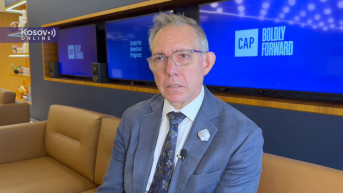
Improving relations with the Serb community will be a challenge for Albin Kurti’s government, as it requires establishing a certain level of communication and engagement with that community. While this will not be easy, it must happen because, if Kosovo wants to become a member of the European Union, it must find a way to integrate the Serb community into its institutions and society, says Luke Zahner, Senior Fellow in the National Security and International Policy Department at the Center for American Progress in Washington and a former U.S. diplomat, in an interview with Kosovo Online.
Zahner also points out that voters sent a message to all political parties in the elections that they want more consensus and less division. He notes that, if anyone believed Kurti’s victory represented a clear mandate to govern as he wished, it is evident that he did not receive such a mandate. He further observes that preliminary results indicate that the Serb List won virtually all seats allocated to the Serb community, demonstrating that Kosovo Serbs continue to look to Serbia for protection, security, and support.
He also stressed that Kosovo’s future government should focus on strengthening institutions, advancing European integration, and implementing domestic reforms, rather than defining its policies primarily through relations with Serbia or efforts to gain support from Washington.
How do you assess the election results in Kosovo? Do they provide a clear governing mandate or risk prolonging political instability?
Albin Kurti’s party, Self-Determination, lost several parliamentary seats and a certain percentage of the vote. The final results are still being determined. The Democratic League of Kosovo did not improve its performance despite having Vjosa Osmani on its electoral list. Essentially, we have almost the same constellation of political parties as before.
If anything, Self-Determination is now somewhat weaker and will have to make an even greater effort to find partners for cooperation and to resolve the constitutional issues it faces, particularly with regard to electing a president.
I believe that voters sent a message to all political parties that they want more consensus and less division. If anyone thought Kurti’s victory amounted to a clear mandate to do whatever he wanted, it is obvious that he did not receive such a mandate. Therefore, I would not describe this as a victory, even if his party won the largest share of the vote. It is quite clear that voters did not grant a clear mandate to Self-Determination and Prime Minister Kurti. In fact, his result is significantly weaker than in the elections held in December.
The other parties, in my view, have remained roughly at the same level. That is why I believe voters are telling political parties that they want more consensus and less division. In other words, Kurti and his party may have won the most votes, but that does not translate into the mandate he likely hoped for in order to overcome the constitutional crisis caused by the failure to elect a president.
What steps should Kosovo’s next government take to improve relations with the United States and restore confidence in Washington after a period of political tensions and institutional deadlock?
I do not think Kosovo should approach matters through the lens of how to please Washington. Rather, it should focus on addressing key issues in order to build a stable Kosovo with strong institutions, ready for eventual European Union membership.
Greater support from Washington—and from Brussels—will follow naturally from that process. Kosovo’s challenge is that many of its issues continue to be defined by political tensions and conflict with Serbia. However, Kosovo’s future lies in the European Union. It should focus on how to build trust among EU member states, because that will, over time, also increase confidence in Washington regarding the country’s ability to manage its own affairs effectively.
It is also important how these issues are framed—within a European context rather than constantly through the prism of Serbia-Kosovo relations. In my opinion, one thing Kurti has succeeded in doing during his time in office is significantly strengthening Kosovo’s sense of sovereignty. However, citizenship and statehood concern all citizens of the country. The question is how minority communities can be integrated into society and made to feel that they are part of Kosovo, so that this ceases to be solely a Serbia-Kosovo issue and instead becomes a question of Kosovo’s European transformation—how it becomes a stable and resilient member of the European family.
This is a major challenge because nearly everything is still viewed through the lens of conflict with Serbia. I believe Kosovo needs, to some extent, to press the reset button and begin defining the terms of the debate in a way that serves its own interests and future, rather than viewing everything exclusively through its relationship with Serbia.
How important will the normalization process with Serbia be for the new government, and what role do you expect the United States to play in encouraging progress?
I do not know how significant a role the United States will play in the normalization process. We have seen the U.S. take somewhat of a step back from the Balkans. The region is no longer the priority it was, for example, during the administration of Joe Biden.
That said, the fundamental question is how Kosovo can develop its political system and institutions in a way that creates a stable framework for future negotiations on European Union membership. Normalization with Serbia is important—there is no doubt about that. However, part of that normalization will, in my view, also come through the development of domestic institutional mechanisms and by addressing issues that will make Kosovo a strong candidate for EU membership.
The normalization process with Serbia is difficult. On one side, you have Vucic; on the other, Kurti. One could argue that, in the long run, they may actually be in the best position to resolve issues between Serbia and Kosovo, because this resembles a “Nixon going to China” situation. Sometimes it takes politicians from opposite ends of the political spectrum to present compromise to their respective constituencies.
For now, however, I think Kosovo should focus more on itself and less on allowing Serbia to define what Kosovo’s problems are.
What should the next government do to improve relations with the Serb community in Kosovo and address concerns related to security, political participation, and minority rights?
This will be a challenge for Kurti’s government. As I mentioned earlier, Kurti has been very successful in laying the foundations of Kosovo’s sovereignty. However, citizenship in a state involves more than just the majority population. It includes minorities as well, including the Serb community.
A certain level of communication and engagement with that community must be established. It will not be easy, but it must happen.
The election results indicate that the Serb List won virtually all seats allocated to the Serb community, at least according to current projections. That means Belgrade continues to wield very strong influence among the Serb population. Kosovo Serbs still turn to Serbia for protection, security, and support.
If Kosovo wants to become a viable member of the European Union, it must find a way to integrate the Serb community into its institutions and society. This is a major challenge for someone like Prime Minister Kurti, who has not traditionally been known for such an approach.
Nevertheless, I believe it is absolutely necessary. Otherwise, Belgrade will continue to influence the Serb community and maintain a significant degree of control over it. In essence, that constitutes a challenge to Kosovo’s sovereignty.
I believe Kosovo should look at models such as Sweden and Finland, particularly the position of the Swedish-speaking minority in Finland. There are also other European models that Europeans will expect Kosovo to follow when addressing minority issues.

0 comments