
Air Defense Systems and prophecies of Mitar Tarabic
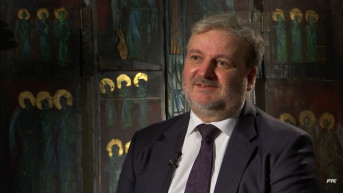
Writing for Kosovo Online: Dragan Bisenic, a journalist
The Secretary General of NATO, Jens Stoltenberg, concluded his tour in North Macedonia with a meeting with leaders of Balkan countries that are also NATO members – Edi Rama, Zoran Milanovic, Milojko Spajic, Robert Golob, and Dimitar Kovacevski.
Stoltenberg's tour had both a reassuring and a warning character. Stoltenberg, who arrived in Skopje after visiting Belgrade, stated that the "security of the Western Balkans is of special importance to NATO" and listed several reasons that were "concerns for the alliance". Just before Stoltenberg's Balkan tour, the joint exercise of 7 NATO member countries called "Strong Balkan 23" was completed in Albania from October 31 to November 10. The exercise involved special operations forces from Albania, Bulgaria, Greece, Montenegro, North Macedonia, Romania, and Turkey, along with units from Bosnia and Herzegovina.
"In Bosnia and Herzegovina, there are tensions, and here I encourage political leaders to refrain from divisions and secessionist rhetoric, directing efforts towards reconciliation and a peaceful future", the NATO Secretary General said.
The NATO Secretary General reiterated that the North Atlantic Alliance "strongly" supported the territorial integrity and sovereignty of Bosnia and Herzegovina. Stoltenberg said this to officials in Bosnia and Herzegovina in Sarajevo on Monday, November 20, expressing concern about current events. "We are concerned about secessionist and divisive rhetoric, as well as an external influence, especially from Russia", Stoltenberg said. One of those who spoke about the possibilities of a new war breaking out in the Balkans is the Ambassador of Bosnia and Herzegovina to the UN, Zlatko Lagumdzija. He directly addressed the High Representative for Bosnia and Herzegovina, Christian Schmidt, supporting his status contested by officials from Republika Srpska.
"NATO supports the sovereignty and territorial integrity of Bosnia and Herzegovina. We want this to be a peaceful country in the heart of a stable region, and your efforts in the role of the High Representative are crucial for unity and reconciliation in this country. Any attempt to undermine your position pushes Bosnia and Herzegovina backward, not forward", Stoltenberg said after the meeting with Schmidt.
In previous statements, Stoltenberg stated that Bosnia and Herzegovina, along with Georgia and Moldova, was among the countries deserving special attention from NATO.
The visit to Bosnia and Herzegovina brought some kind of calming effect, but it did not contribute significantly to addressing the main causes of political disagreements. Immediately after these statements, there was a mediated response from Republika Srpska. Milorad Dodik, marking the 28th anniversary of the initialing of the Dayton Agreement, reiterated that the pinnacle of the problem in Bosnia and Herzegovina "is the illegitimate private High Representative". Dodik stated that Republika Srpska did not plan secession but that Bosnia and Herzegovina would peacefully fall apart on its own. "We consider the imposition of the High Representative as a step closer to the peaceful separation of Bosnia and Herzegovina, and unfortunately, Bosnia and Herzegovina will have the epilogue of a peaceful separation", Dodik said.
In this context, Stoltenberg also addressed the developments in Kosovo, emphasizing the need for the continuation of dialogue between Pristina and Belgrade.
"In Kosovo, we have seen incidents of serious violence involving unacceptable attacks on the KFOR peacekeeping forces some time ago, and those responsible must be held accountable. Belgrade and Pristina must continue the dialogue led by the European Union because that is the only way to a solution that respects the rights of all ethnic communities", the head of the Western military alliance said.
He spoke about the role of North Macedonia in regional security and approval of necessary constitutional changes for integration into the European Union.
In addition to repeatedly stating that NATO is ready to contribute to regional stability, he, on several occasions, indicated with his intonation as if the threat of destabilization was imminent and immediate. Prior to the meeting in Skopje, Stoltenberg summarized his visits to Sarajevo, Pristina, and Belgrade, reiterating that NATO would do everything to prevent "the escalation of the security situation, military threats to any NATO member, or even other countries in the Western Balkans".
NATO's action here is not only limited to eliminating "military threats to any NATO member" but extends to "even other countries in the Western Balkans". Although these "other countries" are not defined, they most likely refer to Bosnia and Herzegovina and Kosovo and Metohija, where NATO has its missions, and its role in peacekeeping is already defined.
Before the tour, there were several instances of the usual dramatization of military and security threats in the Balkans, all consistently linked to the assessment of Russia's efforts and attempts to "open a second front" in Europe to ease its position toward Ukraine. Such assumptions have been created for a while, with the accompanying narrative that Serbia is the one that will be the "executor" or "carrier" of such threats, as it is the only remaining European state that has not imposed sanctions on Russia. Before his trip to the Balkans, Stoltenberg said, "We must understand that the situation on the battlefield is complex. Russia does not plan for peace but a new war".
In the article titled "Russia's Second Front in Europe", the prestigious New York magazine "Foreign Affairs" stated that Serbia believed it could soon have an opportunity for operations in Kosovo, as the West was occupied with supplying Ukraine, supporting Israel, and containing China, but that it needed Russian assistance for such action. As an illustration of these plans, allegations were made of Serbia deploying weapons on its side of the border with Kosovo, "marking one of the largest concentrations of Serbian military forces since the end of the Kosovo war almost a quarter of a century ago". It is evident that this was one of the topics on Stoltenberg's agenda, as he addressed it during the meeting with the President of Serbia, Aleksandar Vucic.
Ahead of the NATO chief's arrival, Kosovo Prime Minister Albin Kurti stated that Serbia had 48 forward operational bases around the border with Kosovo and has "recently deployed air defense systems near the border". He assessed that the lack of sanctions against Serbia increased the threat level in the Western Balkans. Kurti also said the ongoing "reorganization of the Milan Radoicic group with the instructions and support of the Serbian state", noting that the former Vice President of the Serb List had gathered a new leadership of the party in Raska last week and "called for mobilization for voting" in the upcoming elections in Serbia.
These claims did not receive a convincing response even in neighboring Albania, which closely monitors the actions of the Kosovo Prime Minister. Albania's official stance on the current state of the dialogue in Brussels has been presented by Albanian Prime Minister Edi Rama on several occasions, emphasizing the need for fulfilling the agreements reached, including the urgent and immediate establishment of the Community of Serb-majority Municipalities according to the latest proposal from Brussels. Rama praised Albin Kurti for making the "right" move by accepting that document, cautioning him that it was a "belated move", and describing the entire approach as an affirmation of the view of "live and let live".
Pointing out the war dangers against Kosovo, according to assessments by Albanian media, has placed Kurti in the role of the famous Serbian clairvoyant Mitar Tarabic, with Kurti surpassing him in his revelations about air defense systems and the meeting with Radoicic.
Kosovo President Vjosa Osmani, during her visit to the US state of Iowa at the end of last month, repeatedly accused Serbia of wanting to start a war and "annex" Kosovo's territory, even though such claims were dismissed immediately after the incident in Banjska. At that time, US Ambassador Christopher Hill stated that there was no evidence that Serbia was planning a war in Kosovo.
During Jens Stoltenberg's visit to the region, Ukrainian President Zelenskyy also stated that Russia wanted to start conflicts in the Balkans. Stoltenberg rejected all these ominous forecasts, saying, "We do not see any military threat coming from Russia against any NATO member country or the region, but we remain vigilant and carefully monitor what Russia is doing. We have a military presence in this region, KFOR in Kosovo, the Main Headquarters in Sarajevo, and an office in Belgrade, and we are ready to do everything to protect every ally from any threat", Stoltenberg said. The NATO Secretary General reiterated the alliance's message to Russia that it "must refrain from aggressive actions against its neighbors and, in any case, cease aggression against Ukraine".
Despite such assessments from the NATO head, it is difficult to assume that these alarming tones will cease. Creating and maintaining tension in public discourse, as well as in political forums, is considered by many as evidence of timeliness, vigilance, and a correct stance in preventing an imaginary conflict. In this sense, the overall dramatization of the situation in the Balkans contributes to the destabilization of the region. NATO is currently concluding the review of the KFOR mission, in which it will evaluate the mission's past activities and determine future tasks and the form of NATO presence in Kosovo. Stoltenberg's tour will have a decisive impact on the assessments and positions in this document, and thus on the future of the KFOR mission in Kosovo and Metohija. Despite the absence of immediate dangers of conflict, there is a high probability that the NATO contingent will be increased again. This will enhance NATO's role in Kosovo and the Balkans from next year onwards.

0 comments