
From "consular days" to today's special representatives for Kosovo

Did Ivo Andric know that the consular times, from the subtitle of his famous Travnik Chronicle, would be as relevant today in Kosovo, as well as in most of the Balkans, just like in the era the renowned Nobel laureate described in his work? Or perhaps even more relevant? What have these people been doing here for centuries?"
Compiled by: Milos Garic
We have already entered 2024, and numerous analysts and experts generally agree that this year, concerning Kosovo, will be marked by a pronounced presence and activities of special diplomatic representatives from influential world powers, especially those countries that have been the main sponsors of Kosovo's "independence" since the NATO attack on Serbia in 1999. High-ranking officials from the European Union, the United States, Germany, the United Kingdom, France, Turkey are engaged on a daily basis—providing advice, recommendations, organizing meetings, stating demands, expectations, threats, and promises.
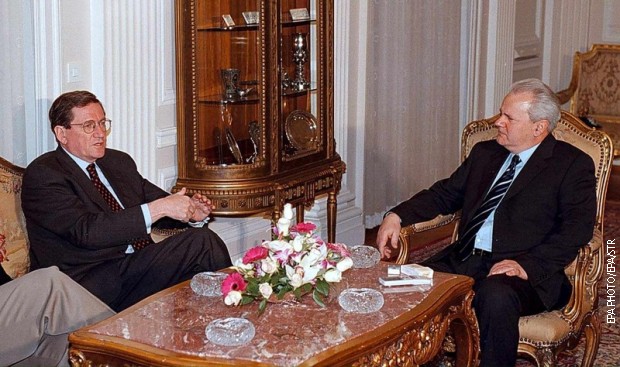
Listing the names of all these people would take up too much space and give them too much significance because their effectiveness is, to put it mildly, questionable. But what is certain, from British, Russian, German, and French mediators from the time of the Ottoman decline in the Balkans, through Consul Sčerbina and his brave death in Kosovska Mitrovica, the Prizren Affair of Austrian representative Oskar Prohaska, and the slap he received in 1912 from General Božo Jankovic, to the recurring occupation authorities in two world wars, to Holbrooke, Walker, Kouchner, Ahtisaari, and then Lajcak, Escobar, von Kramon, and others today, foreign presence and the role of external factors in the Western Balkans are constants—a permanent and unchanging category.
Therefore, the question arises, with a caveat toward rare honorable exceptions, do these people even intend to contribute to the creation of conditions for a normal life for the local population here? Or is that not their intention at all, as it would consequently leave them without lucrative engagements and the key role of their countries in shaping the rules and way of life among the Balkan people.
Writer Muharem Bazdulj, discussing for Kosovo online, suggests that when it comes to the forces influencing the Balkans, or more specifically, Kosovo, they can be divided into those who, conditionally speaking, support the Albanian or Serbian side.
"When it comes to the former, these are primarily the United States, Germany, and Turkey. The U.S. for relatively recent reasons, as they led the bombing of the Federal Republic of Yugoslavia and, in a way, acted as the 'midwife' for Kosovo's self-proclaimed independence. It is their project. Also, there is Bondsteel, and there are their investments. Symbolically, Germany is the successor to Austro-Hungary, at least in the context of Balkan politics. They benefit from Serbia's weakened position in the center of the Balkans," Bazdulj points out.
He notes that at the beginning of the 20th century, weakening the position of the Serbs served the creation of Albania, with the rejection of Serbia from Shkodra, Durres, and the Adriatic in general.
"At the end of the twentieth century, this was further emphasized by the de facto creation of an independent Kosovo. Finally, the Turks held Kosovo for more than 500 years. In the neo-Ottoman context and in light of the fact that Kosovo is predominantly inhabited by Sunni Muslims, they see this area as their sphere of interest," emphasizes Bazdulj.
He also highlights the role of Russia, China, and Spain.
"On the other side are Russia, China, and Spain. For Russia, this is a current geopolitical issue and a convenient token to prove the hypocrisy of the political West. Also, supporting Serbia helps Russia get support in return. China has at least three reasons to support Serbia. The first concerns the issue of Taiwan, the second the 'New Silk Road,' namely the fact that the crucial axis Athens-Skopje-Belgrade-Budapest, or the highway and future railway, has its 'narrowest point' precisely along the Kosovo territory. From that territory, forces hostile to China, while having control over the Albanians in Kosovo, can jeopardize it. Finally, there is also the continuation of mutual friendly relations along the Belgrade-Beijing line. Spain, on the other hand, does not want to make it any easier for Catalan separatists, and that is more than enough," Bazdulj explains.
Political analyst Srđan Barac reminds us that the interest of major powers in the Balkans is not a new phenomenon.
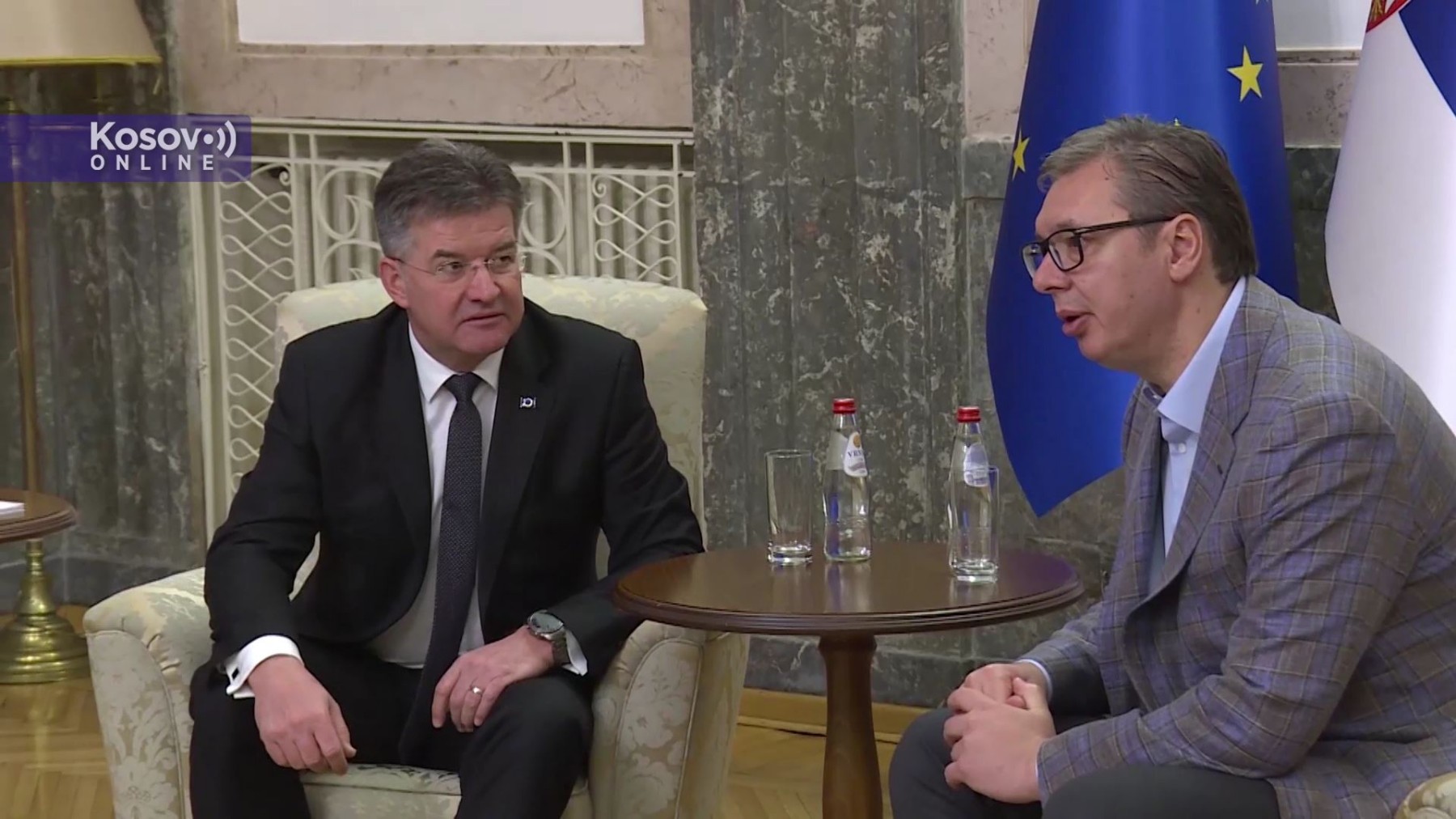
"Throughout history, the Balkans has always attracted the attention of great powers and rulers. We could conclude that it is good to be the subject of interest, but when the interested parties want more than just gathering information, then it becomes a problem. Often, envoys of powerful nations want to be the creators of events, not just messengers. Whether our air intoxicates them or they have been given permission to violate the Vienna Convention remains a puzzling question, but as a clear perception and echo of every speech, the awareness remains that they only care about themselves and their interests through the deception of defending us while attacking others. Naively and romantically, we tend to believe that there are friendships and alliances that transcend mere interests and dream that it is possible to build an international order based on a desire for cooperation, not just a necessity," Barac notes for Kosovo online.
Curiosity about what is happening with neighbors and a tendency to look into others' yards, says Barac, are not characteristics unique to our region, as it may sometimes seem.
"In recent times, we welcome and bid farewell to foreign envoys, popularly called observers, with the same questions and anxieties: whether they are sent to cause problems or to support peace. Building sustainable solutions for lasting peace is a complicated process, and sometimes it's good for someone who is not an interested party to have a role in the process, but only if they genuinely do not take sides," Barac points out.
According to him, since people formed tribes, brotherhoods, tribes, and up to the state, one of the reasons for association is the ability to conduct reconnaissance or intelligence operations.
"One of the basic prerequisites for quality defense policy is quality information. Systematic education is the only thing that can enable society to progress and rise above the current problems that press us and push us into mutual clashes. Understanding, as well as accepting the challenges we face as a state, is a basic prerequisite for rational judgment and making quality conclusions," Barac concludes.
The specific role of Germany
Political scientist Dimitrije Milic highlights the role of German foreign policy in events in Kosovo and the entire region.
"If German foreign policy is considered, this country does not draw its strength from great military power, a nuclear arsenal, or the right to veto in the UN Security Council. It does not possess these elements of hard power, but it has significant economic power as the largest economy in Europe and the most important trading partner for numerous European countries. If this perspective is considered, Serbia would be the most important partner for Germany in the Western Balkans because it has the largest and most connected economy in the region with Germany. However, pro-business parties like the Christian Democratic Union (CDU) or its sister Bavarian party CSU are in opposition, while pro-business liberals (FDP) are just one of three coalition partners in the current government. These parties prefer stability and opportunities for the expansion of the export-oriented German economy, which, in relation to the Western Balkans, means a policy of supporting stability and less insistence on values and support for risky solutions," Milic assesses for Kosovo online.
He emphasizes that when it comes to left-wing parties, primarily the German Greens, whose foreign minister is Annalena Baerbock, and the frequently present Viola von Cramon in the region, "value elements" take precedence over economic indicators.
"The Greens now control the Ministry of Foreign Affairs and have a strong influence on the formulation of Germany's foreign policy. As a party, they have identified the Kosovo side as more aligned with their values than the attitudes present in Serbia. German foreign policy is traditionally reserved about any risks because there is fear of escalation in the European Union's backyard that could not be controlled. However, the Greens are certainly the least averse to risks as a force, being significantly more critical than all other parties, whether it concerns Russia or relations with China. A significant portion of them believes that Pristina, with its foreign policy, is much closer to Germany than Serbia is, especially when viewed through the lens of relations with Moscow and Beijing," Milic notes.
On the other hand, former Foreign Minister of the Federal Republic of Yugoslavia, Zivadin Jovanovic, emphasizes the long-standing harmful activities of the most influential Western states in the Balkans.
"The position of Serbs in Kosovo and Metohija is difficult due to the anti-Serb geopolitics of Great Britain, the United States, and Germany, whose goal is the complete subjugation of Serbs in the Balkans. This is part of the same strategy of former German expansion to the East, which is why the war in Ukraine was provoked. It is difficult to expect changes in that strategy in the near future, but the war they have provoked cannot be won. It is up to the Serbs as a nation not to lose sight of this, to believe in themselves and proven allies, to guard against provocations, to work, stop the sell-off, and endure, because enemies cannot be appeased by anything," Jovanovic advises.

comments