
The dark beauty of former life
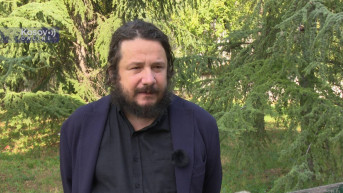
Writing for Kosovo Online: Muharem Bazdulj
One of the most famous and beautiful passages from Andric's correspondence is found in his letter to Tugomir Alaupovic, written on July 8, 1919, and sent from Split. It goes like this: "I feel sorry when I think that our old, strange Bosnia is dying out every day and there is no one to record and preserve the dark beauty of its former life. [...] And I feel sorry when I think that with every old woman, one verse dies, and with every monk, one history is buried. Let's not even talk about today's Bosnia."
A part of the magic of this quote is the little mystery that has surrounded it. In his famous study "Rani Andric," Miroslav Karaulac mentions the same quote, but in his version, Bosnia is not "strange" but "emotional." A whole essay could be written about how indicative this "mistake" by Karaulac is. And it is indeed a mistake since the original of Andric's letter has been preserved where it is clear that he wrote "strange." However, thanks to Karaulac, Andric's Bosnia is revealed to us today as both strange and emotional.
I remembered this quote after reading the following news: "Leposava Stojanovic, or as she was called - Grandma Mila, passed away in Pristina at the age of 91. She was one of less than ten Serbs who remained to live in the largest city in Kosovo. 'When a Serbian soul falls silent in Kosovo and Metohija, it's as if an entire city has disappeared,' Dr. Aleksandar Canovic, who had cared for Grandma Mila for years said. Years after the conflict in 1999, the largest number of Serbs, around 40,000, were forced to leave Pristina, but not Grandma Mila. Leposava Stojanovic will be buried in Nis."
Consciously or, more likely, unconsciously, Dr. Canovic here seems to paraphrase the quoted Andric's letter. For Andric, the death of every old woman is like the disappearance of one verse, while the death of a monk is the burial of one history, and Dr. Canovic rightfully compares the death of a specific old woman with the disappearance of an entire city.
History sometimes makes certain people become a kind of symbol even in relatively old age. When Serbs began to leave Pristina en masse, Leposava Stojanovic was already over sixty years old. By deciding to stay in Pristina, Leposava was one of the last living traces of Serbian presence in this city. Forty thousand Serbs left Pristina, but Leposava Stojanovic stayed.
Only she knew how the last quarter century of her life had passed. Judging by the statements and interviews she gave, there wasn't much bitterness in her. She experienced the great parental tragedy of outliving both of her children, but she still had five grandchildren. She outlived her husband by many years.
In one interview, Leposava Stojanovic said: "All around me are Albanians, I am the only Serb woman in this building, nobody bothered me. We worked together, I never had any problems. I didn't leave when all my people left, I stayed alone. I was born in Urosevac, I am from Kosovo. When I went to Belgrade, everything felt foreign to me, I used to go to my daughter's in Nis for two months, while they were alive, but when I came back to Pristina, I rejuvenated."
When she spoke about living together with Albanians ("We worked together, I never had any problems"), it evoked Andric's "dark beauty of former life." Leposava Stojanovic does not idealize the past; she does not say "We were brothers, we were one people," she says "We worked together," as it indeed was, and therein lies that "dark beauty."
Leposava Stojanovic knew, while her children were alive, to spend a sixth of the year in Nis, but it was only upon returning to Pristina, in her own words, that she would "rejuvenate." However, now she will not rest in Pristina. It's logical; her grandchildren don't live there, and her children are not buried there, but it's also known that Serbian graves in Kosovo, euphemistically speaking, are disproportionately often desecrated.
In cities where the population structure has changed due to persecution and ethnic cleansing, cemeteries, and graves are often the only traces of the people who are no longer there. For a quarter of a century, Leposava Stojanovic maintained some Serbian presence in Pristina. However, her grave will be elsewhere.
A quarter of a century ago, Leposava Stojanovic was left without her people in Pristina. Stevan Raickovic translated the verses of Alexander Blok, who said:
Even if you live another quarter of a century —
Everything will be the same, without a way out.
That's how it was, more or less. It's possible that in 1999, Leposava Stojanovic expected her compatriots to gradually return to Pristina over time, but it turned out to be an illusion. What once was is dying with each passing day. Memories in which the dark beauty of former life was at least preserved as a memento are also disappearing.
0 comments