
Eighty years of the International Court of Justice – between the rule of law and the dominance of force
Wrriten by: Zeljko Sajn for Kosovo Online
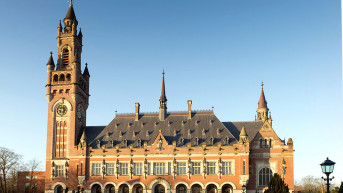
On the occasion of the 80th anniversary of the International Court of Justice in The Hague, at the Peace Palace, the Secretary-General of the United Nations, António Guterres, delivered a speech emphasizing the importance of international law in the contemporary world.
The International Court of Justice was established in 1945 alongside the founding of the United Nations, and began its work in 1946. It is the successor to the Permanent Court of International Justice, which operated under the League of Nations. Since then, it has served as the principal judicial organ of the United Nations and plays a key role in maintaining international peace and justice.
In his address, Guterres stressed that the world today is facing a serious crisis in which the fundamental rules of international law are increasingly being undermined. He recalled that, after World War II, states chose to build an order based on law rather than force, and that the establishment of the International Court of Justice was a crucial step in that process.
The Court plays an important role in resolving disputes between states and in issuing advisory opinions on matters of global significance. Its decisions contribute to the preservation of peace and stability by affirming that all states—regardless of size or power—are equal before the law.
Guterres warned that international law is currently under significant pressure. Violations of rules are becoming more frequent, humanitarian norms are being disregarded, and state accountability is weakening. Such developments lead to increased instability, the spread of conflicts, and the worsening of conditions for the most vulnerable populations.
He particularly emphasized that the world now stands at a crossroads: between a system based on law and one dominated by force. Should the “law of force” prevail, the consequences would be severe—from global insecurity to economic and humanitarian crises.
For this reason, he called on all states to respect international law, resolve disputes peacefully, and comply with the decisions of the International Court of Justice. He underlined that preserving the legal order is the only way to ensure long-term peace and stability in the world.
The importance of international law can also be seen in the territory of the former Socialist Federal Republic of Yugoslavia, whose dissolution during the 1990s led to numerous disputes among the newly formed states. In those processes, international law and institutions played a significant role in addressing issues of borders, responsibility, and state recognition.
A particularly complex issue is the unilateral declaration of independence of Kosovo in 2008. In that regard, the International Court of Justice issued an advisory opinion in 2010, examining whether such an act was in accordance with international law. This case illustrates the complexity of questions related to sovereignty, territorial integrity, and the right of peoples to self-determination, as well as the importance of international law in their interpretation.
In conclusion, the speech of the UN Secretary-General represents a strong appeal to the international community to renew its commitment to justice and cooperation. In a time of numerous challenges, international law remains a fundamental pillar for preserving peace and preventing conflicts among states.

0 comments