
Elections in North Macedonia - determining the path towards the creation of "Greater Albania"
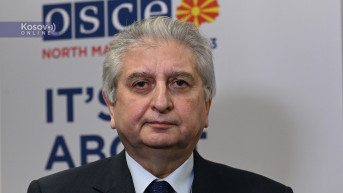
Writing for Kosovo Online: Zeljko Sain, Politika’s correspondent from Skopje
This year's political elections, both presidential and parliamentary, both in the region and worldwide, will largely mark a historical step forward in countries' efforts to pursue their interests in the global division of the world. Economically dominant states will be the foundation for establishing peace and stability in the world, where the political and security lines will be drawn between the global political figureheads - the Russian Federation and the United States.
While our focus is on the world political stage, whose security architecture is disrupted by fragmented wars, the Western Balkans, on the doorstep of the European Union, is following the political game from the sidelines, which is shaping a new geopolitical map of the world.
In the Republic of North Macedonia, the race for the presidential elections officially began, scheduled for April 28th, when the first round of elections will be held, while the second round is scheduled for May 8th. Around 11 candidates have announced their candidacy for the head of state, including the current President of the country, Stevo Pendarovski, who won the last presidential elections against Prof. Gordana Siljanovska Davkova. However, this time Pendarovski is supported only by the ruling Social Democratic Party, while its coalition partner in the government - the Albanian party DUI - has offered its candidate to the citizens of Macedonia, emphasizing the national basis.
According to all polls, Gordana Siljanovska Davkova has the greatest chance of winning these presidential elections, as she will be supported by the largest opposition Macedonian parliamentary party - VMRO-DPMNE. It is quite certain that Davkova will enter the second round of elections if she does not win in the first round.
On the other hand, it is very uncertain whether Pendarovski will enter the second round of elections, considering that a large number of candidates from other political parties will significantly weaken Pendarovski's support. Among them are the Albanian opposition bloc, then the DUI party, a coalition partner of SDSM in the government, which is running independently in these elections, as well as several smaller Macedonian parties, such as the Left of Professor Apasiev or the party ZNAM of the Mayor of Kumanovo Maksim Dimitrievski. Muslim political parties are also joining the election campaign. The final number of candidates is still uncertain, as signatures are being collected from citizens until March 8th. To appear in the elections, someone must have 10,000 signatures, and according to the Constitution, one citizen can sign for more than one candidate.
While the battle for gathering signatures from Macedonian citizens is underway in North Macedonia, the political ideology of Adem Demaci finds fertile ground for its revival and the consolidation of the path towards the creation of a "Greater Albania." It is known that before the New Year, Albin Kurti was chosen as the president of all Albanians by the Albanian opposition in Tetovo, with the iconography of the so-called Greater Albania, and the promotion was carried out by the mayor of Tetovo, Bilall Kasami. Kurti not only embraced this role but, just one day after Talat Xhaferi was elected as the Prime Minister of North Macedonia, he invited the entire Albanian opposition from North Macedonia to his office in Pristina and began to build a path to exert influence in this country and strengthen the idea of creating a "Greater Albania." During Kurti's visit, Dr. Arben Taravari was also present, and he was offered to run as a candidate for the Albanian opposition in the presidential elections in North Macedonia, opposing Ali Ahmeti, the leader of the DUI party. Although Ali Ahmeti has the support of the Prime Minister of Albania, Edi Rama, his position is increasingly threatened by Kurti's actions in the territory of North Macedonia.
It is interesting to note that Taravari appeared in the meetings with Kurti as the president of the Albanian Alliance, the party he led in the coalition government. However, after accepting to run as an opposition candidate for the president in North Macedonia, following Kurti's orders, Taravari's ministers in the Macedonian government were dismissed, leading to a split in the Albanian Alliance, with the other faction led by Ziadin Sela.
Therefore, if Dr. Taravari legally and legitimately secures the right to run for president of the Republic of North Macedonia, the official procedure for realizing Kurti's ideology inherited from Adem Demaci will begin, with staunch support from the Walkerists, above all.
There have been no reactions from the official ranks of the government and the opposition to Kurti's meddling in the internal affairs of the state, nor from foreign actors. Admittedly, it was difficult to expect a reaction from representatives of state organs, as both the Prime Minister and the Minister of Foreign Affairs – Talat Xhaferi and Bujar Osmani – are members of the Albanian parliamentary party DUI. It is very important for both of them to maintain good relations with Kosovo, a neighboring state where a certain number of citizens hold dual citizenship, so their support for Osmani, as the presidential candidate of the DUI party in the upcoming presidential elections, is expected.
After Albanian Talat Xhaferi, who was the President of the Macedonian Assembly, became the Prime Minister of North Macedonia, Osmani's candidacy for the President of North Macedonia sparked euphoric comments that it was time for this country to have an Albanian president. Osmani addressed his voters from the UN and thanked his leader Ali Ahmeti for giving him the historic opportunity to run as the first Albanian president of North Macedonia.
Since it is very difficult for this Albanian dream of having a president of North Macedonia from their ranks to be realized alongside the Macedonian electorate in direct presidential elections, the DUI party and its leader Ahmeti are seeking to change the method of electing the president and transfer the election to the Assembly, where the presidential candidate would be elected by a majority vote in the parliament, just like the government is elected. It should be noted that the Albanian DUI party, together with all Albanian parties in the government have reached nearly half of the ministerial positions, which is significantly more than what is approved by the Ohrid Agreement. By such advancement of the Albanians in the executive, legislative, and judicial branches, all other peoples in North Macedonia, including the Serbs, have been put in a discriminatory position.
If the progression of the Albanian factor in North Macedonia continues in this manner, and if there is adaptation of the electoral law and formation of new governments and heads of state as well as parliaments, we can soon expect Kurti's supporters to seek the independence of western municipalities until their secession.
Therefore, these presidential and parliamentary elections in North Macedonia will mark a historical step forward for all those who support Kurti on the long-term and patient path toward the so-called Greater Albania. The experience from the former Yugoslavia seems to be an insignificant guide for Macedonian politicians, probably due to the Albanian vote they are hoping for, foremost among them Pendarovski.

0 comments