
Fog Keepers
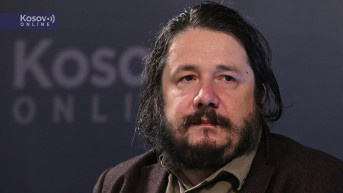
Written for Kosovo Online by: Muharem Bazdulj
Last year, I was preparing a paper for an international conference on the final decade of the 20th century in the Yugoslav space, titled "When the Unimaginable Becomes Reality: Transitioning from Peace to War in Real Time." My idea was to show how the days and weeks when peace transitioned into war were remembered in the diaries of some significant cultural figures of that time, whose diaries were later published (for example, Zivojin Pavlovic, Aleksandar Tisma, Zdravko Malis, Divna Zecevic, Milovan Djilas, etc.). Today, it seems to many that the war was inevitable, but these records illustrate the fact that the perception of the entire crisis and its possible outcomes changed from day to day, and that the reality which ultimately emerged seemed unimaginable and impossible just a short time before.
In any case, these diaries are marvelous reading, even outside the context of my aforementioned work. It seems to me that any reading of them, even the most casual browsing of five to ten minutes, could potentially provide the framework for some new research or discovery.
Diaries are convenient because they are practically made for random reading. I open Zdravko Malic’s diary from the 1980s on page 521 and come across this entry from July 17, 1989; it was a Monday:
"The night before last, in the almost empty 'Jadran' cinema hall – the Kosovar film Fog Keepers. Director: Isa Qosja. Excellent cinematography and set design. The director has a great sense for so-called local color, and it's a real shame that the script didn’t allow him to fully showcase his talent. Our Albanians like the symbolist mode of expression. The clash between life’s realities and symbolism doesn’t bother them, but it bothers me. Qosja would make a good film, for instance, about the liberation of Kosovar women from the patriarchal bondage of men... Fog Keepers, a film I will remember despite all my reservations and distance from its loaded symbolist poetics."
These few lines are extremely indicative. Zdravko Malic died in 1997, and his diaries were published about twenty years after his death, without any changes. Malic defines the film as "Kosovar," even though at that time the SFRY still very much existed. The film was produced in Pristina, but it’s hard to imagine that a film produced in Sarajevo, Skopje, or Zagreb would be described any differently than as "domestic" or "Yugoslav." Why is that? The reason is probably the fact that the film was made in Albanian, so Malic watched it with subtitles, and in that sense, it was hard for him to call it "domestic," although he quite naturally refers to "our Albanians."
Malic watched the film less than three weeks after the large gathering at Gazimestan marking the 600th anniversary of the Battle of Kosovo. It had also been almost two full years since the famous Eighth Session. In newly constructed histories of the Albanians from Kosovo, the 1980s—especially the period after Tito's death—are often described as a time of repression, almost akin to slavery.
And yet, during the 1980s, films in the Albanian language were being produced regularly. Before Fog Keepers, there were films like The Outing by Emin Halili, Proka also directed by Isa Qosja, Man of the Earth by Agim Sopi, The Swollen River by Besim Sahatçiu, The Rabbit with Five Legs by Ismail Imeri, and White Traces by Ekrem Krvaziu. These films all featured Albanian actors, with Albanian screenwriters (Ramiz Kelmendi, Rifat Kukaj, Petrit Imami, Ekrem Basha, Ethe Gashi, Fadil Hysaj), Albanian composers (Bashkim Shehu, Krist Lekaj, Akil Koçi), and Albanian set designers (Nazmi Sadiku, Nuredin Loxha, Agush Beqiri).
Film, as probably the most complex art form, was so developed in Kosovo in the 1980s that local talent could fill entire production teams.
The foundation of today’s Kosovar cinematography is built on these same people, most of whom were educated in Belgrade. The aforementioned Isa Qosja, the director of Fog Keepers, was born in 1949 in the Montenegrin municipality of Gusinje. Qosja is perhaps the most prominent director in Kosovo today; his film Three Windows and a Hanging was the first film from Kosovo to be submitted for an Oscar.
It would be interesting to see, even in the most developed democratic countries, how many examples there are of broad cinematic development in a minority language. It would also be interesting to explore where, in the final decades of the 20th century, better and more successful films in the Albanian language were being made: in Albania or in Kosovo, i.e., in Serbia, i.e., in Yugoslavia.
Unfortunately, even in some parts of the public in Serbia today, there is a stereotype that after 1980 or 1981, Albanians in Kosovo could not develop their culture. For those who, despite the facts, claim such things, it could be said that they are nothing more than—keepers of the fog.

0 comments