
How the recognition of Kosovo became mandatory for Serbia's EU membership
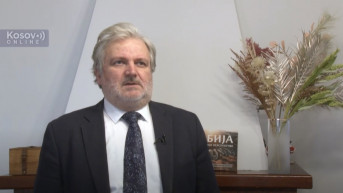
Writing for Kosovo Online: Dragan Bisenic, a journalist
Although the slogan "Kosovo or EU" appeared very early in analytical papers that dealt with the future of the Balkans after 2000, European representatives and officials of European countries claimed for a long time that Kosovo was not a condition for Serbia's EU membership, even after the unilateral declaration of independence in 2008. In 2009, figures like Javier Solana, Commissioner Olli Rehn, French Foreign Minister Bernard Kouchner, and many others held this view.
The shift occurred in Germany in 2010 or 2011. As early as 2010, the German Ambassador to Serbia, Wolfram Maas, stated that Europe did not set recognition of Kosovo's independence as a condition for Serbia's progress towards EU membership.
The clearest and most explicit expression of this new policy was presented during a visit by a delegation of German parliamentarians to Serbia in June 2011. The delegation included Roderich Kiesewetter, who remains a member of the German parliament on behalf of the CDU, as well as Peter Beyer. Uta Zapf from the Social Democratic Party was a member of the Bundestag from 1998 to 2013. On that occasion, they presented a platform for relations with Kosovo and a "roadmap" that has been in effect until today as an EU proposal, or as a German proposal, called the proposal for the normalization of relations between Kosovo and Serbia, later approved by France and the European Union.
"The start of accession negotiations for Serbia to join the European Union (EU) will not be jeopardized by the demand for Kosovo's recognition, but by the end of that process, Serbia will effectively have to recognize Kosovo's independence to become an EU member", Kiesewetter said in Belgrade, a sentiment echoed by other members of the delegation.
"At the end of the accession negotiations, the de facto recognition of Kosovo must be on the table, and if it is absent, the German Parliament will not support Serbia's EU membership", Bundestag members said in Belgrade.
They also presented how this recognition was expected to be achieved. They explained that the negotiations for Serbia's accession to the EU would begin and conclude without formal legal (de jure) recognition of Kosovo's independence, which was desirable but, in any case, some solutions that would mean de facto recognition of Kosovo's independence must be accepted, as discussed now.
According to them, de facto recognition of Kosovo's independence would include, among other things, accepting Kosovo's membership in the United Nations and international organizations, and this is what Serbia will have to fulfill by the end of the EU membership negotiations.
They stated that the issue of recognizing Kosovo's independence was crucial and pointed out that EU members, in their assessments, adhered to the International Court of Justice's position in The Hague, whose decision on the legality of the unilateral declaration of independence had prompted recognitions of Kosovo.
"The talks (between Pristina and Belgrade) must continue, and at the end of those talks, there must be recognition. This is implied", they said to Belgrade journalists, emphasizing that it was clear that contentious issues could not be resolved overnight but would require several years.
Kiesewetter, whose statement about Germany's expectation that Serbia will recognize Kosovo's independence by the end of the EU accession process sparked strong reactions in Belgrade, later said that he and his colleague Peter Beyer acknowledged during the visit "Serbia's great effort" to meet all the required conditions for candidacy and EU accession.
Kiesewetter's statement about Germany's expectations of recognizing Kosovo by the end of the EU accession process could hardly be interpreted as a turnaround in Berlin's policy towards Serbia or German opposition to Serbia's EU entry.
Leading German politicians, not only during Angela Merkel's conservative-liberal government but also in the previous conservative-social-democratic government, during which Kosovo was recognized as an independent state, insisted that "good neighborly relations" are crucial for the EU integration of all countries in the region.
This was emphasized not only in discussions with officials from Serbia or Kosovo but also in talks between Chancellor Angela Merkel and the head of state Christian Wulff with the then President of Croatia Ivo Josipovic and Prime Minister Jadranka Kosor.
When the Bundestag ratified the Stabilization and Association Agreement between Serbia and the EU in February 2011, then State Minister, now the Director of the European Investment Bank, Werner Hoyer, emphasized that "the boundaries in the Balkans have finally been drawn" for Germany.
Hoyer reminded that Berlin also expected Serbia to work towards achieving "European values as stated in the SAA", including the "development of good neighborly relations".
Speaking in 2009 about the conditions Serbia should fulfill before applying for EU membership, the German State Minister reiterated that the "EU does not accept members who have not resolved problems with their neighbors". Hoyer emphasized the need to "create an atmosphere that will facilitate Belgrade in resolving the Kosovo issue". "Regarding cooperation with the Hague Tribunal, the situation is also clear, but I must say that I consider this problem solvable in the foreseeable future", Hoyer said.
Foreign Minister Guido Westerwelle, after a meeting with Kosovo's Foreign Minister Enver Hoxhaj on June 10 in Berlin, emphasized that Germany "unconditionally supports the territorial integrity of Kosovo" and was convinced that the "geographical map of the Western Balkans is complete".
Westerwelle clearly formulated the German position by saying that "all Western Balkan countries have the perspective of joining the EU", but for this to happen, it was necessary to "cultivate good neighborly relations, not question borders, and respect territorial integrity".
Hoyer reiterated in mid-June in Belgrade that for EU accession, it was a "precondition to recognize the territorial integrity of neighboring states, all neighboring states".
The fact that leading German diplomats at the time spoke about "acknowledging territorial integrity" rather than directly recognizing Kosovo's independence was certainly not accidental but related to the fact that five EU member states had not yet recognized Kosovo.
After the meeting with Hoxhaj in Berlin, Westerwelle said that Germany was making efforts for the remaining five countries to recognize Kosovo, hoping that they would bear fruit, but he explicitly answered a journalist's question, saying that he did not know when that could happen.
What Germany currently expects is, as the head of the German diplomacy expressed, that "Pristina and Belgrade pragmatically continue the negotiations initiated in the interest of their citizens" because that was a "premise that applies on the path to the EU". Within this "pragmatism," a solution was sought that would not be direct recognition but recognition in an adequate and non-provocative form for the Serbian public.
The influential conservative newspaper Frankfurter Allgemeine Zeitung (FAZ) at the end of May, after the arrest of Ratko Mladic, commented that "no one demands, nor can demand, that Belgrade recognizes its former province as an independent state", but that a solution must be found below the level of formal recognition.
Nevertheless, immediately after the visit of German MPs, the Ambassador of Poland to Serbia, Andrzej Jasionowski, on the day when Poland took over the EU presidency, said that recognizing Kosovo would not be a condition for Serbia to gain candidate status or conclude membership negotiations.
The authorities in Serbia had the opportunity to hear interpretations of what the German demand for "respecting territorial integrity" in the Western Balkans entails at the end of August when German Chancellor Angela Merkel visited Belgrade and Zagreb for the first time since becoming chancellor in 2005.
Angela Merkel's assessments were clear and explicitly stated. It is expected: firstly, that the dialogue will produce results, secondly, to enable EULEX to operate throughout Kosovo, and thirdly, to abolish parallel institutions in northern Kosovo. When asked if she feared that Serbia, when choosing between the European Union and Kosovo, would choose Kosovo, she said:
"I never fear. What I see ahead of us is a serious political problem, but success is needed in its resolution for both Serbia and the European Union. I want to emphasize - Europe is the solution. I can speak based on the example of Germany. I once did not believe that Germany would reunite, and it happened. I believe that Serbia's problems will also be resolved. In the unified Schengen system, there are no borders. Regarding Serbia's recognition of Kosovo, I wouldn't specify. We don't know where the process we are in will end. But we already have enough problems because of the unresolved issue in Cyprus. This doesn't mean we don't want Serbia in the European Union. We really want it, and let's not have false expectations", Merkel said.
Even after all this, the statement from the head of the EU delegation in Belgrade, Vincent Degert, followed, stating that recognizing Kosovo was not a condition for Serbia's EU membership, specifying that the conditions were determined by the European Council, not individual politicians or parliamentarians of member countries.
Following such statements from Germany, other more direct statements followed. In 2017, after talks with the EP rapporteur for Serbia, David McAllister, President Aleksandar Vucic said that the key issue for Serbia was Kosovo, the second key issue was Russia, not the rule of law.
European Commissioner for Neighborhood Policy and Enlargement Negotiations Johannes Hahn stated in 2018 that resolving the issue of Kosovo was not the only precondition for Serbia's entry into the European Union, emphasizing that implementing reforms in the rule of law, fundamental rights, and good governance was at the core of the enlargement process.
"It seems that many, including politicians, have the impression that resolving the issue of Kosovo is the only precondition on Serbia's path to the EU. That is not the case", Hahn said, definitively confirming that recognizing Kosovo was a condition for Serbia's EU membership.
He said no new state could join the EU without resolving outstanding bilateral issues, and for Serbia, this meant concluding and permanently implementing a legally binding agreement with Pristina.
Hahn emphasized that for the dialogue between Belgrade and Pristina, a lasting agreement implied a "feasible, sustainable, and realistic solution, in line with international law and EU legal acquis".
"Any agreement must be specific and tailored, not to set a precedent and to contribute to regional stability and the region's path to the EU. At the same time, the EU does not speculate on possible elements of a final legally binding agreement", Hahn said.
In preparations for talks on normalization, it has been repeatedly stated from the European and American sides that mutual recognition was expected.
0 comments