
Kosovo will not receive independence as a New Year's gift from Serbia in 2024
Writing for Kosovo Online: Dragan Bisenic, a journalist
"We, Americans, don't pay for what we get for free". This maxim of the recently deceased giant of world diplomacy, Henry Kissinger, should be kept in mind now when the question arises only about the form in which Serbia should agree to the "de facto" recognition of Kosovo. Kissinger said this to the Egyptian side, which in 1974 voluntarily made several accommodating gestures, and then asked for a quid pro quo for them.
Now, a somewhat different sequence is being asked of Serbia – to "de facto" yield Kosovo's independence and thus inflict immeasurable damage to the historical, cultural, political, and economic existence of Serbia and the Serbs. This became unequivocal in the first half of this month when the European Union decided to request changes and additions to Chapter 35 in negotiations with Serbia to include the obligations arising from the Agreement on the Normalization of Relations between Kosovo and Serbia and its Implementation Annex, as stated in the adopted conclusions that were extensively discussed.
The Council of EU Ministers, on December 12, just two days before the EU Council and the Western Balkans Summit, requested the European Commission and the EU High Representative, Josep Borrell, to "urgently, by the end of January 2024", propose changes and additions to the criteria for Chapter 35 in accession negotiations with Serbia to include the obligations arising from the Agreement on the Normalization of Relations between Kosovo and Serbia and its Implementation Annex, as stated in the adopted conclusions.
The Council of Ministers welcomed the Agreement on the Normalization of Relations between Kosovo and Serbia, reached on February 27 in Brussels, and its Implementation Annex, agreed on March 18 in Ohrid, expressing regret for their non-implementation by both parties, as well as other unfulfilled obligations from the dialogue mediated by the EU.
"The Council calls on Serbia and Kosovo to fully respect and implement these agreements without further delay and preconditions, including the establishment of the Community of Serb-majority Municipalities (CSM). The Council welcomes Serbia's and Kosovo's readiness to accept the draft of the CSM Statute presented to the parties by the EU, with an understanding that further work is needed on that basis", the conclusions state, extensively and in detail addressing Serbia.
It is added that the normalization of relations and the implementation of obligations from the dialogue are essential conditions on the European path for both Serbia and Kosovo, risking missing "significant opportunities if there is no progress".
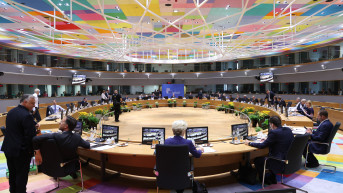
During the EU Council held on December 14–15, which specifically addressed enlargement, with a focus on Ukraine, Moldova, and Georgia, the EU-Western Balkans Summit was also held, confirming all that the Council of Ministers had requested. This includes the additions to Chapter 35 that will apply to negotiations with Serbia. The adopted declaration dedicates a special section to the normalization process between Serbia and Kosovo, urging the parties "to fully implement the Agreement on the path to normalization and its Implementation Annex, as well as all past agreements without further delay or preconditions".
"We expect constructive engagement in good faith and in the spirit of compromise from both sides to achieve rapid progress in the normalization of their relations, which is critically important for the security and stability of the entire region, ensuring that the parties can advance on their European paths", the adopted declaration reportedly states.
This sets up significant, perhaps decisive, barriers for Serbia that will significantly impact its future relationship with the European Union. Commenting on suggestions that the European Council might propose to the Commission to include the implementation of the Ohrid Agreement in Chapter 35, Serbian President Aleksandar Vucic said in early December that he did not think it was possible because that would de facto close the doors of the Union for Serbia. He reiterated that he had repeatedly informed European leaders about what Serbia could fulfill and what was impossible.
"If you include Kosovo's UN membership as a part of Chapter 35, then it is clear that you do not want Serbia. I do not believe that is possible, and I do not think such a decision will be made", the President of Serbia repeated. Indeed, such a decision has not been adopted yet, but only one step remains—this January—for it to be formalized.
Consistently adhering to this stance, Serbian Prime Minister Ana Brnabic, participating in the EU-Western Balkans Summit, sent two letters in which the Serbian Government expressed its reservations regarding such EU positions. In its document, as reported, Serbia clearly indicated that Kosovo remaines an integral part of the Republic of Serbia in accordance with United Nations Resolution 1244.
"The Republic of Serbia, committed to the process of European integration and negotiations, generally aligns, with reservations, with the Declaration 'EU-Western Balkans Summit, Brussels, December 13, 2023', as a political statement and a legally non-binding document. The 'Agreement on the Path to Normalization and its Implementation Appendix', as stated in this Declaration, is considered acceptable only in a context that does not imply any de facto or de jure recognition of the so-called 'Kosovo'.
The Republic of Serbia emphasizes that alignment in no way implies recognition of the membership of the so-called 'Kosovo' in the UN, the system of UN organizations and agencies, or the so-called territorial integrity of 'Kosovo'. The above-mentioned document does not represent a legally binding treaty under international law. Furthermore, alignment with this Declaration does not affect the fact that Kosovo and Metohija remain an integral part of the territory of the Republic of Serbia under international administration in accordance with UN Security Council Resolution 1244 of 1999", the letter from the Government of Serbia states.
Serbia's reservation in Brussels on the declaration from the EU-Western Balkans summit is just a confirmation that Serbia does not agree with provisions 1, 2, and 4 of the Ohrid Agreement, which have elements of statehood for Kosovo and would imply de facto recognition. These are provisions that would allow Kosovo to be internationally verified under international law, and by invoking Serbia's consent, join the United Nations and other international organizations within the UN system.
Following this, the spokesperson for the European Commission, Peter Stano, issued a controversial statement. Stano stated that the agreement on the path to normalization of relations with Kosovo, including the implementation annex, was legally binding for both parties. "The European Union reiterates that the Agreement is fully binding for both parties. Its implementation will be an integral part of their European path", Stano emphasized in a written statement.
He explained that the agreement reached by the leaders of Kosovo and Serbia on February 27 in Brussels and the implementation annex, which had been coordinated on March 18 in Ohrid, "became legally binding" when the High Representative of the European Union for Foreign Affairs and Security Policy, Josep Borrell, had announced the agreement on March 18. "This has been the consistent EU stance, which has also been publicly stated on several occasions", Stano emphasized.
According to EU officials, the position that the agreement has a legally binding character after Josep Borrell's statement is in line with Article 11 of the Vienna Convention on the Law of Treaties, which states that "the consent of a State to be bound by a treaty may be expressed by signature, exchange of instruments constituting a treaty, ratification, acceptance, approval, or accession, or by any other means if so agreed". This is an interesting interpretation. Considering that the EU has allowed even officially signed agreements, for which it is the guarantor, to remain "dead letters on paper", it can be said that anyone can sign and accept whatever they want because it does not actually bind them to anything.
The European Union has not only allowed its agreements to be nullified but has also accepted them as a cover for achieving other goals. Not only does Serbia have examples before it, but Serbia also has its own example that convinces everyone that grand gestures cannot be made to partners prone to breach of faith. The central point of tension in Kosovo over the past three years has been the establishment of the Community of Serb-majority Municipalities.
Let's remind ourselves once again that the Community of Serb-majority Municipalities was part of the Brussels Agreement in 2013, based on which Serbia disbanded its so-called "parallel structures" and integrated all existing institutions and bodies into Kosovo's institutions. More than 10 years have passed, the Community of Serb-majority Municipalities has not been formed, and the Serbs in Kosovo have been facing existential uncertainty for years. The obstruction of the implementation of this agreement has been ongoing, most sadly, with the tacit approval of the EU. This is no longer even concealed.
Recently, an expert in international politics from the German SPD, Nils Schmid, after the recent party Congress of the German Social Democrats, expressed dissatisfaction with
Serbia's approach to the "normalization with Kosovo", while praising Kosovo for having a government that "decisively follows a pro-European course". So, a government that does not implement the European agreement, nor does it intend to, but according to Schmid's words, follows a "decisive pro-European course". In addition, the Prime Minister of the Kosovo Government, after appearing at the convention of the British Labour Party, was recently at the Congress of the German SPD.
It has been clear for a long time that the EU wants to "sell" the Community of Serb-majority Municipalities to Serbia multiple times or as many times as it can, and the best way to do that is if Serbia, in return, "de facto" recognizes Kosovo. It has been publicly stated by Euro-Atlantic officials that the essence of everything, especially the provisions regarding the Community of Serb-majority Municipalities, is to "trade" it for the recognition of Kosovo, or something closest to that, which is "de facto" recognition. The current idea on the table implies that there will be a Community of Serb-majority Municipalities, and in return, Serbia will "step back" and allow Kosovo to seek membership in the international community, as Kosovo "needs a greater capacity to be an international player". Serbia would not gain anything from all of this, except for a few promises that the EU this time "seriously considers" enlargement to the Western Balkans and Serbia's accession to the EU. What the EU offers is simply called "opportunities".
If, for example, Ukraine, backed today by almost the entire European Union and the US administration, cannot be guaranteed the promised financial aid, how can Serbia hope for anything when no one is willing to invite anyone for coffee or do any similar favor for Serbia?
Essentially, Kosovo gains in this deal, while Serbia gives up everything for vague promises. Serbia can only renounce Kosovo once. It cannot do that twice or adjust that decision later. Considering Kissinger's lesson, it's clear that Kosovo will not gain independence as a New Year's gift from Serbia for the year 2024.
0 comments