
Kosovo "roadmap" for NATO accession
Writing for Kosovo Online: Dragan Bisenic, a journalist
One Albanian commentator presented an interesting observation last week while watching the football match between Kosovo and Israel. On that occasion, he wondered why Israel was not a member of NATO, "Israel has been playing in European leagues for 30 years, not in Asia where it belongs. In historical, geographical, and strategic terms, this country is closer to Europe than many NATO member countries, and not for sports reasons".
The commentator questioned whether today's history, including the entire history of the Middle East, would be different if Israel were a NATO member.
"Would it stop Hamas terrorists, who, among other things, have been killing innocent children, from provoking a war between Iran and Israel? Would they have the courage to involve NATO in a conflict with Iran? Would the fear of NATO intervention restrain Iran, which funds Hamas? Would Lebanon, held hostage by Hezbollah, be more peaceful as a border state with NATO? Can Hezbollah be on the border with NATO? Would Israel itself be a more cautious state in respecting the Palestinians whose hatred it has rightfully earned over the past 75 years?" The Albanian commentator pondered, offering a partial answer, "Perhaps yes, perhaps no".
He believes that if there are a hundred reasons for NATO not to interfere in that part of the world, there are a thousand reasons to believe that NATO's presence there could have saved the world from many troubles, and there are "many reasons to think that Israel could be a NATO member, just like Turkey or Ukraine". In a series of interesting observations, the final conclusion is that the history of the Middle East would be entirely different if Israel were a NATO member. There would be no such conflicts we witness, nor the wars we have faced. This is, of course, one scenario of events, assuming that NATO, by its mere presence, restricts the actions of non-member states. However, there is no answer to what would happen if Hamas were not impressed by NATO at all and continued to act on its own, whether Israel is a part of it or not. Would NATO then bomb Gaza? What kind of relations would NATO establish with Arab and Muslim countries in that case? The risks of such circumstances undoubtedly convinced NATO strategists that potential damages are manifold greater than any possible benefits, so there is no consideration of Israel becoming a NATO member.
What serves as a kind of hidden message in this analysis is a certain, quite obvious coincidence in the attitudes towards NATO from the competitive football teams of Israel and Kosovo. The question posed for Israel applies even more to Kosovo, given the current concept of "two Germanies", aiming for Kosovo to become a NATO member, regardless of not being a state in the true sense, with more than half of UN members not recognizing its statehood, and therefore having very limited international capacities. The dysfunctional statehood of Kosovo on the international stage would receive validation by Serbia committing not to oppose the entry of Kosovo and Metohija into international organizations. The logic is as follows: if Serbia does not oppose, it implies consent. And if Kosovo joins international organizations within the UN system, then countries around the world would inherently accept Kosovo's statehood, even if they do not officially recognize it.
In any case, NATO is considered a key player in the future of the Kosovo state. The regional future of NATO, as well as the future of all Balkan states in relation to the North Atlantic Alliance, were the natural and central topics of last week's Balkan tour by NATO Secretary General Jens Stoltenberg. Stoltenberg visited Sarajevo, Belgrade, and Pristina, concluding the tour in Skopje with a meeting with the heads of state or governments of all Western Balkan NATO member countries. Stoltenberg met with all NATO members "from Vardar to Triglav", along with Albanian Prime Minister Edi Rama. Accompanying him were Zoran Milanovic, Milojko Spajic, Robert Golob, and the host, Dimitar Kovacevski.
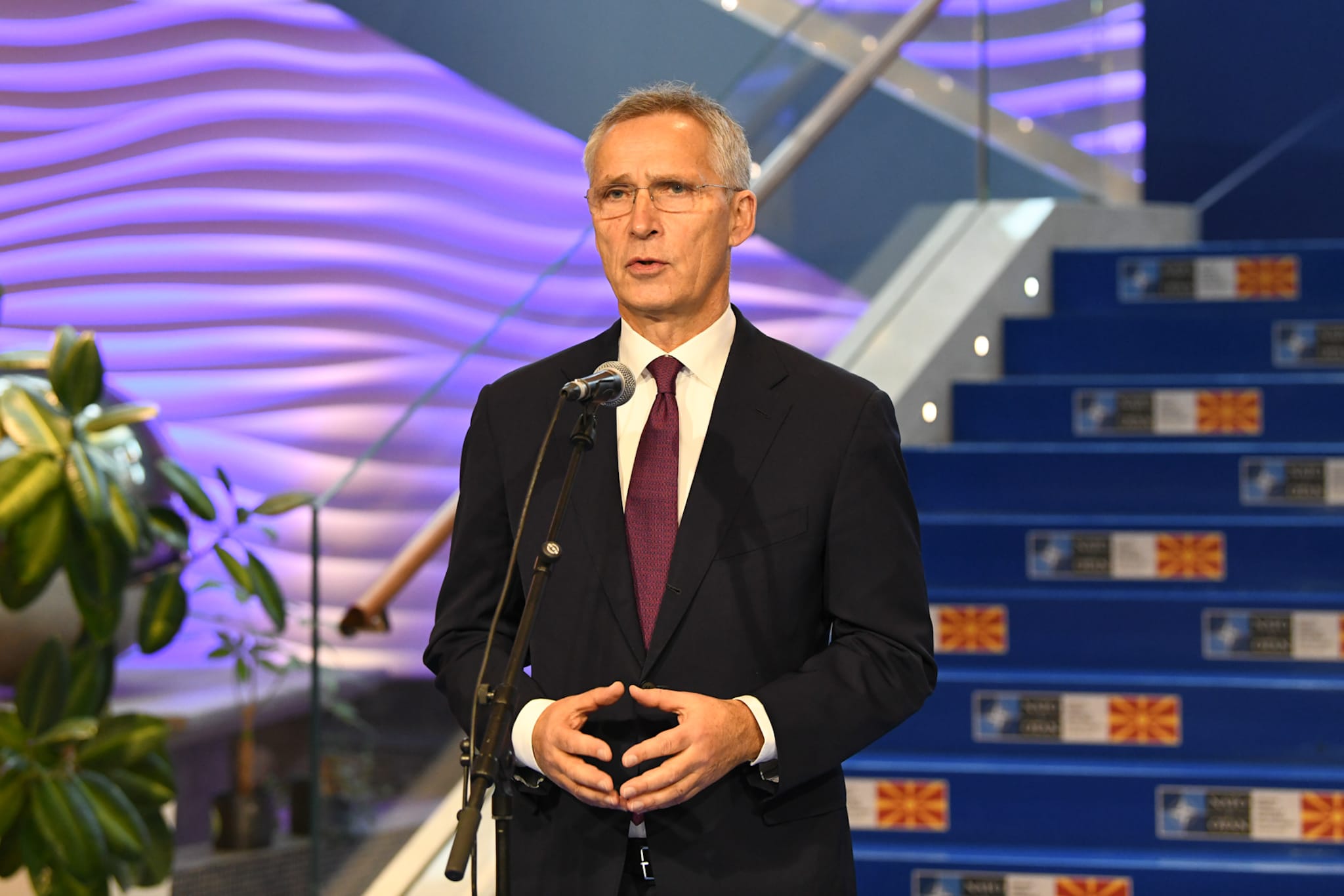
This meeting in Skopje is not coincidental. North Macedonia currently holds the chairmanship of the OSCE, and this week, the OSCE Summit will take place in Skopje. Therefore, in addition to regional issues, the Skopje meeting also focused on the topic of the Balkan countries' relations with Russia, especially since the upcoming Summit will include a delegation from Russia led by Foreign Minister Sergey Lavrov.
Washington has not confirmed Secretary of State Blinken's attendance at the Summit in Skopje, but the State Department announced that on November 25, Blinken would travel to Brussels to participate in a NATO foreign ministers' meeting, where discussions on Ukraine would take place, emphasizing "support for democracy and regional stability in the Western Balkans".
Stoltenberg reiterated that there was no immediate threat from Russia to any NATO member or ally, acknowledging Russian presence but without the capacity for destabilization. Despite this, he emphasized that "NATO is vigilant and carefully monitoring what Russia is doing". He mentioned three centers where NATO was present in the region: with KFOR, based in Sarajevo, and with an office in Belgrade, from where NATO was prepared to "monitor the situation and protect every ally from any danger". Instead, Stoltenberg noted that NATO recognized an increase in tensions in Kosovo. NATO has increased its presence in Kosovo by deploying an additional 1,000 soldiers accompanied by heavy weaponry. Alongside these assurances, another topic was indirectly related to the previously mentioned football match between Israel and Kosovo: Kosovo's NATO membership.
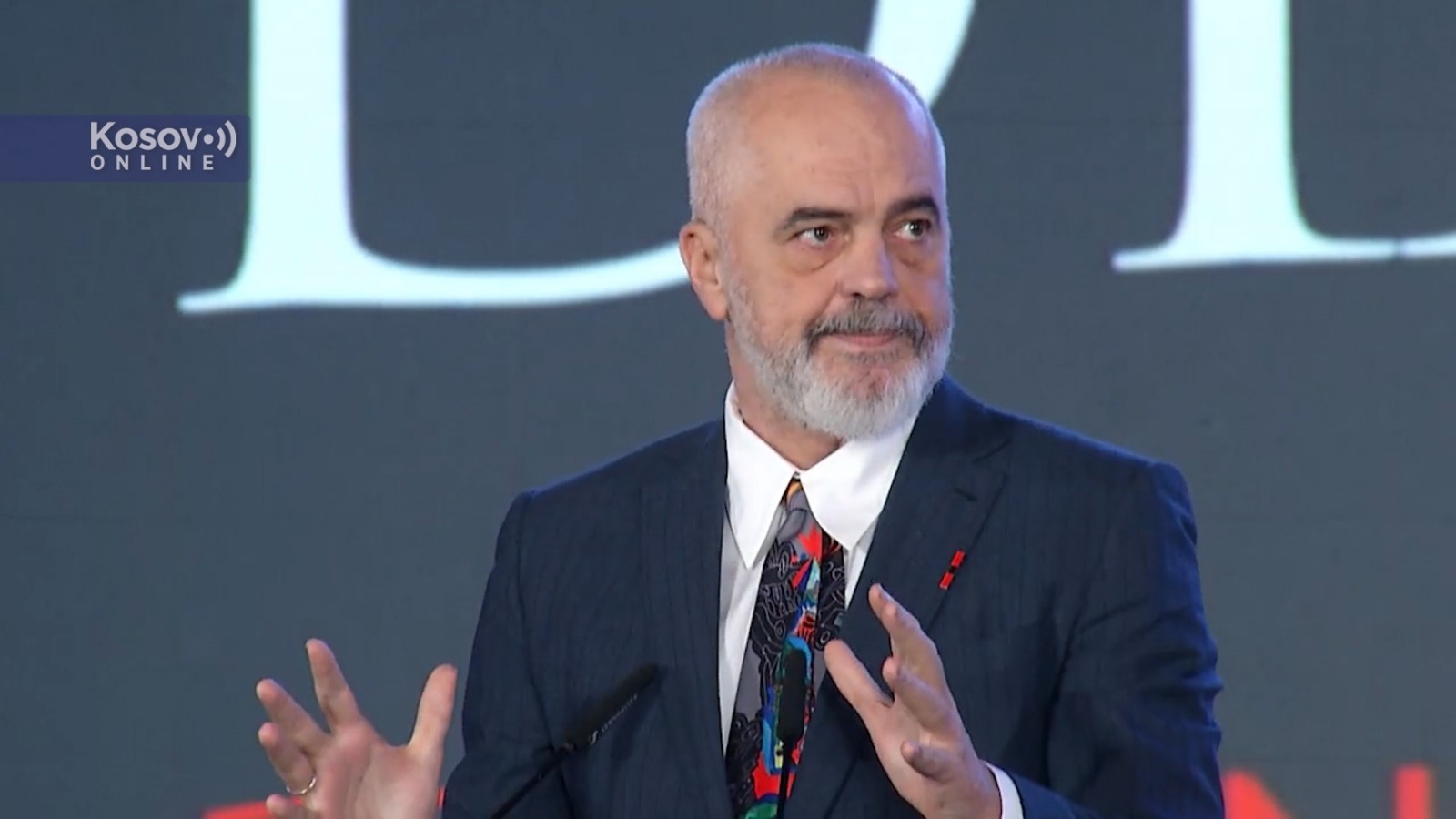
At the end of the meeting, Albanian Prime Minister Edi Rama emphasized that "Kosovo needs to accelerate the processes of integration into NATO", thanking Croatian President Zoran Milanovic "who constantly repeats this". Rama stressed his agreement with the view "that it is absurd to hinder Kosovo in this process". "Kosovo should be recognized by NATO and EU countries", Rama added. He also called on KFOR to be more involved and to secure the border between Kosovo and Serbia with more troops.
According to his statements, the only way to resolve all issues between Pristina and Belgrade is through dialogue, mediated by the EU.
"I believe it is not accidental that NATO Secretary General Jens Stoltenberg emphasized this. It does not represent a direct instrument of NATO but the EU. The only way to address all the issues that require a final solution between Kosovo and Serbia is through dialogue mediated by the EU", Rama said.
Considering its NATO membership, Kosovo began the transformation of the Kosovo Security Forces into a national army as early as 2018. While the United States supported this decision, NATO Secretary General Jens Stoltenberg expressed concern and called this move "untimely". The core issue revolves around one central question: the fact that after Kosovo declared independence, Serbia and four NATO member states did not recognize it. This enduring dispute hinders Kosovo's further integration into NATO or other international forums. The lack of normalization with Serbia and the issue of non-recognition have posed political and legal barriers to Kosovo's relationship with the NATO-commanded Kosovo Force (KFOR) and with NATO itself, including Kosovo's prospects for future membership.
During this tour, Jens Stoltenberg expressed reservations about the actions taken by the Kosovo Security Forces, particularly their arming. Stoltenberg stated that the so-called Kosovo Security Forces did not have NATO support for arming and that the transition of the KSF into an army was not a positive development, explaining that NATO had been against these steps.
"Now we are considering whether to permanently increase the number of soldiers to ensure that this does not get out of control and create a new violent conflict in Kosovo or the broader region", he said.
As early as the beginning of this year, Kosovo Prime Minister Albin Kurti announced that Kosovo would soon apply for NATO membership. However, this has not happened because the most significant obstacle to Kosovo's membership is the fact that four NATO member states have not recognized Kosovo. According to the current rules of the organization, if one NATO member were to propose Kosovo for new membership, it would be impossible, as the four alliance countries do not recognize Kosovo. Slovakia, Spain, Greece, and Romania, all NATO and EU members, have not recognized Kosovo as an independent state.
The criteria for NATO entry are defined by Article 10 of the Washington Agreement, and the decision to admit a new member must be unanimous. The Belgrade-Pristina agreement resulting from the dialogue is seen as the primary precondition that will eliminate obstacles to Kosovo's entry into NATO. It represents a kind of "roadmap", the implementation of which is believed to enable the remaining four countries to recognize Kosovo and thus open the way for its accession to the Alliance.
During their May visit to Pristina, two US senators, Chris Murphy and Gary Peters, stated that Kosovo must implement the agreement with Serbia proposed by the EU and the US if it wants to achieve its goal of becoming a NATO member. Essentially, nothing has changed since then: an agreement with Serbia, based on which the four remaining NATO members will recognize Kosovo, will open the door for Kosovo's NATO membership application. Derek Chollet requested this year that the parties focus on the EU proposal for the normalization of relations between Belgrade and Pristina, "which would be grounded in mutual recognition", as this was their path to realizing "their destiny", which Chollet called the "Euro-Atlantic destiny". This is likely the strongest expression and most direct conviction any politician coming to the Balkans has stated about the future of Belgrade and Pristina. Euro-Atlantic integration, or NATO as fate, stands at the end of the road.
0 comments