
The intersection of Kosovo and Kashmir
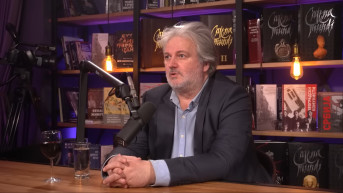
Writing for Kosovo Online: Dragan Bisenic, a journalist
Controversial territories around the world are becoming more dynamic. Synchronously with the issues of Kosovo, Donbas, Crimea, Gaza, and Latin America, changes are also taking place in India. The Indian Supreme Court has affirmed the decision of Prime Minister Narendra Modi's Government from 2019 to revoke the special status of the state of Jammu and Kashmir and set a deadline for local elections to be held there by September 30 of the following year. The only Indian region with a majority Muslim population, Jammu and Kashmir, had been at the center of hostilities between India and Pakistan for more than 75 years. The unanimous decision of a panel of five judges followed more than ten petitions challenging the revocation of special status and the subsequent decision to divide the region into two territories under federal administration – one being Jammu and Kashmir, and the other Ladakh. This allowed for elections to take place in Jammu and Kashmir, which was more closely integrated with India after the Government's decision, in line with the promise of the Bharatiya Janata Party (BJP) led by Prime Minister Modi.
Pakistan categorically rejected the verdict announced by the Indian Supreme Court regarding the status of what it termed as "Indian illegally occupied Jammu Kashmir". Islamabad claims that Jammu and Kashmir are an "internationally recognized dispute that has been on the agenda of the United Nations Security Council for more than seven decades".
Such territories have their own logic and political history that connect them, so they intersect with each other in their ambitions and aspirations. India does not recognize Kosovo partly due to the issue of Kashmir, which is claimed by Pakistan and China. China asserts its claim to Ladakh due to the ongoing dispute over Aksai Chin. The Chinese responded by stating that the 2019 reorganization "will interfere with China's sovereignty".
Kosovo officials are thus seeking recognition from India, claiming that "Kosovo is not Kashmir". In this effort, the Kosovo Government in 2022 supported the opening of a commercial office in New Delhi. India, on the other hand, stated that this was a unilateral move and that there was no plan to recognize Kosovo because of it, nor was it related to India's stance on Kosovo. The spokesperson for the Ministry of External Affairs of India, Arindam Bagchi, issued a statement on this matter, "It is reiterated that our position on Kosovo is well known, and there is no change in it". According to official sources, there is no bilateral element or reciprocity in this issue, as it concerns private individuals who do not have any diplomatic or special status.
Since Kosovo declared independence from Serbia in 2008, India has consistently refused to recognize it as a separate state. It argued that Kosovo had not met three principles necessary for the recognition, "defined territory, properly constituted competent government accepted by the people and having effective control over the areas of governance".
Furthermore, India, "at the request of Serbia", opposed Kosovo's membership in international bodies, including UNESCO, Interpol, the Apostille Convention, the Convention on the Pacific Settlement of International Disputes, and the Egmont Group.
When the Minister of External Affairs, Subrahmanyam Jaishankar, visited Serbia in 2019, he stated that India's non-recognition of Kosovo was "a very principled stand because it relates to supporting the sovereignty and territorial integrity of a country, a friendly country, a country with which we have a longstanding relationship".
This year, the President of the Republic of India, Droupadi Murmu, officially visited Serbia, where discussions took place on overall cooperation in defense, pharmaceuticals, medicine, and other areas.
Although India has not publicly articulated this, New Delhi's stance is colored by the perception that Kosovo could serve as a precedent for Kashmir. As in the case of Kosovo, India has refused to recognize Taiwan in line with its "One China" policy. In 1995, they established representative offices on a reciprocal basis – the Taipei Economic and Cultural Center in India (TECC) in New Delhi and the India-Taipei Association (ITA) in Taipei. Senior diplomats from both sides lead these bodies. While these are not full-fledged missions, they function as de facto embassies, issuing visas and performing consular duties.
In contrast, the Economic Office for Trade of Kosovo in India is not managed by any government official from Kosovo; instead, it is led by a private citizen. In India, experts closely monitoring the evolution of secessionist territories, especially those involving third countries, the US, EU, and NATO, note that the Indian region of Kashmir and the Serbian province of Kosovo and Metohija share similar historical patterns and related issues.
In this regard, they emphasize cultural, historical, and especially religious aspects. It is noted that both regions have experienced centuries of shifting ethnic and religious balances, drastically impacting the religious equilibrium in the region, with Orthodox Christianity in Kosovo and Hinduism in Kashmir being reduced to minorities, even if only considering the part of Kashmir under Indian control today. Indians claim that the beginning of religious changes in Kashmir coincided with a pivotal year for Kosovo, namely 1389 and the Battle of Kosovo.
Similarly, the national balance in Kashmir and the ethnic balance in Kosovo have shifted. Indians who identify as such make up only 15 percent, considering the entire Kashmir, or 30 percent, considering only its part under Indian control.
Both territories enjoyed political autonomy. Kashmir was divided between India, Pakistan (1947), and China (1962). India secured 60 percent of Kashmir on its side after the Indo-Pakistani War in 1947 but lost 25 percent of that to China in the Sino-Indian War in 1962. In 2019, India decided to firmly integrate the part it still controls, revoking the autonomous status of the state of Jammu and Kashmir and integrating it as a union territory directly governed from New Delhi, aiming to ensure proper integration and the future of the region in India. India believes that this move cannot elicit a response similar to those that followed Serbia's actions.
India is a nuclear power and, according to other military potentials, is ranked between 4th and 6th place globally, along with France and the UK. Therefore, it is confident that no foreign power can threaten India's sovereign policy and territorial integrity. India can defend itself against any involvement in the conflict in Kashmir today and will only strengthen its capabilities in the decades to come.
However, the caution and circumspection defining the stance of the United States and major European Union countries toward the Kashmir dispute are typical of the "international community" and its dominant actors' approach to self-determination demands. The often-stated US position on Kashmir was that India and Pakistan should negotiate a bilateral solution to the Kashmir dispute, taking into account the "wishes of the Kashmiris".
Due to the disparity in the strength of the Indian and Serbian states, Kashmir, despite all its similarities to Kosovo and Metohija, will not experience the same fate, at least for the part controlled by India – to be completely separated from its homeland by organizations supported by foreign countries.
Therefore, if the future fate of Kosovo and Metohija hangs by a thread, with its present reduced to political games, economic devastation, and overall despair, the fate of Kashmir controlled by India is likely to be much better: progressive assimilation into Indian society and economic progress due to this renewed assimilation and associated investments, according to Indian experts. However, this does not at all eliminate the dilemma of self-determination that exists from Kosovo to Kashmir.

0 comments