
Messages from the UN Security Council - less political tension, more genuine dialogue

Written for Kosovo Online by Albert Prenkaj
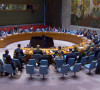
Summarizing the latest session of the UN Security Council, several important points stand out that should be emphasized:
The representative of the United States called on both sides to return to dialogue that ensures a sustainable path toward normalization, instead of political "theater." This time, mutual recognition between Kosovo and Serbia is not emphasized, as it was in the US Congress National Defense Authorization Act for Fiscal Year 2026.
A standing US demand for years has been the abolition of UNMIK, given that Kosovo is no longer in the situation it was in 1999.
According to their position, UNMIK has no significant role in advancing normalization and security in Kosovo. Other agencies exist and are functioning. This was also reiterated by the representative of the United Kingdom, but it was not accepted by the representative of France, while Russia and China even encouraged the continuation of UNMIK’s activities.
France, as a country that recognizes Kosovo, unlike the United States and the United Kingdom, emphasized the importance of UNMIK’s presence until the final completion of the negotiation process.
It is important to mention that the position of the International Court of Justice on Kosovo’s Declaration of Independence was also presented to the Security Council, as an important UN body.
Interesting nuances were observed in the statements of Latvia and Greece. While the representative of Latvia, like many other speakers, called for measures against paramilitary interventions from the territory of Serbia in Banjska (2023), and for the management of the implementation of the Law on Foreigners, the importance of freedom of expression and media freedom was also emphasized.
Greece, as one of the five countries that do not recognize Kosovo, repeatedly referred to bilateral and trilateral levels in the context of encouraging negotiations, which, given the platform of the UN Security Council where state representatives were speaking, carries the connotation of negotiations between equal parties, that is, states.
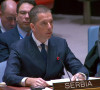
Unlike the Minister of Foreign Affairs of Serbia, Marko Djuric, who remained on Serbia’s already familiar line by presenting reports aimed at discrediting the institutions and authorities of Kosovo, using partial arguments or deliberate projections, the address of Minister Glauk Konjufca can be summarized in several key points: criticism of the "insufficient" reporting by the new head of UNMIK, especially regarding the Banjska case (2023); administrative "clean-up" in three municipalities of the Presevo Valley; four most recent recognitions by Sudan, Kenya, the Bahamas, and Syria, along with the use of this international platform to seek new recognitions from UN, EU, and NATO member states.
An important topic of this Security Council session was also the argumentation regarding the legal connection between the Specialized Chambers and the Assembly of Kosovo, as well as the presence of EULEX through an exchange of letters between Kosovo and the EU. I believe this presentation was necessary for the audience at the Security Council table.
The demand for the abolition of UNMIK, which should be accompanied by a continuous demand for a new resolution to replace Resolution 1244, represents a coordinated position over many years, including previous governments of Kosovo.
What, in my opinion, is missing from Kosovo’s appearances at these sessions is comprehensive reporting from a state perspective, an institutional overview of measures addressing shortcomings or deficiencies regarding the rights of non-majority communities, in order to avoid room for inconsistent interpretations by external actors.
I believe that Kosovo should seriously begin drafting periodic reports addressing issues of human rights and the rights of ethnic and other communities, the functioning of democratic institutions, the judiciary, freedom of expression and media, as well as the rule of law.
Such reports should be submitted to members of the UN Security Council and the UN General Assembly in New York and Geneva, the OSCE, as well as other multilateral, international, and intergovernmental platforms.

0 comments