
Subotic: Changes to the negotiating framework for Serbia would confirm the status of a "blocking chapter"
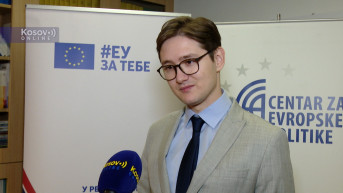
Program Manager and Senior Researcher at the Belgrade Center for European Policy, Strahinja Subotic believes that regardless of expectations for a change in the EU negotiating framework for Serbia, involving the inclusion of the Agreement on the Path to the Normalization of Relations between Serbia and Kosovo from February of this year and its Ohrid annex in Chapter 35, major countries such as Germany and France, as well as other EU countries, will certainly expect the oral agreements made in the dialogue to be implemented.
Subotic stated this to Kosovo Online in response to the decision of the European Council for the European Commission to propose amendments and additions to the criteria of negotiating Chapter 35 within the framework of accession negotiations with Serbia by the end of January, reflecting the obligations arising from the Brussels Agreement of February this year and its Ohrid annex.
"Whether they do it in January, in six months, or a year, the fact is that Belgrade and Pristina have orally committed to implementing the Ohrid Agreement. Everything we see happening in Brussels regarding the negotiating framework and its changes is an internal, political, and technical matter of the European Union. However, in practice, the most important states such as France and Germany will hold us accountable to implement what we have orally committed to", Subotic said.
According to our interlocutor, modifying Chapter 35 in this way would confirm its status as a "blocking chapter".
"If we imagine that the negotiating framework is changed, and the Ohrid Agreement is included in Chapter 35, it would reaffirm the status of a blocking chapter. Even if Serbia aligns its foreign policy with the EU, fulfills all agreements, and resolves the rule of law issue, it still couldn't become an EU member until a legally binding and comprehensive agreement is reached with Pristina. As long as that is the case, our European future remains uncertain", Subotic says.
At the same time, he adds that the Ohrid Agreement actually places the most obligations on the Pristina side.
"They are the ones who need to roll up their sleeves; they are left with forming the CSM, and without that precondition, Belgrade cannot be expected to take other actions. Meanwhile, what Belgrade can do is encourage the Serbs in northern Kosovo to participate in elections. That was one requirement, and the other was to conduct an investigation related to Banjska and prosecute those involved", Subotic says.
At the EU Summit and even before it, he adds, it became clear that the issue of dialogue, or normalization of relations between Belgrade and Pristina, is a crucial question that will impact not only the path of Belgrade and Pristina toward the EU but also the essence of our region's existence in terms of good neighborly relations and the creation of a common European future.
"There was an indication that Hungary was preparing to block the inclusion of the Ohrid Annex in the negotiating framework, so it was postponed until January of next year. It was said to be an urgent matter, and they will address this issue jointly right after the New Year, with the Commission, the EU High Representative, and the EU Council", Subotic says.



0 comments