
Kurti has changed his mind about Decani: The effect of Eskobar's arrival and why the property of the Serbian Orthodox Church is a taboo in Kosovo
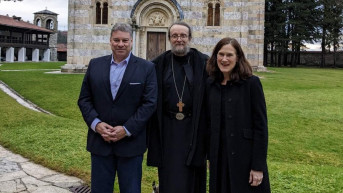
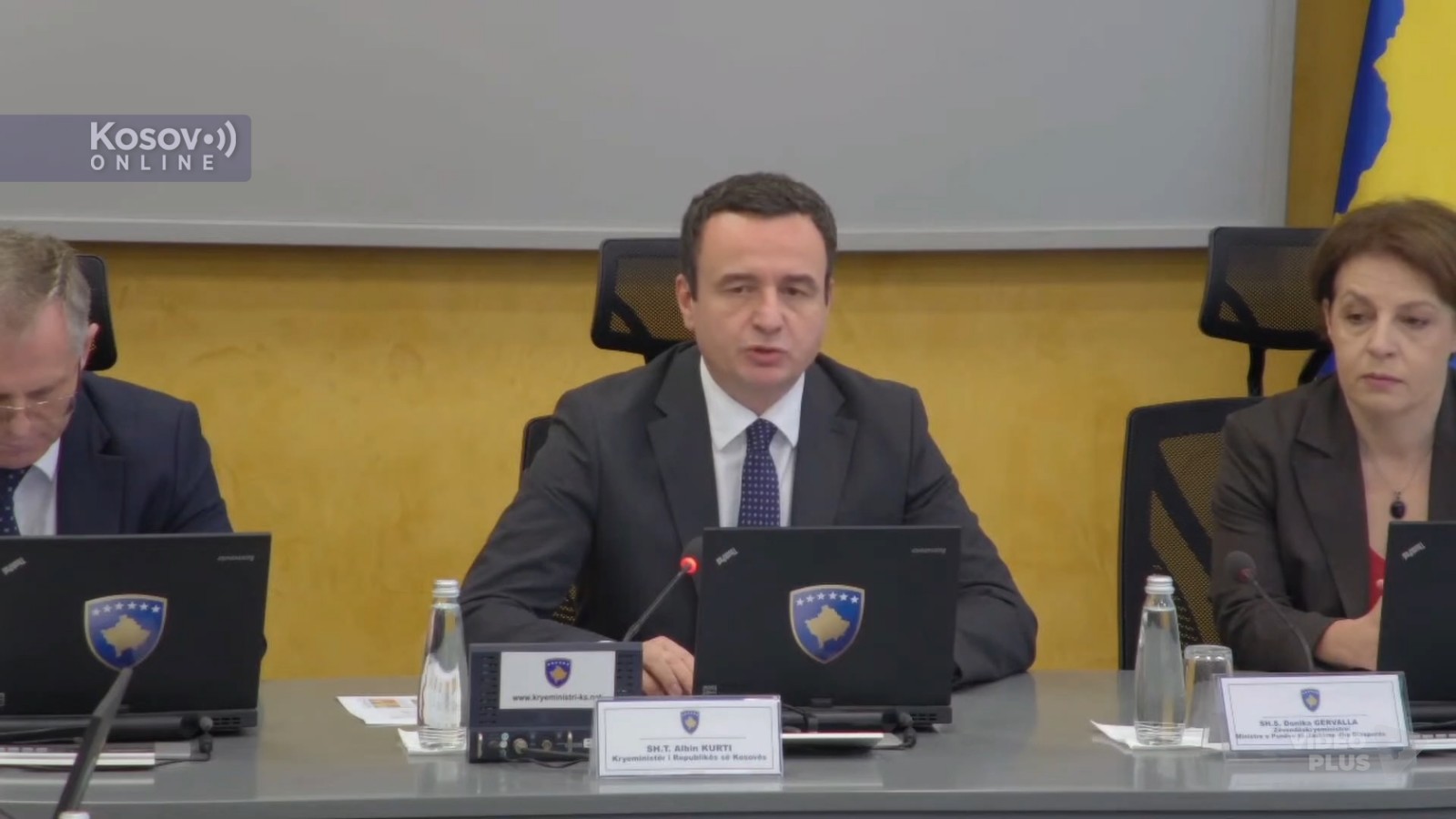
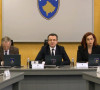
"One of Kosovo's paradoxes is that the local self-government in Decani has completely ignored the decision of the highest legal instance - the Constitutional Court - for eight years. Today's forced decision by the government of Albin Kurti to finally register the awarded 24 hectares to the Visoki Decani Monastery, as a 'price' for Kosovo's possible accession to the Council of Europe, confirmed where that decision had been sitting for the past few years."
Edited by: Milos Garic
"Kosovo will not be able to join the Council of Europe until Albanian political leaders implement the Constitutional Court's decision from 2016 to return 24 hectares of land to the Visoki Decani Monastery. This has been stated several times in the past ten days from the most significant international addresses, and it seems that there is indeed consensus around the mentioned part of Decani's property even in those circles in the West that have so far shown a high level of tolerance towards numerous violations of legal obligations by authorities in Pristina.
Anyone who knows even a little about the thinking and policy of the current Prime Minister Albin Kurti knows that he is persistent in his rigid policy towards any Serbian presence and rights in Kosovo and is absolutely opposed to the realization of the property rights of the Serbian Orthodox Church. However, today's arrival of the Special Envoy of the US State Department, Gabriel Escobar, in Pristina showed that some things can still change.
An old Serbian saying goes - there is always a higher authority. How and to what extent the US Government influenced Kurti's thinking in this case will remain a secret; however, he changed his mind and decided to act on the long-standing decision of the Constitutional Court regarding the return of land to Visoki Decani.
It is interesting that this issue was put on the agenda of the Kosovo Government immediately after the meeting that Gabriel Escobar had this morning in Pristina with President Vjosa Osmani, regarding the abolition of the dinar and the obligation to form the CSM. Therefore, even without Escobar's meeting with Kurti."
In this regard, there is no doubt that abandoning the further blockade of returning land to Visoki Decani is a painful decision for Kurti because, according to many assessments, he was even willing to sacrifice Kosovo's possible accession to the Council of Europe to prevent the monastery's property from "expanding," even if only by 24 adjudicated hectares beyond the current wall and barbed wire. However, he has made a decision that shows he is not "unyielding," and we will see how this will affect his future political career.
Let's return to the main topic here, the property of the Serbian Orthodox Church in Kosovo, and the question of why the Albanian political elite so vehemently refuses to accept some undisputed facts regarding this matter.
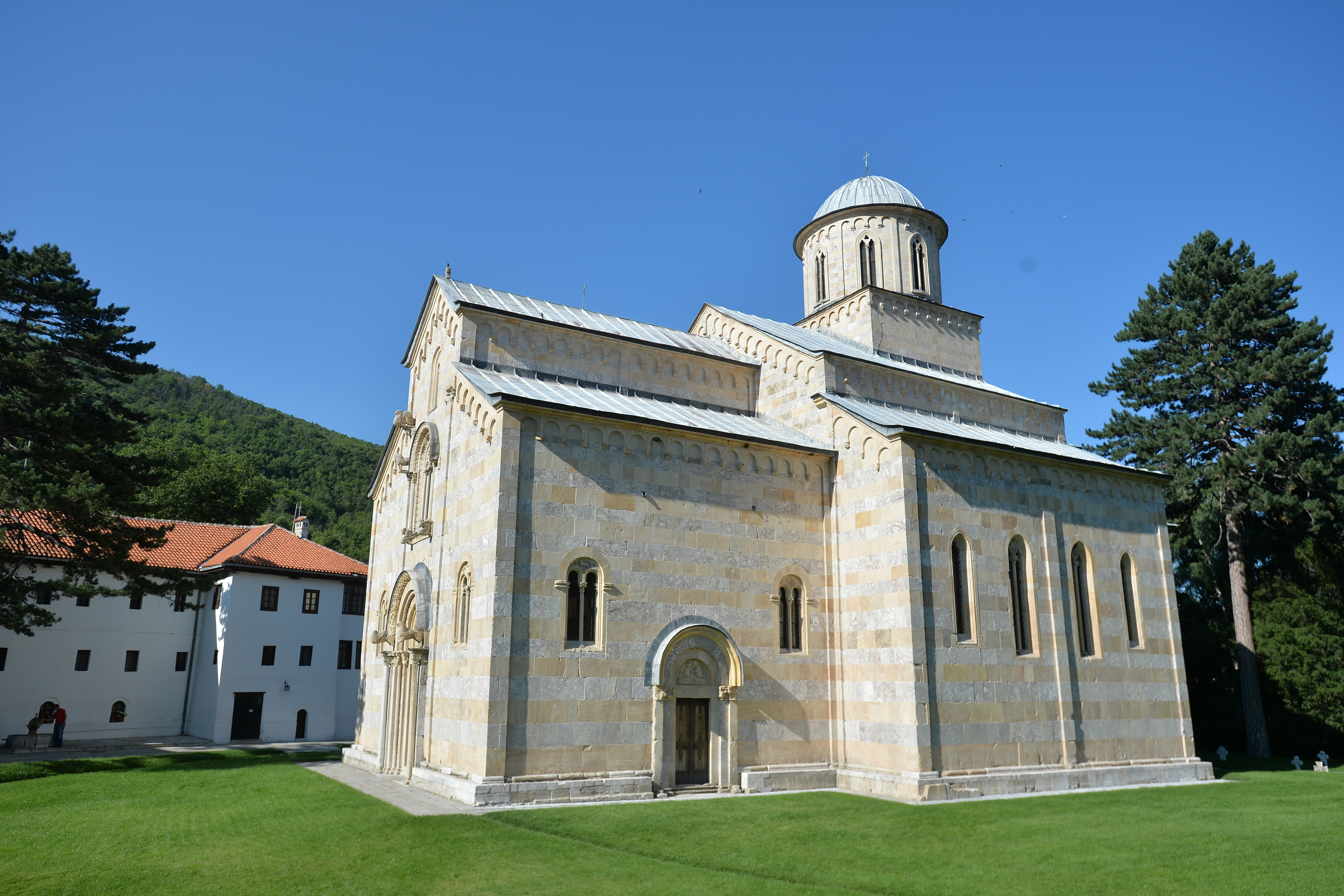
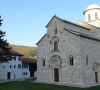
Historical data indicates that the Visoki Decani Monastery once owned hundreds of hectares, almost the entire area where the town of Decani is now located, and where since the summer of 1999, the absolute majority consists of Albanians. It's worth noting that this monastery, which extreme Albanians baselessly claim as a part of Albanian heritage, has been subjected to mortar attacks and planned terrorist attacks over the past two decades, hence it is under the 24-hour protection of KFOR. What would happen if they didn't claim it as theirs?
Local authorities are against
The fate of the Serbian Orthodox Church in Kosovo has dramatically changed over the centuries, from medieval times, through the Serbian and Ottoman empires, to the first and second Yugoslavia, and to the present day. It is highly likely that if he were alive today, Edvard Kardelj would be extremely satisfied with the current fate of the Serbian Orthodox Church in Kosovo. Since 1945, with the establishment of communist rule, agrarian reforms, and the laws enacted at that time, numerous Serbian religious sites in Kosovo have had vast properties, especially fertile land and forests, confiscated from the Serbian Orthodox Church.
In Kosovo today, mentioning the property of the Serbian Orthodox Church is a taboo among Albanian politicians. For example, the mayor of Decani, Bashkim Ramosaj, has repeatedly stated that he will never respect the court decision in Pristina to return the confiscated land to the monastery. And, one should believe him. Therefore, we will see how the decision of Kurti's government today will be implemented in practice. And whether the monks in Decani will be allowed to freely use the monastery's land. Unfortunately, it would not be the first time that some decisions of the Kosovo authorities are not implemented in practice if they are in the interest of the Serbian side.
"The Eparchy of Raska and Prizren, nor the Visoki Decani Monastery, have been contacted by any Kosovo institutions regarding the execution of the decision of the Constitutional Court of Kosovo from 2016 regarding the monastery's land. In recent years, we have witnessed several statements from the highest Kosovo officials claiming that the Constitutional Court's decision regarding the Decani Monastery land was allegedly not legally made and cannot be executed, suggesting that some form of dialogue with the Church should be conducted," the Eparchy stated for Kosovo Online a few days ago.
While in Belgrade, invited experts on church matters avoid speaking on this topic and leave it to the competent authorities within the Serbian Orthodox Church to fight and express their opinions, it is entirely clear that the issue of Decani land is just a small part of what has been usurped and seized in Kosovo.
Historian Aleksandar Gudzic from Gracanica points out the vast and valuable property that was seized from Serbian monasteries.
"I don't have precise data on the total amount of land confiscated from the Serbian Orthodox Church after World War II, but I know that on Vidovdan (St. Vitus Day) in 1947, more than 1,000 hectares of land – forests, meadows, arable land – were seized from the Visoki Decani and Gracanica monasteries in a single day. Decani and Gracanica overnight became impoverished monasteries dependent on the alms of the faithful," Gudzic noted.
When asked why Albanian officials in Kosovo refused to return property to the Serbian Orthodox Church, Gudzic tells Kosovo Online that it is the best indicator of the current situation in Kosovo.
"They return some things only under pressure. Until a few years ago, the Anti-Corruption Agency in Pristina unlawfully and without compensation used the church premises in Pristina, and only under pressure from domestic and international public opinion did it agree to pay rent to the Eparchy of Raska and Prizren. However, the fact is that Kosovo institutions, like Serbia in the 1990s, have not returned property seized by communist authorities after World War II to the church or individuals. Today's political elites of Kosovo Albanians show no readiness or political will to return confiscated property, and the most well-known example is the Visoki Decani Monastery, where the local government refuses to implement the Constitutional Court's judgment and return 24 hectares of land to the monastery. This is the Kosovo paradox in which local self-government is stronger than the highest legal instance; all this speaks to the kind of Kosovo we live in today," Gudzic explains.
In Pristina, they shy away from the truth
Writer and journalist Zivojin Rakocevic from Gracanica points out that restitution will have to happen in Kosovo.
"The return and registration in the cadastre of 24 hectares of land to the Visoki Decani Monastery is just a fraction - almost a speck - of the property and buildings that should be returned to the Serbian Orthodox Church in Kosovo and Metohija. Every time this land is mentioned, in front of us are fields, forests, pastures, buildings, guesthouses, and commercial spaces in cities that were seized by the communists and legalized through the last usurpation of the Kosovo system. Restitution will surely happen, and the authorities know very well that the return of land to Visoki Decani is a kind of prelude to restitution. Just imagine how much the poor Devic Monastery needs to have returned what was taken from it. Because of all this, the authorities strive to defend themselves from the truth and the fact that private property of the Serbian Orthodox Church, acquired over more than 700 years, must be returned to its rightful owners," Zivojin Rakocevic emphasized for Kosovo Online.
Jovana Radosavljevic, the Director of the New Social Initiative from North Mitrovica, reminds us that the decision of the Constitutional Court of Kosovo from 2016 regarding the Visoki Decani Monastery has been waiting for enforcement for eight years, although it is a binding and final decision.
"The most common excuses we have heard from Kosovo officials are that the Constitutional Court's decision on the land of the Decani Monastery was allegedly not legally made and cannot be executed and that some kind of dialogue with the Church should be held because it is some 'Milosevic's decision.' This refusal to implement the decision of the highest authority in Kosovo is not unique; it is also reflected in, among other things, the decision of the Constitutional Court on the Community of Serb-majority Municipalities. Alongside a series of decisions of the current Kosovo Government made and implemented unilaterally, and not in the spirit of dialogue or a desire for meaningful integration of the Serbs, this only deepens the distrust between Kosovo Serbs and Kosovo institutions, as well as the gap between the Serbian and Albanian communities in Kosovo," Jovana Radosavljevic points out.
She emphasizes that eight years later, the pressure on the authorities in Kosovo to implement the court decision is "stronger than ever."
"This is especially significant because the implementation of this decision is seen as one of the conditions for Kosovo's admission to the Council of Europe. Given the previous practice, as well as the narrative surrounding the Serbian Orthodox Church in Kosovo, it was difficult to achieve the implementation of the decision of the Constitutional Court of Kosovo, as well as any constructive progress on other issues such as the decision of the Central Bank of Kosovo or the verbal decision to ban imports from Serbia. Implementing this decision would be perceived as a concession to Serbia, and the ruling party in Kosovo does not want to allow this, especially not in an election year," Radosavljevic concludes.
0 comments