
Miljkovic: My motivation in the legal profession is justice and defiance
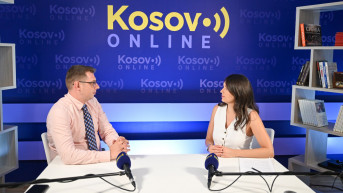
The job of a lawyer in Kosovo has changed significantly in recent years, and our fight is no longer just legal, it is political too. Nine years ago, there was a bank robbery in North Mitrovica, and from 2016 to 2020, it was the most talked-about case. Today, the focus is on terrorism, war crimes, espionage, and serious criminal offenses. We have reached a point where a bank robbery is seen as trivial, like illegal logging, and no longer even makes the news. Now, almost all cases are handled by the Special Court, where I spend most of my time, even though it would be more natural for me to work in the Mitrovica court. Civil lawsuits used to make up a big part of our work, but now no one has time for those, we are all dealing with urgent, most difficult cases, lawyer Predrag Miljkovic said on the KOntext.
Miljkovic has been practicing law for six years and has traveled tens of thousands of kilometers for legal disputes across Kosovo. His clients are mostly Serbs, but he has also represented Albanians.
“In my opinion, some hired me because the judge or prosecutor in their case was Serbian, so they probably thought they’d have a better chance. I have represented Albanians in civil cases in Klina, Istok, and Mitrovica. Still, there were a few cases where I even asked myself why they chose me,” Miljkovic said.
He believes there aren’t enough lawyers to handle the growing number of legal proceedings against Serbs.
“I often joke that I feel like an emergency service, people call me at all hours, day and night, because of arrests in Pristina, Metohija, or at border crossings. We are constantly on the move. There are very few Serbian lawyers in Kosovo, maybe around fifteen, and even if there were twice as many, it still wouldn’t be enough,” he said.
Miljkovic has excellent cooperation with his Albanian colleagues and recalls the positive reception he received at the court in Lipljan, where he was a legal intern.
“I chose Lipljan because I grew up there, and my mother worked there until the war. I was the first, and so far the only, Serb in that court after 1999, but I was the top-rated intern out of about twenty of us at the time,” he recalled.
He also earned high marks for his language skills – in addition to Serbian, he speaks English and Albanian. He learned Albanian in three years, as he says, out of defiance.
“I learned most of the language in court, working on document issuance and having daily contact with people. By the end of my internship, I was even writing rulings in Albanian. Today, I conduct entire civil proceedings in Albanian. In some cases, it is even easier for me to question witnesses in Albanian than to rely on a translator,” Miljkovic said.
He says his work is far more complex and difficult than that of his colleagues in central Serbia, mainly because most of the cases are politically motivated. He cites the example of Srdjan Lazovic, a member of the Gendarmerie from Kraljevo who was arrested last year for alleged war crimes.
“He was arrested first, and only afterward was an investigation launched. It is a classic case of mistaken identity. The prosecution has a photo of a man who looks nothing like Srdjan, it is clearly not him. But all the witnesses insist it is. For that case, I hired two expert witnesses, one from France, one from Italy, and their conclusion was that there are at least eight morphological differences between the two individuals that cannot change with age or weight. Yet, the prosecutor rejected the findings, and the case is still ongoing,” Miljkovic explained.
He considers his most important case to be the trial of Milun Milenkovic and three other Serbs accused of a terrorist attack in December 2022. Awaiting the verdict at the end of July, he notes that the defense has dismantled all of the prosecution’s evidence.
Although the goal of every lawyer is an acquittal, Miljkovic believes that, under the circumstances he and his colleagues work in, achieving the minimum possible sentence and shortest possible detention already counts as a success.
You can watch the full interview with Predrag Miljkovic and Dragana Biberovic in the video segment.



0 comments