
"Przino Government" - Albanians are writing history
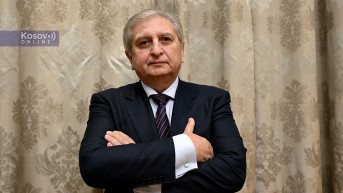
Writing for Kosovo Online: Zeljko Sain, Politika’s special correspondent from Skopje
While the path to lasting world peace remains hazy, this calamity has also struck the political scene of North Macedonia, as the government and the opposition cannot agree on the course that leads the country toward a brighter future. Indeed, storms on the path to the prosperity of this country, where Eurointegration is the primary strategic goal, are also created by the European Union itself, which continuously imposes new demands for the inclusion of this state under its wing.
Not only do the government and opposition of North Macedonia have different views on the steps the country should take towards a brighter future, but conflicts also arise within the government itself, among the coalition partners Social Democratic Union of Macedonia and DUI. Social Democratic Union of Macedonia is, as a reminder, the Macedonian left-wing party, while DUI is the largest Albanian party, which has been in power for more than a decade, today with Social Democratic Union of Macedonia, and before that with VMRO-DPMNE, now the largest opposition party.
European integration is the primary strategic goal, for which this country has already met not-so-pleasant EU conditions—changing the constitution and the name of the country. Now, it is struggling to fulfill a new condition—another change in the constitution, demanded by Bulgaria, which is strongly opposed by the largest opposition party, whose voice is crucial for amending the country's highest legal document. However, this issue, at least seemingly, takes a back seat as there is a political struggle for power in the lead-up to the presidential and parliamentary elections. The presidential elections will be held at the end of April, in the regular term, while the parliamentary elections will be slightly earlier, but then, in the second round, they will be held together on May 8.
For Albanian parties, both in power and in the opposition, this is a very significant moment, as the Prime Minister of the 'Przino Government' will be elected from their ranks, and they will hold this position for at least one hundred days. For all Albanians in North Macedonia, and certainly, for the Albanians living in the neighboring regions, this will be a historic step towards realizing the vision that individuals of the Albanian population should hold the state positions of the President of the Assembly, the Government, and the country. It will be an impressive sight when prime ministers from states where all Albanians reside meet in Skopje, Tirana, or Pristina and speak the Albanian language during official visits. However, all this would not be so tragic if the idea of creating a 'Greater Albania' had not found its reincarnation when Kurti was welcomed in Tetovo in North Macedonia with the Albanian anthem, flag, and the map of 'Greater Albania'. He was proclaimed the President of all Albanians, becoming the successor to Adem Demaci and his vision of the unification of all Albanians.
The international community not only did not react to Kurti's 'inauguration', but in North Macedonia, this incident was more or less overlooked, probably due to the upcoming elections or the anticipated constitutional changes that would finally open the doors of the European Union to the country. However, the Macedonian Prime Minister did not miss the opportunity to criticize Kurti in Tirana, at the regional summit of prime ministers, using a very understandable 'diplomatic' language to condemn his unconstitutional and inappropriate behavior during his visit to North Macedonia. Although it was emphasized that Kurti was on an unofficial visit to Skopje, he is still considered the Prime Minister of the independent state of Kosovo for North Macedonia, as this country, along with Montenegro, recognized the independence of Kosovo.
However difficult it may be to forget this event, let's return to the current topic. The Albanian party is in a position to make history by appointing Talat Xhaferi, the current President of the Assembly, as the first Prime Minister of Albanian descent in January. Xhaferi is one of the most experienced politicians on the Macedonian political scene, leaving his mark on both the political and Albanian history in state functions in North Macedonia. It is not ruled out that we might see him in the role of the President of the country in the next elections, considering the words of the spokesperson of the parliamentary party DUI, Bujar Osmani, who is also the Minister of Foreign Affairs. Osmani emphasized the vision of Ali Ahmeti, the leader of the DUI party, that the next position for the Albanian should be the President of the Republic of North Macedonia.
The question remains open whether VMRO-DPMNE will join the "Przino Government" and propose a Minister of Internal Affairs from its ranks, even though, according to the law, it is obliged to do so. This is because the party advocates the position that it does not want to enter into a coalition or a new government with members of the DUI party due to their involvement in criminal activities. It is worth noting that this largest opposition party did not allow the change of the Constitution of North Macedonia because Bulgaria imposed the change by dictation. If they remain consistent with their stance this time, the "Przino Government" would be considered illegal. Such behavior by the opposition, as expected, faces sharp criticism from the government, which emphasizes that the state is stagnating in development due to the actions of VMRO-DPMNE, and only a changed stance by the opposition in parliament can illuminate the country's path toward Eurointegration processes.
However, despite the promise made to the Western Balkan countries that, if they meet all the conditions, they will be a part of the European family by 2030, it is important not to forget the fact that the EU itself and its member states are hindering the enlargement of the Union to the Western Balkan countries. Initially, Greece blocked Macedonia's Eurointegration path, and now Bulgaria is doing the same. Greece is preparing to block Albania, and there is also the possibility of a blockade against Serbia, both from its neighbors and from Europeans, as Serbia does not align its foreign policy with the EU's policy.
In the complex military-political relationships, where even EU members do not agree with each other – Romania, Slovakia, Spain, Greece, and Cyprus have not aligned their policies with other EU members regarding the recognition of Kosovo; Hungary disagrees with the EU's policy on the Ukrainian issue – it is not surprising that there is no unified stance on the accession of Western Balkan countries to the EU. Let's not forget the fact that Lavrov pointed out in Skopje, at the 30th OSCE Ministerial Council meeting, that serious discussions are taking place about new territorial integrations. Whatever that may imply, changes in the future are very possible, especially if it is the price for peace, primarily in Europe.

comments