
Somaliland – The Resettlement of Palestinians and the Challenges of International Recognition of Independence (4)

By Habib al Hadi for Kosovo Online
Amid reports that Prime Minister Benjamin Netanyahu’s government is in contact with at least four countries to explore the forced transfer of Palestinians, Israel’s Channel 12 recently reported that “progress has been made” in talks with Somaliland on this issue.
Arab and African Solidarity: The Political Risk of Betraying Palestine
On September 2, U.S. representatives Chris Smith and John Moolenaar also wrote a letter to Secretary of State Mark Rubio, calling for Somaliland to be removed from his travel ban list for Somalia, citing Hargeisa as a strategic partner in containing China, engaging actively in supporting U.S. interests, as well as “strengthening ties with Israel through its strong support for the Abraham Accords.”
“Pro-Israel networks are embedded in the same Washington ecosystem as the hawks on Red Sea security issues and skeptics of China, and you can see some sponsors explicitly pairing recognition of Somaliland with closer Israeli ties and anti-China rhetoric. Ted’s August letter calling for recognition is a clear example of this framework,” analyst Norman said. However, if the Trump administration were to recognize Somaliland, it would lead to catastrophic consequences in Somalia and beyond, he argued. “It would risk turning a smoldering flame into an open fire,” Norman warned.
“This so-called ‘resettlement plan’ is part of a broader architecture of power that stretches far beyond the interests of U.S. and Somaliland officials,” emphasized Samar Al-Bulushi, Associate Professor of Anthropology at the University of California, Irvine, who said that more foreign alliances in the region could fuel political instability.
For Al-Bulushi, the alleged agreement on the table speaks more to the region’s lack of global power than to its rising influence.
“The very act of striking such an agreement with the U.S. and Israel reflects the enduring asymmetries of power between African leaders and global powers,” she said. “It symbolizes the lack of independence of Somaliland’s leaders – ironically, at the very moment they are seeking recognition as a sovereign state.”
The political significance of Palestine in the Arab and African spheres cannot be overstated. For decades, the Palestinian cause has been a rallying point of solidarity among Arab states, shaping much of their foreign policy and regional alliances. The idea of Palestinian self-determination resonates deeply in neighboring regions, especially given the historical and religious context surrounding the Israeli-Palestinian conflict. For Somaliland, which shares cultural, religious, and historical ties with many Arab countries, supporting an initiative seen as harmful to Palestinian interests carries profound moral and political risks.
The question, therefore, becomes not only one of economic and diplomatic gains or losses, but also of moral alignment. Somaliland’s decision is not just about siding with one powerful ally over another; it is about balancing its moral obligations, economic interests, and long-term aspirations for recognition.
The Arab world’s commitment to the Palestinian cause is not merely a matter of foreign policy, but an integral part of its political identity. The Gulf states have taken clear positions on this issue, often using their political and economic influence to shape international opinion on Palestine. Somaliland’s cooperation with Israel would risk not only the loss of key economic ties, but also the alienation of its Arab allies, many of whom have been critical in supporting its political stability. Moreover, the moral optics of endorsing a plan that could displace already displaced people from a conflict-affected region would severely undermine Somaliland’s image in neighboring regions, where the issue of Palestinian rights remains a powerful and unifying cause.
Among the many analyses, it has been suggested that one regional factor could prove decisive: the United Arab Emirates (UAE). Undoubtedly, the UAE is a key partner in Somaliland. The UAE has made significant investments in the region. Its state-owned logistics giant DP World manages and expands the Port of Berbera, turning it into a major regional hub. That deep economic and political influence positions the UAE as a potentially powerful mediator for any such ideas and plans.
If the UAE were to withdraw its support or redirect its investments elsewhere in the Horn of Africa, Somaliland’s already fragile economic stability could be deeply undermined. The UAE, a key investor in the development of the Port of Berbera, could also reconsider its involvement, potentially withdrawing or diverting financing to other regions in Africa, thereby threatening the growth of one of Somaliland’s most important infrastructure assets.
Abu Dhabi has been a crucial supporter of Somaliland’s bid for recognition and its ties with Israel. This could help mediate negotiations. Yet while the UAE has avoided harsh condemnation of Israel’s war, it has backed Egypt’s plan to rebuild Gaza – one that directly contradicts Trump’s displacement strategy.
For the United States, closer ties with Somaliland could counter China’s growing influence, including its naval base in nearby Djibouti. Israel, meanwhile, would secure a diplomatic and potentially security foothold near the Red Sea.
The idea of permanently removing Palestinians from Gaza has met with sharp condemnation from the United Nations and Arab states, which argue that it would constitute ethnic cleansing and a violation of international law.
The Fourth Geneva Convention prohibits individual or mass forced transfers from occupied territory. UN officials have repeatedly stressed the right of Palestinians to remain in their homeland and to return if displaced.
Publicly, the UAE has supported the Palestinian cause and joined other Arab states in rejecting any plan for the permanent displacement of Gaza’s residents. Behind the scenes, however, it is claimed that Abu Dhabi’s back-channel diplomacy contradicts its public stance, using the crisis to reshape regional relations.
The report concludes that the proposal is not a humanitarian initiative, but a “geopolitical gambit” using displaced persons as “currency” to achieve diplomatic and military goals. The governments of the UAE, Israel, the United States, and Somaliland have not publicly responded to these specific allegations.
“The UAE is widely seen as a key advocate of Somaliland’s international recognition as it seeks control over trade routes. Berbera is the country’s main seaport on the Gulf of Aden and a major attraction for foreign powers, including the United Arab Emirates.”
Abu Dhabi had previously invested in neighboring Djibouti in the hope of developing ports there, but is currently involved in a bitter dispute. Officials in Djibouti accuse the UAE of attempting to influence its internal politics through Emirati development projects in the country. The Gulf state’s conduct was described in Djibouti as “covert colonialism.”
All this was being speculated before Israel’s attack on Qatar, the consequences of which led to the construction of a new geopolitical architecture in the Gulf that has made the realization of such scenarios extremely difficult – or, more accurately, entirely impossible – even assuming they were ever realistic. The UAE is preparing to join Qatar in an agreement between Saudi Arabia and Pakistan. Israel has decided to withdraw its diplomatic personnel from Abu Dhabi, and Abu Dhabi–Tel Aviv relations are severely strained. Thus, such speculation has become irrelevant, raising the question of how valuable it still is for the United States.
Omar Mahmoud, a researcher at the International Crisis Group focusing on Somalia, argues that Somaliland has limited influence on Trump and American policy.
“Somaliland will have to offer a sufficiently good deal that Trump sees as clearly in the U.S. interest,” Mahmoud says.
The U.S. might promote the resettlement of Palestinians as part of any deal, but that alone would likely not be enough, and it would also be politically incendiary. Moreover, Hargeisa itself may not be sufficient for a president wary of foreign entanglements, as the U.S. can still access port facilities through other arrangements without granting recognition.
According to Faisal Roble, a prominent Horn of Africa analyst, “If the focus is on U.S. interests, Washington can leverage Bosaso, located on the Indian Ocean, offering comparable strategic advantages to Berbera.”
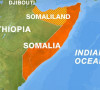
Somaliland also faces a particular threat of encroachment from the Mogadishu government. Over the years, Somaliland’s total land area has shrunk, and the unrecognized state has been reduced to an enclave. Recently, the Somali federal government recognized the provinces of Sool and Sanaag, long considered part of Somaliland, as new regional states incorporated into a unified Somalia.
Domestic Considerations: The Role of Public Opinion
While the Somaliland government conducts these high-stakes international negotiations, domestic public opinion also plays a critical role. Nearly 80 percent of Somaliland’s population identifies as Muslim, and their views on the Gaza issue are deeply shaped by religious and humanitarian concerns. In recent weeks, social media platforms and public forums in Somaliland have been filled with calls for solidarity with the Palestinian people. The population overwhelmingly supports Palestine, and many see any involvement in foreign powers’ plan as a betrayal of both religious and national values.
The potential for mass public protests is real. Public opinion is a powerful force in Somaliland, and any decision that alienates the majority could lead to domestic unrest. The country’s fragile political stability largely depends on the unity of its diverse clans and ethnic groups, and any move perceived as politically or morally wrong could jeopardize that unity.
(To be continued tomorrow)

0 comments