
Summary of the Week 85
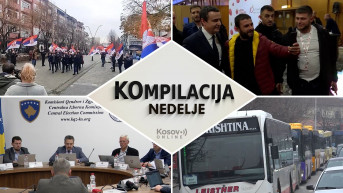
What lies behind easy promises, loud solutions, and seemingly good ideas? Everything that appears simple during a campaign becomes complicated after the elections, when solutions and accountability come due. In this week’s compilation, we revisit what is hidden behind those “first impressions.”
Although nothing seems to change on the surface, there are those who have worked tirelessly all year. The more elections there are, the more work they have: confirming, adding up, redrawing, prohibiting.
“Before the parliamentary elections in February, we had a certain number of Albanian voters,” recalls historian Aleksandar Gudzic.
“That number increased ahead of the local elections, and now, ahead of the repeated parliamentary elections, it has decreased again,” he adds.
Both the increasing and decreasing appear simple and consistent with the desired tactics. Yet, as we saw this week during the CEC sessions, even those responsible for these tasks are overwhelmed by elections.
“The entire process, and the entire voter register in Kosovo and Metohija, is unrealistic,” analyst Nikola Vujinovic tells Kosovo Online.
Many decisions that at first glance seemed well thought out were shocking and unrealistic the first time they occurred. Then they became confusing. And now, the refusal to certify the Serb List surprises no one.
“The problem,” explains political scientist Ognjen Gogić, “is that no one bears any consequences. No one has been held accountable—legally or politically—and this is already the third time it’s happening.”
Politicians rely on short public memory and the absence of accountability. However, analysts warn that the tactic of “looking good during the campaign, disappointing in practice” no longer works.
“When you go asking for votes, you must make commitments. You can lie once, but the second time you can’t lie to them anymore,” says professor Nexhmedin Spahiu.
Both voters and the international audience now demand answers and solutions. And they will not accept, they say, ideas that sound good in theory but are unworkable in practice.
“We don’t know when we will have a new government,” says political analyst Shkelzen Maliqi.
“This entire year has passed in these tricks, games, and delays,” Maliqi adds.
Some long-postponed tasks were finally set in motion this week. New goals and deadlines were introduced—especially in the northern municipalities. Some problems, at least on the surface, were resolved. And some buses have finally set off toward their intended destinations.



0 comments