
Summary of the Week 86
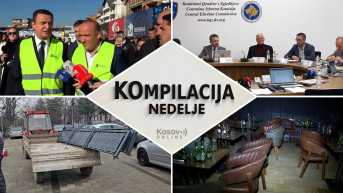
This year in Kosovo, virtually every week has been a pre-election week. In the next one, ahead of new elections, we will officially enter yet another campaign. Whose New Year’s wishes align with electoral ambitions, and who no longer expects anything—either from elections or from the New Year?
It is hard to believe, but the campaign in Kosovo has not yet officially begun. Choosing the right audience to address may be less important than dealing with the audience the candidates have already alienated. Analysts point to this, recalling the stumbling block that has marked Kosovo–U.S. relations.
“Falling out with such an actor cannot result in a good electoral outcome,” says Petar Ivic of the Pupin Initiative.
There is still time to correct certain decisions, such as those of the Central Election Commission. There is somewhat less political will.
Older voters have had many opportunities this year to listen to promises—to believe them or to reject them. Those who have not yet voted, at least in theory, have not yet had time to be disappointed.
“What worries me is that young people have lost even the little trust they had in the process and have realized that democracy is not what they imagined,” says Dušan Borisavljevic of the Youth Center Gracanica, sharing his impressions from practice.
“In fact,” adds political scientist Ognjen Gogic, “for young people the biggest concern is how to leave Kosovo.”
Those who stay—disappointed or not—will sort through offers and promises in the coming weeks: which foundations will not shift from the first stone, which victories are realistic, and which moves are already worn out.
“Each side will want to appear more Albanian than the one currently in power,” predicts campaign messaging Petar Curcic of the Institute for European Studies.
While politicians must be cautious ahead of elections because every move is scored, some others do not have to be. When playing to their own audience, they can afford to alienate the opposing one. What such “disagreement” looks like in practice is illustrated by Nikola Radomirovic, the owner of a venue in North Mitrovica that was closed after an inspection.
“This was direct damage caused by the inspector, who threatened us that evening that we would be shut down and not allowed to operate for a long time,” Radomirovic says.
The material damage inflicted is difficult to compensate. Human relations are damaged—perhaps irreversibly. And ramps and physical barriers, such as those in Leposavic, although they once seemed the hardest to remove, in the end turn out to be the easiest to move—after just a few years.



0 comments