
Turbo-folk: connecting the East and the West, Serbian-style
Written for Kosovo Online by Srdjan Garcevic, founder of The Nutshell Times
This December brought an end to Taylor Swift's generation-defining Eras tour. Due to its global span and economic and cultural impact, the tour was incredible even for non-Swifties. Not only was this the highest-grossing music tour in history - it made Swift the first billionaire who earned her money just from music - but it also had a substantial positive impact on the economies of the cities it visited. The cultural and economic significance was so significant that politicians from all over the world - from Canada to Taiwan - were competing to have her perform in their country. Swift even caused a regional scandal in Southeast Asia as Singapore's neighbors accused the island state of underhand dealings to have Swift have it as the only stop in their region. The closest that Swift was supposed to come to the Balkans, despite Hungary's attempts, was Vienna. However, an Islamist ethnic Albanian youth caused even those to be cancelled.
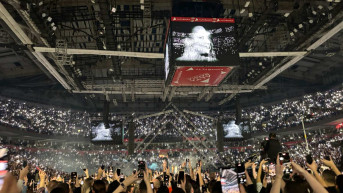
Around the same time that Swift was spreading her version of Americana throughout the world, her local equivalent, Aleksandra Prijović, was making history in the region with her "Od Istoka do Zapada" ("From the East to the West") tour, bringing the best of the Serbian turbo-folk to the world. While incomparable to Swift, the total attendance was significant for the region - over half a million - and the tour made history regarding the number of sold-out mega venues like Belgrade and Zagreb Arenas. During her final concert in Belgrade on 22 December, Prijović proudly displayed all her tour stops: from Skopje to Chicago via Zurich, Vienna, Munich, and other places with a sizable Yugoslav diaspora.
However, more than just the numbers, Prijović's tour was a testament that turbo-folk remains the most cohesive cultural product in the Balkans and beyond. Prijović, a Sombor native who spent her youth in Beli Manastir across the Danube in Croatia, brought together Serbia's queer Eurovision sensation Marija Šerifović, Montenegrin crooner Aco Pejović and Croatian eurodance diva Vanna, all keeping the packed Belgrade arena cheering.
Prijović also confirmed that turbo-folk is the most profitable traditional cultural product from Serbia, despite the decades-long efforts of the Serbian and Croatian cultural elite to destroy it. While the Croatian elite now sees turbo-folk as subversive Serbian influence, the Serbian elite's reasons tended to be more pedestrian and short-sighted. While the first formal attempts - through additional taxes - started in the early 1970s when "liberals" of the Serbian wing of the Yugoslav communist party tried to sideline folk music and its variants in favor of more Western-influenced rock and jazz, this was a product of a long line of Serbian and more generally Yugoslav intellectuals who desperately wanted to ape the West rather than create anything memorable. In a particularly incisive 1925 essay by Croatian-Yugoslav anthropologist Vladimir Dvorniković, "The Psyche of the Yugoslav Melancholy" (which I am currently translating into English), the author sees this myopia as a consequence of our overly Westernized intellectual class, unable to appreciate the power of local folk music, which he sees as the most potent expression of Yugoslav genius.
Dvorniković's views on whether folk music displays our unique national genius are quaint but interesting. However, they fail to underscore that much of what we call turbo-folk ties Serbia to the Eastern Mediterranean culture. As the most prominent contemporary theorist of turbo-folk, Ognjen Lopušina, notes, not only do our singers exchange their tunes with Greek, Turkish, and even Egyptian colleagues, but this phenomenon allows bridge building in a region sadly plagued with too many divisions, as we see with the clashes in Syria, Lebanon, and Gaza. As many of those conflicts are a product of forced modernization, the local variants of turbo-folk display a possibility of more gentle, humane, organic cultural evolution. While it may be fanciful to suggest that the whole region, from the Julian Alps to the Iranian mountains, could solve its problems by building on its love of vibrant folk music, it is certainly something that puts Serbia on the global cultural map.
In line with the most accomplished works of our culture, whether Pavić's "The Dictionary of the Khazars," Andrić's entire oeuvre, or Kusturica's movies, turbo-folk also taps into our connection with both the East and the West.
Finally, music - and especially turbo-folk - is good business in the increasingly distracted world: two of the world's ten most-attended ticketed concerts took place in Belgrade, and they gathered more than any of Taylor Swift's concerts. They were in 2005 when Bijelo Dugme, who integrated folk elements into their rock music, took over Belgrade's Hippodrome and attracted 220,000 attendees and in 2013 when Svetlana Ražnjatović Ceca, arguably the most significant name in turbo folk, took over Ušće and had over 150,000 tickets sold. Ceca announced that her next mega concert will take place next year on the very evocative St Vitus' Day in Belgrade and will bring people from all over the Balkans to Belgrade. Hopefully, Serbia will embrace its most significant cultural product the way the US has pushed Swift, and use it to build bridges around the region, from the East to the West.


0 comments