
What are the necessary prerequisites for the potential improvement of relations between the Serbs and Albanians in Kosovo?
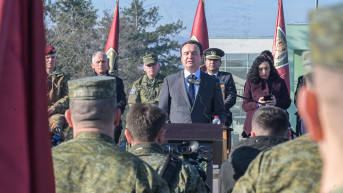
"Extremism, prejudice, the idea that aggression is a legitimate way of political struggle, and Albin Kurti as a dominant political expression of extreme approach among the Albanians, prevent the convergence of views between Belgrade and Pristina, as well as between the Serbs and Albanians."
Edited by: Milos Garic
According to one of the recent public opinion surveys published in Kosovo media, two-thirds of both Serbs and Albanians in Kosovo have a negative opinion of the other side. Recently, there has been data indicating that only slightly more than three percent of Kosovo Albanians confirmed that they could have friends among the Serbs, while around 30 percent of Serbs gave a positive answer on the same topic in the opposite direction.
In the current tense circumstances in Kosovo, which do not favor the improvement of negative trends in society at all, these discouraging percentages could be even worse, which does not give optimism that the coexistence of the two peoples in Kosovo could be normalized in the near future.
The atmosphere of political extremism, which is no secret, favors the current Kosovo Government, represented by Albin Kurti's Self-Determination because despite numerous poor results in the economy, healthcare, social welfare, education, and all other important life areas, the ruling policy towards the Serbs has strong support among the Albanians.
The Serbs in Kosovo have completely left almost all major cities in the past 25 years due to insecurity and the absence of basic conditions for a normal life, and today they live in small enclaves, in conditions very similar to ghettos. In mixed environments, provocations often occur even among close neighbors, much more to the detriment of the Serbs as a significantly smaller part of the population, although these relationships were once mostly good, despite the ever-present political instabilities.
How can we expect improvement of the overall situation in Kosovo under such conditions, and what are the necessary prerequisites for improving relations between the Serbs and Albanians in Kosovo?
historian and prominent political analyst Ognjen Karanovic tells Kosovo Online that improvements cannot occur in these conditions.
"Belgrade, the state of Serbia, and the Serbs, especially the Serbs in Kosovo and Metohija, are not responsible for this. All historical events, but especially those in recent years, support this claim. Colloquially speaking, the ball has long been in the court of the temporary Pristina institutions, as well as their mentors, mostly from the political West, who passively observe all processes in Kosovo and Metohija unfolding over the past three decades, especially in the last few months," Karanovic points out.
It is necessary to abandon extremism
He sees Albin Kurti, the leader who currently determines Albanian policy towards the Serbs, as the main culprit for the current negative processes in Kosovo.
"If our intention, and it is, is to direct all these processes towards achieving a compromise solution, in which everyone will remain somewhat dissatisfied or even bitter, but in which both sides will achieve, presumably, the basic goal of living in peace, or that the entire region, especially Kosovo and Metohija, preserves peace and establishes some more lasting stability, to achieve this, Albin Kurti must be removed first. Both he and his government, and the entire administration of the most extreme form of Albanian separatist movement in Kosovo and Metohija, which was installed in power several years ago. If there were truly sincere intentions to reach that compromise, or rather stabilize the situation, then the political mentors of the false state in the southern Serbian province would do that first," Karanovic emphasizes.
For a more stable order in a more lasting form, he adds, there needs to be a significant change in the Albanian attitude towards the Serbs in Kosovo.
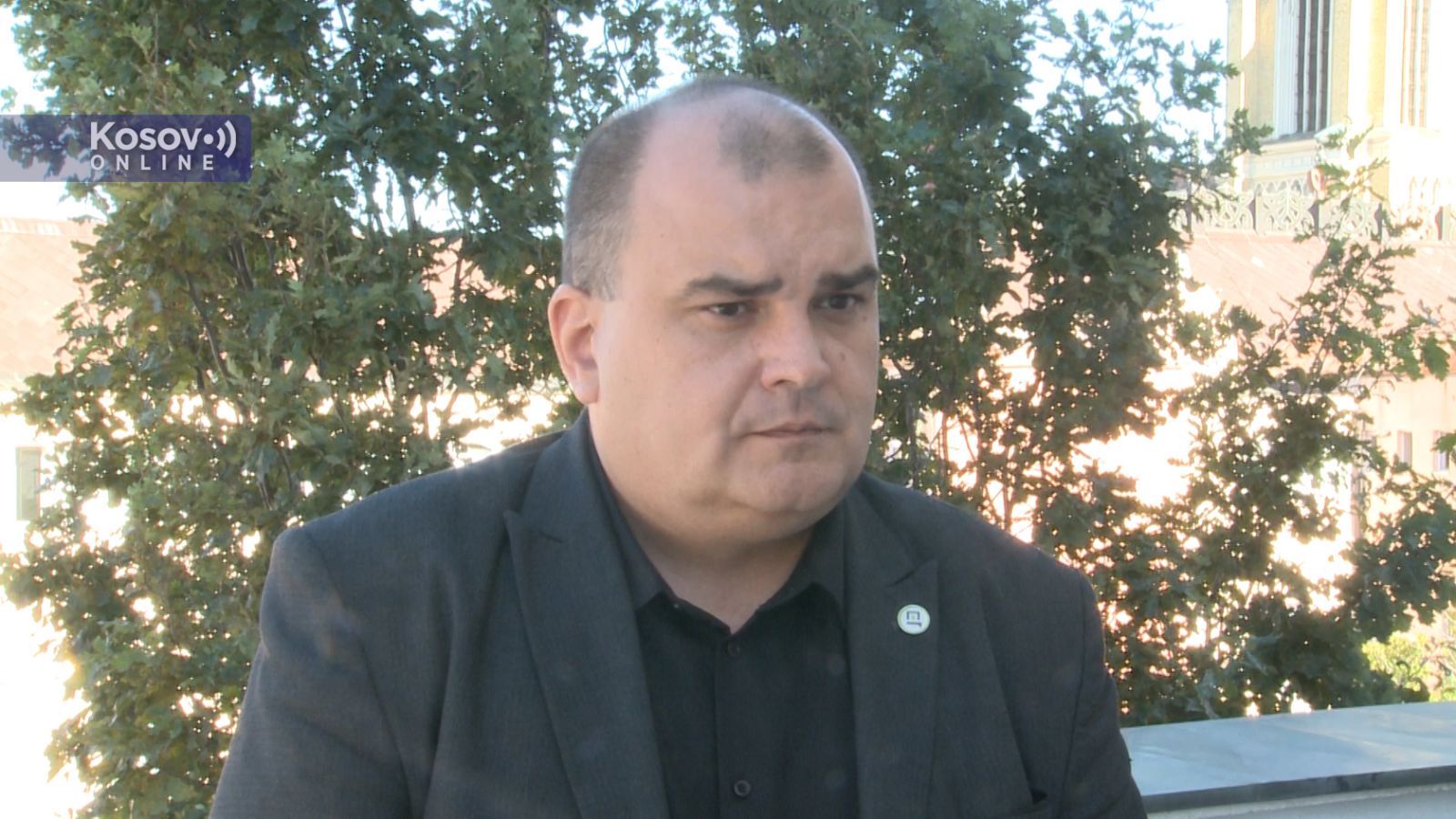
"It is necessary for someone, again I am talking about the political mentors of the separatist movement, to convince the elders, both tribal and mafia, who sponsor both politically, materially, and logistically, this separatist movement in Kosovo and Metohija, that they must renounce extremism, terrorism, violence, and aggression in their political activities, when we speak about the Albanian community in Kosovo and Metohija, and beyond. Therefore, it is necessary for the political West to truly curb this extremism, that is, to eradicate the propensity for violence and extremism in political struggle from the consciousness of these groups. To be clear, in practical terms, this would mean that their financial flows, from which they are financed, should be obstructed, that they should be deprived of material support, and of course, they should lose political support," Ognjen Karanovic explains.
According to him, without these two fundamental steps in attempting to reconcile the interests and views of the Serbian and Albanian sides, any other attempt to seek compromise is doomed to failure in advance.
"So, extremism as a form of political struggle and the notion that aggression and terrorism are legitimate means of political struggle towards Serbia and the Serbs, on the one hand, and Albin Kurti as a political expression of such a form of political struggle on the other hand, these two pillars of Albanian nationalist policy in Pristina, are the main obstacles to the convergence of the views of the state of Serbia and the temporary Pristina institutions, but also between the Serbian and Albanian people as a whole. Without that, I don't see how it could be overcome," Karanovic points out.
He also sees a number of other unresolved issues besides these basic steps, but he is not optimistic that there will be any improvement soon.
"There are a number of issues for which there is no willingness in Pristina and among their mentors to be resolved, neither indefinitely nor in the foreseeable future. I think that only a possible change in the geopolitical situation in the world can provide circumstances in which the Albanian separatist movement would abandon its most extreme goals or rather its ultimate methods of political struggle," Karanovic concludes.
Prejudices and education
Professor of Political Science Nexhmedin Spahiu believes that both Serbs and Albanians need a change in the interpretation of history.
"As for the short-term improvement of relations between the Serbs and Albanians, it is the implementation of the agreements already reached in Brussels between Serbian President Aleksandar Vucic and Kosovo Prime Minister Albin Kurti. In the long term, a thorough improvement in relations is to change the way history is interpreted in textbooks and public institutions in Serbia and Kosovo. Both Albanians and Serbs are taught a false history that is not true, and school textbooks must depict and teach about real events and relationships between the Serbs and Albanians, rather than one side always being portrayed as a victim and the other as an aggressor. This could improve relations in the long term," Spahiu points out for Kosovo Online.
He particularly emphasizes the influence on younger generations.
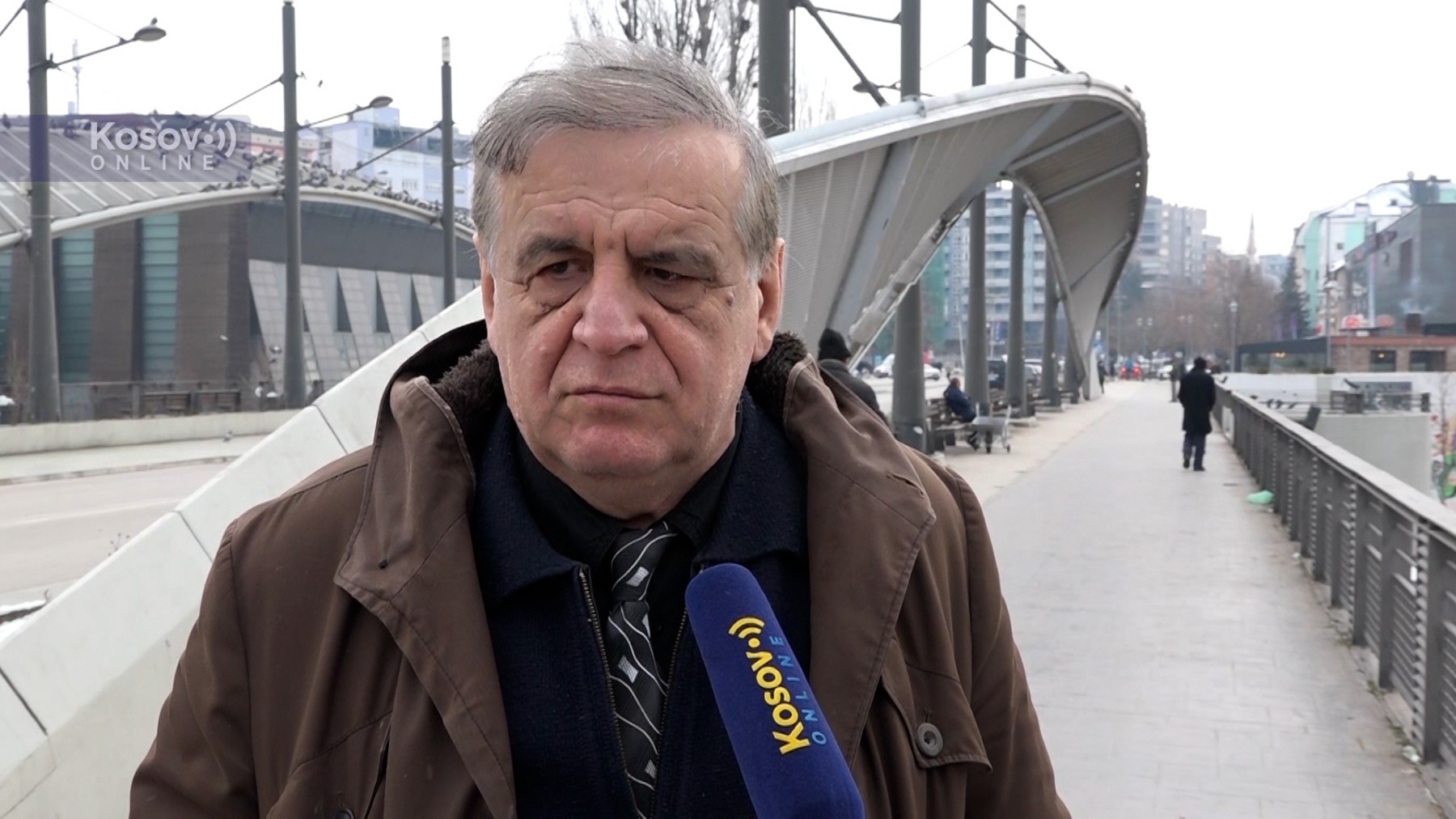
"As for the younger generations, those born after the conflict in Kosovo, the situation is the same; they inherit the same history as us. That is the source of evil. Nothing good is achieved by lies; as long as the Albanians and Serbs learn false history in their history and literature textbooks, they will always be inclined to think poorly of each other. What Albanians are taught today, similar to the time of Enver Hoxha, that all the nations around us are our enemies, is detrimental to Albanians. On the other hand, the Serbs learn in history textbooks how Serbs are dominant in the world, disproportionately to their size. This tempts Serbs into conflict with stronger forces, and it is detrimental to Serbia because such exaggeration leads to the idea that Serbs are not a ten-million-strong nation but a hundred-million-strong one. Such megalomania represents a wrong perception. This must change not only among Serbs and Albanians but also among other nations in the Balkans," Spahiu explains.
Srdjan Simonovic, from the NGO "Human Center" in North Mitrovica, emphasizes the necessary fight against prejudices.
"When it comes to the conditions for improving relations between the Serbs and Albanians, they will not improve concerning Kosovo's status. But what can yield concrete results in the short term, in terms of improving relations, is confronting stereotypes and fighting against them. This means not all Albanians are lazy and stupid, just as not all Serbs are murderers and criminals. Such stereotypes need to be addressed, starting with the meaning of the word 'Shqiptar,' which acquired negative connotations only in the early 1970s and does not have a pejorative meaning, as well as 'shkije' or 'shkavell,' which refers to those who do not speak Albanian in Kosovo," Simonovic stated.



comments