
What is the truth about the "genocide" against the Albanians in Kosovo, and why is this claim being brought up again in Pristina?
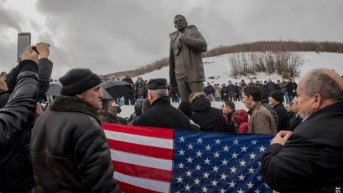
"The war in Kosovo was brutal, bitter, and intense, but there was no genocide" - this headline and the entire analysis from The Wall Street Journal on December 31, 1999, sharply opposed the previously dominant war propaganda in the United States. It was one of the first signals that a significant part of the Western public would, in the years to come, shift towards a more objective approach to the causes and consequences of the NATO attack on Serbia“.
Edited by: Milos Garic
The claim of genocide allegedly committed by the Serbs against the Albanians in Kosovo, extensively used in Western media during the winter and spring of 1999, immediately after the NATO aggression on FR Yugoslavia and the entry of the first representatives of international institutions into the southern Serbian province in June of the same year, turned out to be completely unfounded, actually a deliberate lie.
Even after months of on-site investigation, what many "expected" and announced was not found. The lack of evidence of mass crimes and genocide is documented in official reports, but this accusation is still invoked by Albanian political leaders as a "key" argument against Serbia.
Albin Kurti and Vjosa Osmani do this very often, and in recent days, they have again announced the filing of a lawsuit, while the Government in Pristina has also established an Institute for War Crimes.
"The Kosovo Government is committed to truth and the right to justice as prerequisites for sustainable peace. Our institutional commitment to resolving all crimes committed during the war continues, as does our commitment to assessing the damage done", Kurti said, along with another demand that Serbia be held accountable for genocide.
That there is no evidence for "genocide" and that the infamous lawsuit cannot pass on any grounds is well known, however, to many among the most hardcore Albanian nationalists in Kosovo. They have long abandoned this narrative, and even in the West, some of the most fervent defenders of the NATO decision for the brutal bombing of FR Yugoslavia, made under the guise of "humanitarian intervention" without the approval of the United Nations in early spring 1999.
What did the investigators establish?
In the book "Noam Chomsky – Yugoslavia: Peace, War, and Dissolution", the distinguished professor from the Massachusetts Institute of Technology and one of the world's leading researchers of contemporary society and political systems details facts that refute the genocide narrative against the Albanians in Kosovo. This narrative served as justification for the leaders of the United States, the United Kingdom, Germany, and other NATO member states to attack the Federal Republic of Yugoslavia.
Chomsky, among other things, quotes the famous American-Israeli journalist Daniel Pearl, whose headline in The Wall Street Journal was mentioned at the beginning of this text. Pearl reported from some of the riskiest places on the planet and was brutally killed after falling into Al-Qaeda captivity in Pakistan in January 2002.
Despite the intensive efforts of numerous special international representatives, verifiers, OSCE, UNMIK, and others, the results of the obsession with mass graves in Kosovo were disappointingly weak, according to Daniel Pearl's conclusions, as cited by Chomsky.
"Instead of vast fields of death, which some investigators were led to expect, the pattern indicates scattered killings, a form of light ethnic cleansing. Most murders and burning of villages occurred in areas where the separatist Kosovo Liberation Army was active", Chomsky emphasizes.
In this regard, the statement of Emilio Perez Pujol, a Spanish pathologist who exhumed bodies in Kosovo after the NATO bombing, is interesting. He had previously worked in Rwanda.
"Rwanda was a real genocide. In Kosovo, there was light ethnic cleansing", Pujol concluded, who, with his team in the western sector of Kosovo, after announcements by United Nations representatives that they expected 2,000 victims, found 187 bodies, none of which could confirm the allegations of alleged mutilations.
Chomsky points to Western documentation and reports. According to them, crimes in Kosovo just before the NATO attack were "equally committed by KLA guerrilla units entering from Albania and the security forces of the Federal Republic of Yugoslavia“.
One OSCE report succinctly summarizes, "Cycles of conflict can be generally described as attacks by the KLA on Serbian police and civilians, a disproportionate response by the authorities of the Federal Republic of Yugoslavia, and then a renewal of KLA activities".
The British Government, the biggest hawk in the alliance, even attributes most crimes in the relevant period to the KLA, which the United States considered a terrorist organization in early 1998.
"When the bombing began on March 24, British Defense Minister George Robertson, later NATO Secretary General, informed the British Parliament that by mid-January 1999, the KLA had been responsible for more violent deaths in Kosovo than the Serbian authorities... Robertson and Minister Robin Cook also speak about the massacre in Racak on January 15, in which, according to the report, 45 people were killed, but Western documentation reveals no conspicuous change in the pattern until the withdrawal of the verification mission on March 19. Even if we take into account that massacre and overlook the question of what really happened there, Robertson and Cook's conclusion remained the same until the beginning of the bombing", Chomsky states, noting that NATO leadership knew that "the bombing was not a reaction to crimes in Kosovo but their cause.
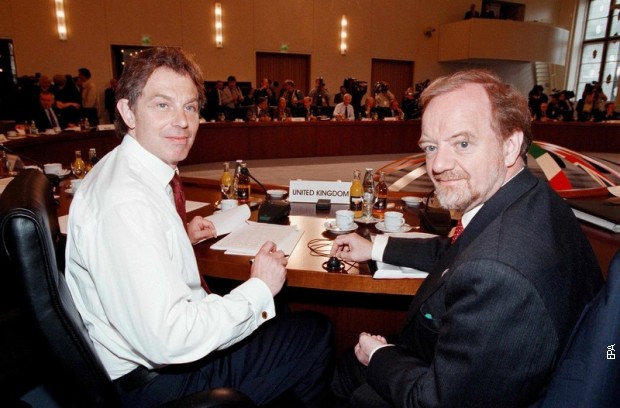
In the abundance of evidence against the thesis of genocide in Kosovo, such as the detailed study by Nicholas Wheeler estimating that the Serbs could be responsible for about 500 out of a total of 2,000 killed (in the year before the bombing), here we will only mention the statements from the book 'Collision Course: NATO, Russia, and Kosovo' by John Norris, a distinguished American diplomat and expert on Kosovo in the International Crisis Group, who points out that 'Yugoslavia's resistance to broader trends of political and economic reforms, rather than the plight of Kosovo Albanians, best explains NATO's entry into the war'.
With all this in mind, the question arises: why and based on what Kurti and Osmani are building faith in a lawsuit for genocide against Serbia?
Attempt to incriminate Serbia
"Faced with hints of a more objective and balanced policy by the scriptwriters of Balkan dramas, and lacking original and feasible ideas, Albin Kurti turns to models that have been effective since the beginning of the breakup of the SFRY in turning the international community against Serbia", political philosopher Dragoljub Kojcic says.
He tells Kosovo Online that the "common denominator of this recipe was the incrimination of Serbia and the Serbs for the most serious war crimes".
"The Hague Tribunal, in the chain of international coordination of the anti-Serbian coalition, served as a fabricated confirmation that Serbia was the only responsible party in the civil war and, later, in defense against the secessionist KLA and terrorism unprecedented in monstrosity, and no less morbid, in the unconditional support of the Western political crimes of Adem Jashari, Ramush Haradinaj, or Hashim Thaci. Today, Kurti resorts to the worn-out and long-debunked political trick that the Serbs committed genocide against Kosovo Albanians", Kojcic says.
Strobe Talbott, the Deputy Secretary of State of the United States from 1994 to 2001, according to Kojcic, is the direct witness to the evolution of his country's political assessments of the nature of the conflict in Kosovo and Metohija.
"From the initial unprecise, one-sided, and sensational rhetoric about the potential genocide that needs to be prevented by international military intervention against Serbia, towards the end of his term, Talbott reformulated his views. As an excuse for bombing the Federal Republic of Yugoslavia, the world was presented with the need to prevent a humanitarian catastrophe. There is a small difference between the concept of genocide and the concept of a humanitarian catastrophe. And while we're talking about quantifications in the down-to-earth marketing of Albanian partners and then mentors — what is the difference between facts and illusions that were sold to the public by the State Department? When the President of the Committee on Foreign and European Affairs of the Italian Parliament came to Belgrade in 2007, he was reminded by his Italian colleagues from Forza Italia that there was no genocide against the Albanians in Kosovo, no ethnic cleansing and that Finnish pathologist Helena Ranta had proven that the Racak case was fabricated by William Walker. It would prove the opposite: only the Serbs were ethnically cleansed, and evidence of the crimes mentioned by Del Ponte and Dick Marty was carefully removed from the archives of the Hague Tribunal, along with a few inconvenient witnesses liquidated. Threats that there is already a bullet for every Serb have been heard recently from the cabinet member of Xhelal Svecla, a minister in the interim institutions of power in Pristina", Kojcic explains.
Kurti's idea to accuse Serbia of genocide, in his opinion, represents an attempt to redirect the attention of the Albanian public and international sponsors to Serbia, given the lack of any results in the Kosovo economy, infrastructure development, crime prevention, healthcare, or culture, and increasingly in diplomacy and support for self-proclaimed independence. "There are no other dimensions to Kurti's program", Kojcic emphasized.
Following Croatia's example
Zijad Becirovic, the Director of the International Institute for the Middle East and Balkan Studies (IFIMES), reminded that Croatia had also tried to prove genocide before the International Court of Justice (ICJ) and lost because genocide in Croatia was not mentioned in any international document, including indictments from the International Criminal Tribunal for the former Yugoslavia.
"It is the same with crimes in Kosovo - genocide is not mentioned. If Kosovo managed to initiate any process, it would be challenging to succeed. Croatia knew it had almost no chance, yet it persisted until the end, done for internal political relations and to be recorded that it was attempted. Serbia also sued NATO members for genocide due to internal relations, and to this day, talk about NATO aggression continues in Serbia. Such actions by states to initiate international legal proceedings against other states and individuals are not unknown. Victors usually write history and establish international law. There are no winners in the Balkans," Becirovic says for Kosovo Online.
Political analyst Srdjan Barac sees the announcements by the Pristina authorities about filing a lawsuit for genocide against the Republic of Serbia before the International Court of Justice more in the domain of a political than a legal move.
Political move aimed at pressure
"At this moment, the ways in which the Pristina authorities would bypass procedural obstacles to even file the lawsuit are very questionable. Namely, Kosovo lacks all the elements of statehood, and most importantly, it is not a member of the United Nations, which are prerequisites to be able to initiate such a lawsuit before the ICJ. If they manage, through strained legal constructions, to bypass the ICJ Statute and succeed in filing the lawsuit, they face an even more challenging material problem, namely, to actually prove that genocide occurred. I am convinced that it is almost impossible for them to overcome procedural obstacles, and I am absolutely certain that it is impossible for them to overcome material legal obstacles and prove genocidal intent during the unrest in our southern province," Srdjan Barac believes.
He thinks this is another political move aimed at putting pressure on the Serbs living in Kosovo and Metohija.
"Such pressures continue a series of physical violence, legal violence, and economic violence, which, in combination with such provocations, is sublimated into psychological violence against the Serbs with the clear goal of provoking a reaction that could later be used against both Serbs in Kosovo and Metohija and the Republic of Serbia. This legal process is very complicated and difficult, and there is a slim chance that the Pristina authorities would succeed in it. This leads to the conclusion that it might not be a bad idea for them to embark on this legal adventure because if they experience a debacle, Serbia, like all unjustly accused, would have the aura of truth and justice and would finally clear up their lies. Let us remember the principle 'Ne bis in idem' from Roman law, according to which the same person cannot be tried twice for the same act, and sometimes it is better to finish with some processes", Barac concluded.
In the end, it is worth emphasizing the fact that after the NATO aggression on Serbia and the entry of international forces together with KLA members into Kosovo in June 1999, due to terror and the absence of basic security, almost 250,000 Serbs and members of other minority communities had to leave their homes and apartments. To this day, less than two percent of that number has managed to return to Kosovo.
0 comments