
Why can't we all just forget the past and move on?
Written for Kosovo Online by Srđan Garčević, founder of The Nutshell Times
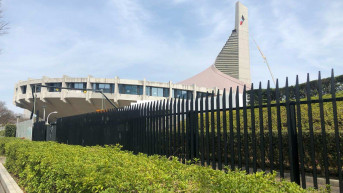
In March 2019, when I was walking around the beautiful Yoyogi Park in Tokyo, it occurred to me that the city’s stylish Kenzo Tange-designed National Stadium was built only 19 years after the bombing of Hiroshima and Nagasaki for the 1964 Olympics. As I later found out, the park also served to house American armed forces from 1946, who vacated it for the Olympians from all around the world to move in (the buildings were later removed).
I found the story of the transformation of Yoyogi Park very poignant. It was a sort of pacifist fairy tale, where in less than two decades, ultimate, total war - Allied destruction of Japanese cities, using nuclear bombs - gave way to the ultimate show of global unity and peace: the Olympic games.
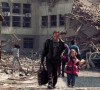
Back then, Serbia was getting ready to commemorate two decades since the NATO aggression (and the ensuing ethnic cleansing of Serbs and other non-Albanians from most of Kosovo and Metohija) and fifteen years since another round of ethnic cleansing on March 17 2004. Serbia (and other countries that made up Yugoslavia) were (and still are) very far from replicating the Japanese post-war economic miracle, let alone letting the painful past slide (despite the armies of experts and pundits and whole cottage industry of NGOs ostensibly pushing for peace and prosperity).
Why can’t we all just forget the past and move on?
Indeed, many of my friends and acquaintances who are part of the bien pensant army of foreign and local experts, pundits and bureaucrats have wondered about this when speaking to me.
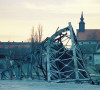
I remember showing an Irish journalist interested in the Balkans around Belgrade and him confidently saying – with all the panache of a first-time visitor with cursory knowledge - that we should tear down the bomb-out remains of the old army building as it is ugly and makes us dwell on the past. Another friend, who had much more experience in the region, took a psychological turn and likened Serbia to a jilted lover who couldn't get over a breakup and acted out. Yet another reconciliation expert was more practical and to the point. Over beers, she explained to me that while some events during the Yugoslav wars indeed should never be forgotten, others (including the expulsions of Serbs from Kosovo and even the attacks on Serbs in Sarajevo in March 1992) should not be mentioned too often, let alone commemorated. In her view, there were clear culprits for everything (Serbs), and according to the very humanitarian logic of liberal and empathetic Balkan Experts, we should embrace the pacifist logic of “vae victis” – woe to the vanquished.
My suggestion that things are not that simple and that a similar logic can be, for example, used for the outcome of WWII in the Balkans was shrugged off. That war was complicated, with dubious morality on each side, and the Yugoslav wars and the NATO aggression were not; they were simple Manichean struggles of good and evil.
These may be just cruder examples of the logic of moving on.
The aforementioned cottage industry produced many books and even more research and policy papers on why some events objectively deserve memorial parks and days of remembrance while others should be brushed aside and forgotten. Arcane-sounding concepts such as "ontological insecurity" and "politics of memory" have been cornerstones of many a PhD and workshop to answer this seemingly unfathomable question, usually locating it only in the Serbian (or if, generous, post-Yugoslav) context.
There, of course, is the Jewish memory of the destruction of the Second Temple almost two millennia ago and the ensuing persecution under the Romans – which not only inspired Freud's phobia of Rome but even now leads many prominent Jews to visit the Arch of Titus. Indeed, after the resumption of hostilities in Gaza last October, Israelis saw their current situation as a continuation of the persecution they suffered for millennia.
Similarly, the Finnish memory of the Russian occupation of Karelia and expulsion of the local Finns has become more vivid since the start of the war in Ukraine, and post-Brexit, any visit to Dublin for more than a few hours will expose you to the discussion of the status of Northern Ireland.
In Palermo, hundreds of miles from the Adriatic coast, there is a national shrine inscribed with the names of Zara, Fiume and Pola (Zadar, Rijeka and Pula) to commemorate the expulsion of the Italians from Istria and Dalmatia after WWII. Just this February, the Italian PM Meloni attended a national day of remembrance dedicated to that event from eighty years ago. Despite the pacific nature of the Yoyogi Park, Japan still clashes with China and Korea around the way it commemorates its dead during WWII.
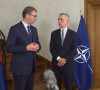
Just yesterday, on the 25th anniversary of the NATO aggression on Yugoslavia, the ambassadors of the most prominent NATO countries which launched the aggression expressed regret over the casualties of war, which they felt they were forced into, but hoped that we would all look towards the future and build better relations. On the same date, the status of Priština authorities has been "upgraded" to the status of associate member in NATO's parliamentary assembly, despite constant, systemic attacks on Serbs even besides the presence of KFOR, just as it happened in 1999 and 2004. It makes you wonder who decided not to move on.
0 comments