
NATO and Serbia 25 years later: Can the wounds heal, what has changed, and what next?
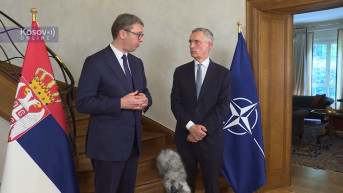
"NATO struggled significantly in 1999 to gain control of Kosovo in favor of Albanian separatists but simultaneously lost the war against Serbia. This is now abundantly clear after a quarter of a century."
Edited by: Milos Garic
It has been exactly 25 years since NATO bombs began to devastate the Federal Republic of Yugoslavia on March 24, 1999, and the horror that lasted for the following 78 days left consequences whose horrifying echo does not diminish even a quarter of a century later.
On the contrary, as time passes and the terrible war dust settles, all the staggering facts have come to light, turning the unprecedented aggression against a sovereign state into one of the most shameful chapters in modern world history. And there it will remain forever.
A powerful alliance composed of the military might of the United States and 18 European member states, after 78 days of fierce defense by the army and citizens of FR Yugoslavia, consisting of Serbia and Montenegro, seized the province of Kosovo and Metohija by the agreement in Kumanovo. NATO took over a piece of Serbian territory and gained the favor of the Albanian separatist movement, but in the spring of 1999, it lost some other important things for a long time, as it turned out.
Perhaps it was not clear, nor particularly important, to Clinton, Blair, Chirac, and Schroder in those few months that they did not overthrow Milosevic and Serbia, but the entire international order, along with their own reputation, credibility, and dignity. Today, 25 years later, their successors see this very well, just as the rest of humanity has been sure of it from the very first day.
NATO struggled significantly in 1999 to gain control of Kosovo in favor of Albanian separatists but simultaneously lost the war against Serbia. This is now abundantly clear after a quarter of a century, and the numbers best testify to that.
The high cost and immense damage
The rating of the NATO alliance among citizens of Serbia today, 25 years later, is at its lowest level since these surveys were conducted after the 1999 bombing. Support for Serbia's entry into NATO is, according to the latest measurements, just over 5 percent, while explicitly against membership are around 90 percent of Serbian citizens.
Research by the Atlantic Council of Serbia conducted five years ago, showed that 89 percent of citizens opposed joining NATO, with more than two-thirds of respondents citing the bombing of Serbia in 1999 as the reason, while others do not support the policies and goals of the Western military alliance.
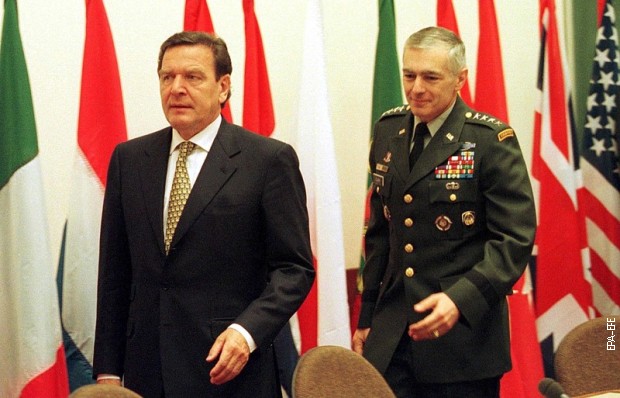
NATO has seen a new decline in popularity in Serbia over the past decade, which, of course, was not particularly high before that. Surveys in 2015 showed 65 percent against and 13 percent in favor, while in 2009, amid the enthusiasm of the leadership for Euro-Atlantic integration, such a policy was supported by as much as 20 percent of citizens.
There is a Serbian saying that goes, 'Don't slaughter the ox for a kilo of meat.' Now, perhaps in the case of the aggression against Serbia and NATO's entry into Kosovo, this was the 'whole leg' for Western policy strategists, but it seems that the price paid and the damage incurred far outweigh the gains.
Serbia and NATO are currently together in the Partnership for Peace. Cooperation and communication between official representatives are at a very correct and high level. US Ambassador Christopher Hill said a few days ago that Serbia and NATO were much closer today than Kosovo and the Western military alliance, which sounds like a very optimistic basis for continued improvement of relations.
Indeed, Javier Solana, Wesley Clark, and Jamie Shea haven't been in political and military command in Brussels for a long time. But Serbia, as the aforementioned numbers show, still remembers its time, and still bleeds from the wounds of 1999, as well as those inflicted on the Serbs in Kosovo over the past 25 years in the presence of international forces.
How can the wounds heal enough for NATO to cease being a symbol of misfortune, injustice, and pain among the citizens of Serbia? This is a question that Western strategists should ponder, and it is clear that today, after a quarter of a century, neither Serbia nor NATO are what they were in 1999.
"Since March 1999, many things have changed. For example, the Federal Republic of Yugoslavia no longer exists, and the NATO alliance has grown from 19 to 32 countries. Meanwhile, neutrality on the European continent has lost significance, following Russia's invasion of Ukraine, as traditionally neutral countries like Finland and Sweden have become full members of the NATO alliance, while Austria and Switzerland have agreed to participate in the European air defense system, which is based on NATO's air defense system," international policy and security expert Ivan Miletic notes.
Geostrategic significance of Serbia
In addition, the NATO alliance has developed partnership relationships with another 32 countries around the world, stretching all the way to distant Australia, through various partnership programs, one of which is the Partnership for Peace, in which Serbia participates.
"All partner countries, including Serbia, choose the form and intensity of participation in NATO partnership programs according to their needs and strategic defense plans of the country. Some of the 32 NATO partner countries, alongside Serbia, are members of the CSTO alliance: Kazakhstan, Armenia, and Tajikistan. But also other countries: Algeria, Egypt, Israel, Morocco, United Arab Emirates, Australia, Japan, New Zealand, and South Korea," Miletic emphasized.
He points out the latest statement by US Ambassador Christopher Hill, who was involved in the events of a quarter of a century ago, that Serbia is much closer to NATO than Kosovo.
"This statement has angered many in Pristina, such as the President of the Administration, Vjosa Osmani. Ambassador Hill's statement was not made thoughtlessly and reflects the dissatisfaction of the United States with the recent actions of the administration in Pristina towards the Serbian population in Kosovo. Serbia has an excellent geographic position, which gives it a clear geostrategic advantage that it can offer in the field of defense and security of the European continent. Geographically, Serbia is located in the very center of the southern wing of NATO, and therefore, it can reap all the benefits associated with the development of logistical and transportation infrastructure if it were to integrate into the system of its immediate surroundings. This would also lead to a clear geostrategic significance for Serbia, which would have much stronger negotiating power regarding the protection of its property, its citizens, and the property of the Serbian Orthodox Church across the entire Western Balkans. Not to mention that by joining NATO, Serbia gains the opportunity not only to have its contingent within KFOR but also to provide reserve forces and support in case NATO needs to increase its military capacities in Kosovo, as well as the potential for positions and commanders within KFOR," Miletic says.
In parallel with this, within NATO, there is a very strong bloc of countries that do not recognize Kosovo - Spain, Romania, Slovakia, and Greece, and thanks to their clear and strong voice, Kosovo is nowhere near being considered for any partnership program of the NATO alliance.
"Of these countries, Romania has the most important geostrategic position within NATO, due to the war in Ukraine. As such, Romania emerges as a natural partner and friend of Serbia, as it has always been. NATO in 2024 is not at all like the NATO of 1999. This NATO encompasses one billion people under its protection, and at least four countries within it share the same views on the independence of Kosovo. Additionally, within NATO today, some countries are very favorable towards Serbia, and we hear that representatives of US diplomacy, more and more frequently and loudly, express dissatisfaction with the behavior of the administration in Pristina. For this reason, we can conclude that the NATO alliance as it stands today is much closer to Serbia, that Serbia is much closer to NATO through its partnership with NATO member countries, and all of this is extremely important for preserving the security of the Serbian people in Kosovo," Miletic concludes.
An open door that Serbia will not pass through
Aleksandar Mitic, a research associate at the Institute for International Politics and Economics, who has also worked as a correspondent for Agence France-Presse from Kosovo and Metohija and for the Tanjug agency from NATO headquarters in Brussels, witnessed many events during the bombing of Serbia.
"As a journalist, I reported from Kosovo and Metohija throughout all 78 days of the NATO aggression in 1999, witnessing many war crimes, false news, and manipulations by the Alliance. Seven years later, I reported from Riga on November 29, 2006, from the NATO Summit where US President George W. Bush gave consent, and then the Alliance gave the green light for Serbia's membership in the 'Partnership for Peace' program. In the meantime, as a correspondent from NATO headquarters, I followed the beginning of the Cooperation Program with NATO, the establishment of trust funds for mine destruction and the reduction of small arms and light weapons, Serbia's successful chairmanship of the Southeast Europe Cooperation Process within the Alliance, but also faced criticism over the, to say the least, controversial deployment of KFOR during the March 17, 2004, riots," Mitic says for Kontekst.
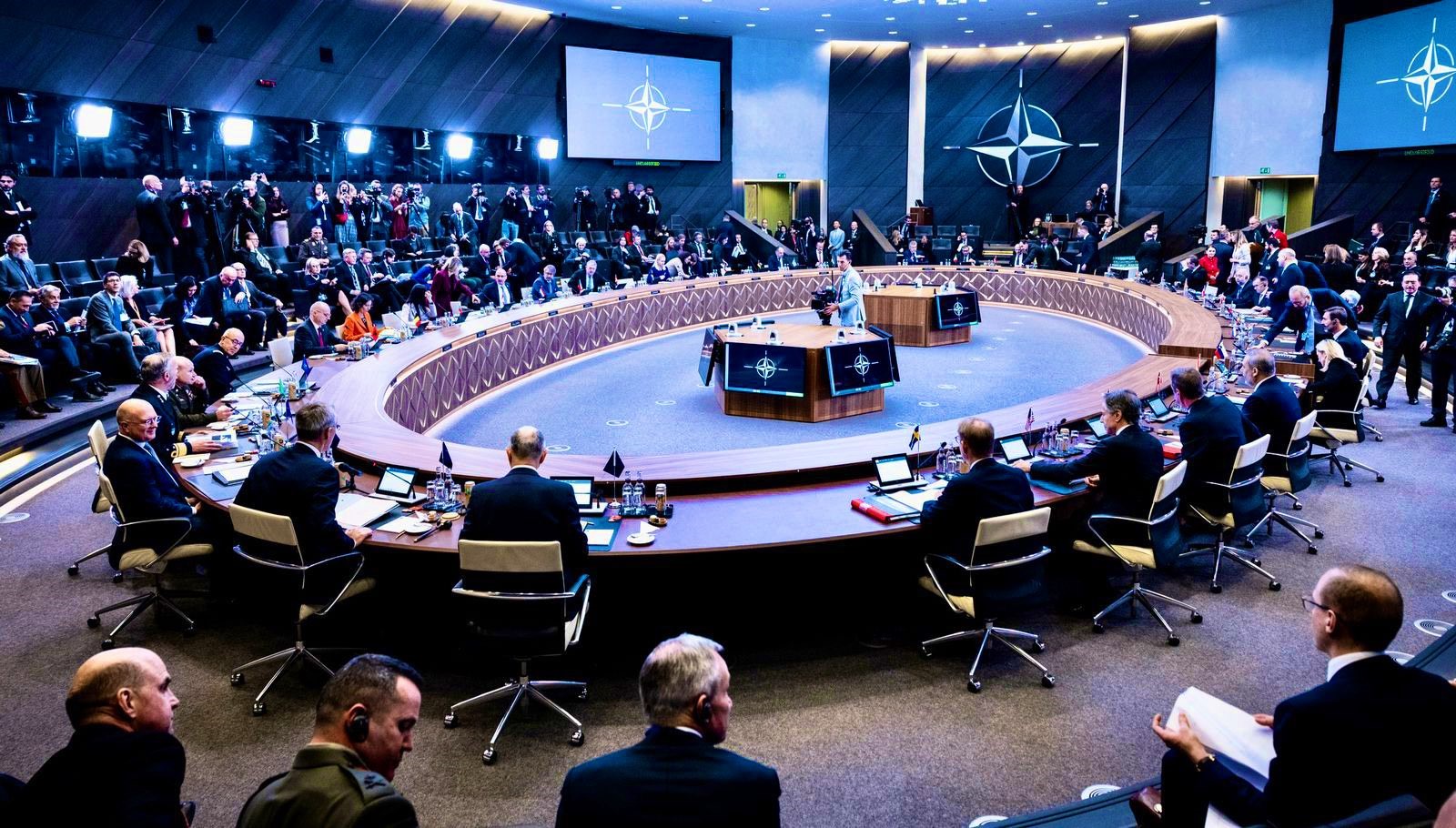
After joining the 'Partnership for Peace,' he followed the signing of the 'Framework Document' on cooperation and the opening of the Mission of the Republic of Serbia to NATO.
"He also witnessed the adoption of the first Individual Partnership Program - IPP, as well as reactions to the adoption of the Resolution of the National Assembly of the Republic of Serbia on military neutrality in December 2007, the complicity of the Alliance in orchestrating the 'unilateral declaration of independence of Kosovo' in February 2008, and the silence, a few months later, at the announcement by certain member states of their future goal to 'form a Kosovo army.' Since then, from Belgrade, I have followed attempts to subtly draw Serbia into NATO between 2009 and 2011 through the acceptance of the 'Membership Action Plan,' and the resolute public backlash against such a possibility, such as the famous petition of 200 public figures in January 2010, signed by, among others, Metropolitan Amfilohije, Dobrica Cosic, Emir Kusturica, Momo Kapor, Matija Beckovic, Brana Crncevic, Ljuba Popovic, Mihailo Djuric, and Dusan Kovacevic," Mitic recalls.
He points out the activities of the non-governmental sector in Serbia in this regard.
"I followed the attempts of the pro-NATO NGO sector in Serbia to replace the 'emotions' about the NATO aggression with 'rational,' 'technical discourse' about cooperation. I also followed the revelations of 'Wikileaks' about the dispatch from the US Ambassador to Belgrade in 2009, Mary Warlick, who assessed that 10 years after 1999, it was the right time for Washington to push for Serbia's NATO integration, and that there had already been a contribution to the 'current reconsideration of Serbia's stance on neutrality.' Just as I am following how the current US Ambassador, Christopher Hill, on the 25th anniversary of the aggression, fundamentally relativizes military neutrality in every statement and points Serbia to the 'right path' and 'open doors' in the alliance led by his country," Mitic points out.
Nobody disputes that NATO is a necessary partner for cooperation, he adds, both because of Serbia's geographical surroundings to the Alliance members, and because of the role of KFOR in Kosovo and Metohija.
"KFOR is the only legal military force under UN Security Council Resolution 1244, although it tolerates the fact that leading member states arm the illegal 'paramilitary' of Albin Kurti. Perhaps Serbia is appreciated as a NATO partner in more than a hundred activities in the last two years. But Serbia is not and will never be a NATO country. Nor will it ever forget the NATO aggression and its crimes," Mitic concludes.
What has changed?
Political analyst Srdjan Barac emphasizes that the events that began on March 24, 1999, have changed the established and somewhat established order that prevailed in the relations of great powers, defined through the rigid regulations of the United Nations Security Council.
"It seems that we all know where we were on that day and that we all still have vivid images of that March, but also of the following 78 days. And, as relations between great powers unfold today, it is clear that many others will try to remember where they were then because it is increasingly apparent that the significance of that event has surpassed our framework and the significance it had for Serbia. We should never forget the aggression that occurred then, as well as all the innocent victims of that act and the damage that was inflicted on our homeland at that time, but it is important to move forward and not allow that event to hinder our rational thinking and behavior today. Political elites and state policies change, as do enemies and allies, so it is important to consciously participate in changing and accepting policies that are beneficial to us. Looking to the future, while being aware of the past, we choose what is best for today," Barac says.

comments