
Why do the USA and Germany have different approaches to the crisis in Kosovo and what are the consequences of this?
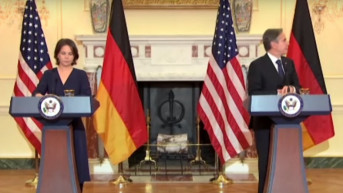
"The foreign policy goals of Washington and Berlin are not identical, no matter how much they try to hide it. Informed individuals agree that the USA has enough instruments at their disposal to bring about the outcome that suits them. How much this will fit into the scenario pushed by Albin Kurti, and how much the Serbs have reason to believe in Washington's goodwill, remains to be seen."
Edited by: Milos Garic
Assistant Administrator for the United States Agency for International Development (USAID) Erin McKee, during her recent two-day visit to Pristina, did not meet with Prime Minister Albin Kurti, who was not invited to any event attended by McKee. This news was reported by all media outlets in Pristina in the past few days, noting that the cooling of relations between Washington and the current Kosovo authorities is becoming increasingly evident.
In the past two months, senior US officials have repeatedly criticized Kurti's government sharply for ignoring the demands of the USA to postpone the implementation of the Central Bank of Kosovo's regulation banning the dinar. The strongest message was undoubtedly from Assistant US Secretary of State James O'Brien, who said that the US would not treat Pristina as a partner because it makes decisions without consulting them.
It can be noted that the US shift in approach to Kurti's policies is not a big novelty anymore, to a lesser extent, it began last summer after Pristina's decisions that led to an escalation of conflict in northern Kosovo. However, after the latest crisis caused by the ban on the dinar and further straining of relations between Pristina and Washington, another thing became evident. Namely, while the United States clearly tries to make efforts to stop Kurti's provocative and warmongering policies towards Serbs, such efforts are not present in Germany and Great Britain.
On the contrary, whenever Kurti needs "shelter," he packs up and suddenly goes on a trip to London or Berlin for a few days.
From Western Europe, old "winds" blow towards this part of the Balkans, and it is not something to be overly surprised about, of course. German and British policies regarding Serbia, and consequently Kosovo, have not changed much since the second half of the 19th century. However, the relationship in transatlantic relations, between Washington and Berlin in particular, reflects all the complexity and yet different interests, as seen in the example of Kosovo. What is happening there?
"It certainly has to do with the foreign policy goals of the US and Germany, which cannot and are not identical, also with the way the diplomatic services of each country operate. So they have different methods of operation. Somewhere, the public impression is that Germany is much more lenient towards the actions of the Kosovo authorities," Dragisa Mijacic, Director of the Institute for Territorial Economic Development says.
Rivalry or a "political game"
He emphasizes that fundamentally, the US and Germany have the same goal, but they want to achieve it through different methods.
"Both sides want to work on affirming Kosovo's independence. The means are different; we see clearer messages from US diplomats. They never miss an opportunity to point out some moves by the Kosovo Government, primarily aimed at disturbing the peace in Kosovo, especially where Serbs live, and disrupting Kosovo's multi-ethnicity, which the Americans are particularly vocal about. Meanwhile, when it comes to Germans, they rarely express their stance on these issues. They usually support coordinated actions within the Quint format, but it wouldn't hurt to hear clear condemnations of unilateral moves by the Kosovo authorities from Germany as well," Dragisa Mijacic points out.
The measures coming from Berlin and Washington towards Pristina also differ.
"The consequences for the Kosovo Government are punitive measures, both European and US. We shouldn't forget that the EU, the European Commission, and member states have imposed punitive measures in these circumstances when it's not easy to punish only one side while seeking a parallel with the other. This means that Serbia, even after the events in Banjska, hasn't faced any consequences, punitive measures, or sanctions, while Kosovo, following the events in Zvecan and the occupation of municipal administrative buildings, has received punitive measures that are still in effect after more than six months," Mijacic notes, who is also the coordinator of the National Convention on the EU for Chapter 35.
Prominent Albanian analyst from South Mitrovica, Nexhmedin Spahiu, briefly stated for Kosovo Online that it was a "political game."
"There's a big political game being played over Kosovo and the Balkans as a whole. I don't think Western countries have deep differences regarding Kosovo. These are more like political games within the same strategy," Spahiu emphasizes.
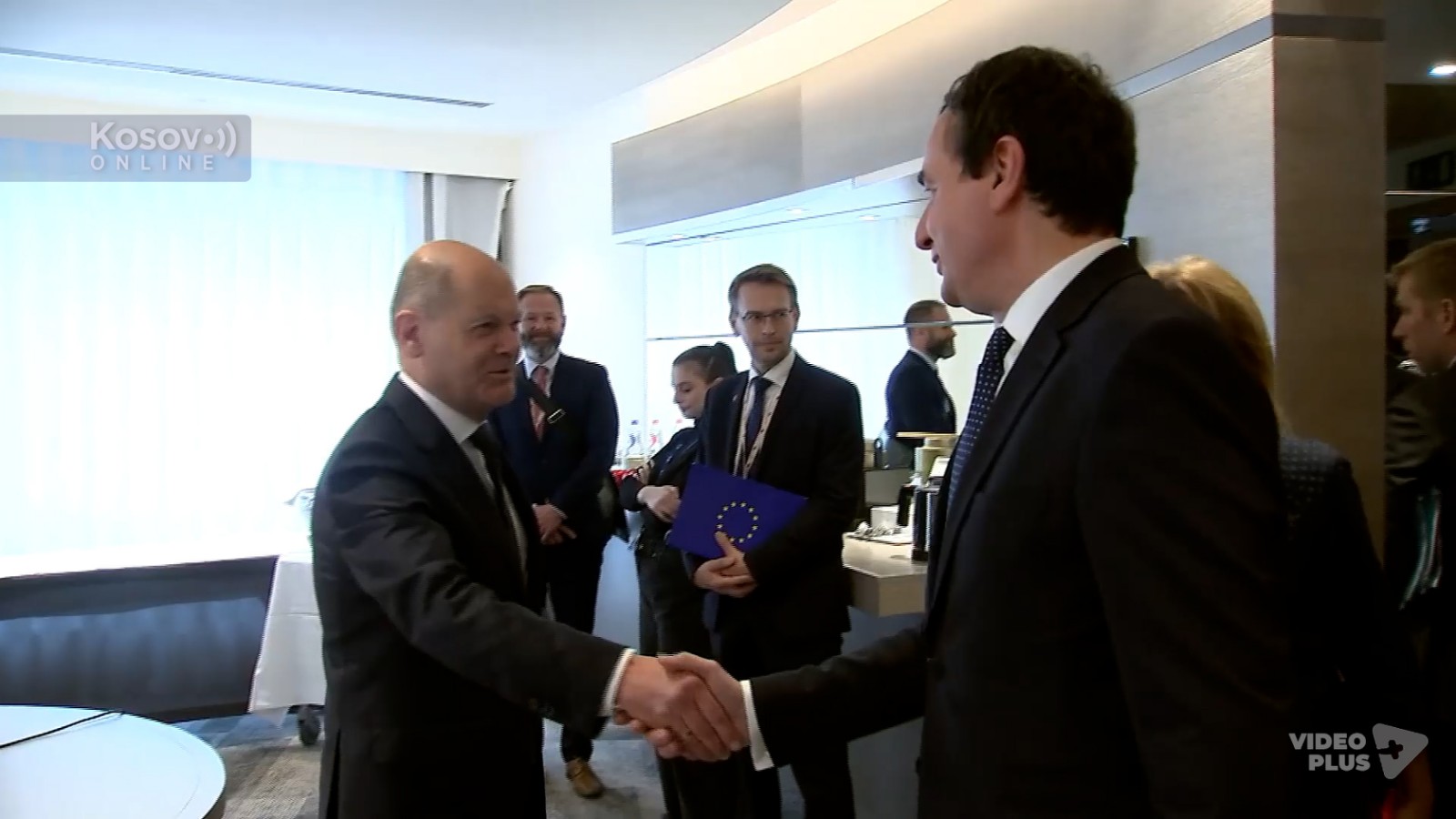
Historian and political analyst Srdjan Graovac explains that the differences in the policies of the United States and Germany towards the Balkans primarily stem from their differing views on the geopolitical position of Europe and its future role in international relations.
"Germany envisions a unified Europe with a consolidated foreign and security policy. It would function more like a confederation or even a loose federal state, thereby gaining the opportunity to become one of the key players in international politics. In such a constructed Europe, German political elites have assigned their country the role not only of an economic engine but also as the creator and bearer of a unified European foreign and defense policy," Graovac notes.
He adds that the United States has different plans.
"On the other hand, the United States has assigned to the EU, and even Germany, the role of a junior partner, some would say vassal, in a geopolitical alliance whose outlines we can clearly see today, and which, in addition to the United States and European countries, includes Canada, Australia, Japan, South Korea. More precisely, all those states considered a part of this colloquially termed 'political West.' Within this Western bloc, the United States has assigned itself the leading role and has no intention of allowing Europe any strategic autonomy that could be a source of division or degradation of that political alliance," Graovac points out.
The struggle for dominance
Graovac reminds us that Germany also sabotaged the previous attempts of the Trump administration with Richard Grenell, who was very active in our region.
"Therefore, in the countries of the former Warsaw Pact, through the Three Seas Initiative, Americans strengthened their positions by firmly tying those European states directly to themselves. After all, that's why the United States has no intention of conceding a key role to Germany in the Balkans. Control over Central and Eastern Europe, as well as the Balkans, allows strategists in Washington to preserve their dominant position on the Old Continent, simultaneously preventing attempts by Germans to achieve dominance in Europe and thwarting any direct cooperation between Russia and Germany, which the Americans strongly oppose," Srdjan Graovac emphasized.
The consequences of these clashes of US-German interests in the Balkans, especially in Kosovo, are seen through the prism of a constant struggle for dominance.
"We witnessed a situation in which the Trump administration removed Kurti, in order to bring its proteges to power in Pristina, while German diplomacy not only opposed it but openly sabotaged Grenell's efforts to stimulate dialogue between Belgrade and Pristina. One of the key moments was certainly the indictment against Thaci, Veseli, and other members of the terrorist KLA, to which certain centers of power in Germany apparently contributed, aiming to remove from the political scene in Pristina individuals close to the then-American administration.
Essentially, these divergences between Washington and Berlin have a greater impact on the question of who will wield power in Pristina than they can strategically change the situation in the Balkans," Graovac concludes.
For now, it is unknown how this differing approach of Western powers will specifically impact developments in Kosovo in the coming period. The conclusion drawn by all well-informed individuals is that the United States has enough instruments at its disposal to bring about the outcome that suits them. How this will align with the scenario pushed by Albin Kurti, and how much reason Serbs have to trust Washington's goodwill, remains to be seen.


0 comments