
Community of Serb-majority municipalities - vision and priorities
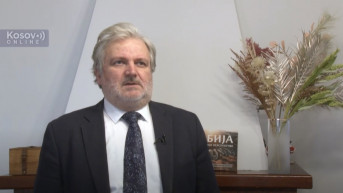
Writing for Kosovo Online: Dragan Bisenic, journalist
The issue of the Community of Serb-majority Municipalities has once again entered a dead end. On Monday, the participants of the talks from Belgrade and Pristina parted ways, without moving an inch forward; it seems, mostly thanks to the chaotic way in which the dialogue between Serbia and Pristina is conducted. In that dialogue, it seems that the priorities are mixed up both in the chronological and political order of moves, while the relevant subjects of the dialogue are wasted and lost. If the negotiation "step by step" could be called the alphabet of the negotiation process, the ten-year dialogue between Serbia and Pristina so far is most like a clumsy entanglement, so that now, one would say, no one can sit down or stand up anymore.
In the dialogue between Serbia and Pristina, it would be said that the priorities, accidentally or intentionally, were completely lost. Now, three or four agreements with different content and quality are being discussed at the same time. Some of them have been signed, like Brussels in 2013 and 2015, and some have only been verbally agreed upon, Brussels on February 27 and Ohrid on March 18, 2023. In such a negotiation chaos, no one knows what the priority is, while at the same time, everyone can set priorities arbitrarily and aim at one of the many targets that revolve around the negotiator. It was the same after the last talks in Brussels.
After the meeting, the director of the Office for Kosovo and Metohija, Petar Petkovic, said that Pristina was running away from the issue of the missing persons and the CSM. The Deputy Prime Minister of Kosovo, Besnik Bislimi, on the other hand, said that the Serbian side had only been interested in the Community of Serb-majority Municipalities, and criticisms came from Pristina that Serbia had been "violating agreements". The Prime Minister and the President of Kosovo simultaneously demand the implementation of all items of the recently concluded agreement, without conditions and delay, and that "priority is not given to the Community of Serb-majority Municipalities".
That is exactly what we are talking about. The European Union and the US need to decide and agree on whether the CSM is a priority or not. International representatives, officials of the European Union, diplomats, and ambassadors in Serbia and Kosovo, have been calling for the formation of the Community of Serb-majority Municipalities for several months now, describing it as a "priority", "urgent", "the discussion should start immediately", "an unfulfilled obligation undertaken in 2013 ", "a legally binding and accepted obligation", but at the same time, the opinion that the Community of Serb-majority Municipalities is not a priority issue in the negotiations is also accepted as a legitimate position.
Keeping in mind the logic of the moves that could lead to an agreement, it is clear that the previous obligations should be fulfilled first so that they serve as a basis for expanding and consolidating what has been agreed. If this is not done, there is always a risk that the entire structure will fail, especially when building from the foundation and the roof at the same time. The veteran and great man of Cold War diplomacy who will turn 100 years old in 10 days, Henry Kissinger, claims that diplomatic skill is most closely related to the ability to choose priorities. The success of any venture depends mostly on that selection.
In January, it was Gabriel Escobar and Derek Chollet who presented the American understanding of the Community of Serb-majority Municipalities with their author's text. They put the implementation of the agreement on the Community of Serb-majority Municipalities "among the most important tasks" and that "it is time to clearly state what it is and what it is not". Let's briefly recall "what is" and "what is not" the CSM, as Escobar and Chollet saw it then. It is "a way to improve the daily life of citizens, create trust between the Serbs and Pristina institutions, ensure better connections between the north and the rest of Kosovo, and create mechanisms for the Serbs to participate more in social life. Kosovo "within the dialogue led by the EU, can reject options that threaten its legal structure, but cannot reject its obligations", they promise that the USA, as "the most pro-Kosovo country in the world", is committed to supporting the people of Kosovo in order to ensure that "its constitutional and legal structure is not threatened". American diplomats state that "municipalities will be able to create curricula and programs in the Serbian language for local schools" and not work "in a vacuum", while Serbia's aid would be "transparent ” and “went through legal and permitted channels.” They concluded that “the creation of the Community does not violate the Kosovo constitution, nor does it threaten, as they state, “its sovereignty, independence or democratic institutions”.
As reported, Samantha Power, while staying in Pristina, allegedly stated in an interview that "the US was clear", and that "there is no need to create an additional level of government in Kosovo", and that "executive powers are not something that is envisaged for the Community of Serb-majority municipality". In the end, she concluded that the Community of Serb-majority Municipalities should be in accordance with the Constitution of Kosovo".
This intonation and content, if the translation and the statements of the Albanian media are to be believed, give a significantly different interpretation than the one presented jointly in January by Escobar and Chollet and narrows the understanding of the CSM to citizens' associations. If this is an American evolution in the understanding of the Community of Serb-majority Municipalities, which excludes from them all the competencies provided for in the Brussels Agreement of 2013, then it is difficult to assume that the CSM has any prospects of being formed and thus reaching an agreement between the two parties.
Again, altogether, it deviates from the European approach to the Community of Serb-majority Municipalities. The High EU Representative for Foreign Policy, Josep Borrell, repeatedly insisted that Kosovo "as soon as possible", "immediately", and "without hesitation" fulfilled its obligations. “The agreement has been ratified by the Kosovo parliament and Kosovo should fulfill its legal obligation and implement it without delay," Borrell announced, without mentioning any disagreement or conflict with the Constitution. Miroslav Lajcak was even more specific. He claims that without the CSM there is no normalization of relations. "The formation of the Community of Serb-majority Municipalities, security, and protection of the collective and individual rights of the Serbs are a prerequisite for the normalization of relations," the European Envoy said several times.
Chollet and Escobar will speak today at the Senate Committee on Foreign Affairs about the situation in the region at a hearing entitled "Assessment of the US Policy for the Western Balkans". This is an opportunity to really specify what the American understanding of the Community of Serb-majority Municipalities is and its role and priorities in the process of normalizing relations.
By the way, according to the Brussels Agreement, the Management Team is responsible for the proposal of the statute, which created it for the meeting held at the beginning of May. Immediately after the proposal, the Kosovo government decided to dissolve that team, which is a violation of the provisions of the Brussels Agreement, as assessed by the European Union, but so far without results. The European Union, as the guarantor of the Brussels Agreement, however, is now starting to multiply documents and issues for discussion. Thus, the German ambassador in Pristina, Jorn Rohde, called the proposal of the CSM presented by Albin Kurti a "vision", and now he requested a "blueprint" from the Kosovo side. The same was requested by the British ambassador in Pristina. He again connected the Republika Srpska with the Community of Serb-majority Municipalities, defining himself in the same negative way toward the proposal of the Management Team as the Kosovo side did.
The procrastination, complication, and delay in the formation of the Community of Serb-majority Municipalities in the public is increasingly raising doubts about what this pursuit of the CSM is for, whether it is really intended to improve the position of the Serbs in Kosovo or whether it has a fictitious role that should keep the Serbian side on alert for talks until we reach the point of the recognition of Kosovo's independence? Those doubts will grow stronger, the longer the current disorientation in the formation of the Community of Serb-majority Municipalities lasts because if it is not completed in a timely and quality manner, Miroslav Lajcak will be right in his assessment that "without the CSM, there is no normalization".

0 comments