
The fate of the dialogue: What after a disappointment
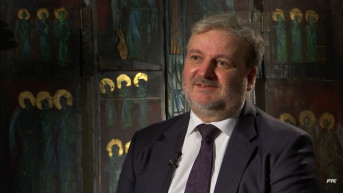
Writing for Kosovo Online: Dragan Bisenic, journalist
The international entities involved in the dialogue received the end of last week's meeting between Belgrade and Pristina in Brussels, with a gloomy face. The US and German representatives announced that they were disappointed with the outcome and asked that both sides focus on dialogue. When the EU High Representative for Foreign Policy, Josep Borrell, last week made official the failure of this round, in which the President of Serbia, Aleksandar Vucic, the Prime Minister of Kosovo and Metohija, Albin Kurti, and EU Representatives Borrell and Miroslav Lajvak participated, he stated that "Kurti was not ready to go ahead and start forming the CSM, insisting instead that de facto recognition be established as a first step". "President Vučić accepted our proposal," Borrell stressed. The head of European diplomacy stated with regret that "there is no progress" in the de-escalation of the situation in the north of Kosovo and reminded that all 27 EU members had requested that immediate steps be taken in this direction. Pointing out that both sides had to fulfill what they had committed to so far; Borrell says that the Community of Serb-majority Municipalities is an old obligation for both sides and that it represents a key element and it is crucial that the implementation of what was agreed finally begins.
In Brussels, they discussed the proposal of the European Union that the formation of the Community of Serb-majority Municipalities should go parallel to the Brussels negotiations, and not that the full implementation of the Brussels Agreements in 2013 and 2015 precedes the implementation of other agreements, above all the Ohrid Agreement, which made another concession from the Serbian side.
But that was not enough for the success of this meeting. Albin Kurti published a proposal for the implementation of the Basic Agreement, which essentially represents a document on mutual recognition as two states, that is, a document by which Serbia accepts the secession of Kosovo and Metohija. In that paper, it is stated, among other things, that the agreement serves for Serbia's formal renunciation of all territorial claims to the territory and borders of Kosovo and that the parties agree to the demarcation of the border within a period of two years, stressing that this was the only proposal on the table. The UN should be informed about all of this, and Serbia should stop expressing objections to the admission of Kosovo and Metohija to all international organizations.
The European Union rejected the interpretation of the Prime Minister of Kosovo and Metohija, Albin Kurti, that his proposal had been the only one presented at the talks and reminded that the EU Special Envoy for Dialogue Miroslav Lajcak, meanwhile, had seven rounds of separate talks with both sides on the occasion. "Kurti's statement that this proposal was the only one on the table is therefore factually simply incorrect," the EU added.
The text presented to both sides, is rather about "instruments of self-government" for the Serbs in Kosovo, instead of the CSM, and states that the completion of negotiations on "the statute of the instrument for self-government of the Serbs in Kosovo" is foreseen. In this framework, it is foreseen the parallel establishment of the "instrument of self-government" for the Serbs in Kosovo, i.e. the Community of Serb-majority Municipalities, but also the abolition of the structures under the administration of Belgrade in Kosovo and their transfer, if necessary, to the framework of the "instrument for the self-government of the Serbs in Kosovo", i.e. the CSM.
After re-entering the impasse, which, it can be said, was predictable and inevitable in negotiations conceived in this way, the question was not only asked what would happen next but also what would be the fate of future negotiations. Simply, the determination of the EU and the USA to proceed with further negotiations, without the previous agreements being respected, has led to a logical, whether accidental or intentional, confusion in which the Brussels and Ohrid agreements trip over each other, without much prospect of introducing any order and time priority, despite the fact that international actors are trying, albeit with different intensity, for one paper or another.
If it was a technical issue or a technical aspect of the agreement, all of that could be ignored. This is not only an essential issue for the existence of the Serbs in Kosovo and Metohija, but also an issue that determines the character and fate of the dialogue. If what was agreed is not respected and if one of the parties is tolerated to undermine and sabotage its own promises, then the dialogue has no meaning. Not now, and not in the future.
In such circumstances, understandably, the ability and capacity of the one mediating the dialogue, in this case, the European Union, is being questioned. There are many who, for various reasons, are dissatisfied with the way the EU conducts these meetings. Kurti's associates accuse that the European Union has sided with Serbia and that "Serbia's demands have become the EU's plan" only because this time it is being asked to respect the agreements related to the Community of Serb-majority Municipalities.
What is particularly important is the warning that came from the US side that "time is running out", which means that Washington does not expect the agreement to be extended indefinitely. The Special Envoy for the Balkans, Gabriel Escobar, has repeatedly given different assessments about the expectations for the end of the dialogue, from August to autumn, and to the end of the year. He also said that the dialogue did not have a time frame, but that if it was not concluded within a reasonable time, both sides would "suffer the consequences". It will not be sanctions but "denying the European perspective".
The European Union has already introduced measures against members of the Kosovo Government for not complying with demands related to de-escalation. The measures are temporary, and they will be abolished only when all the demands of Brussels are implemented, which include the complete withdrawal of the police from municipal buildings in the north, the removal of the mayors from municipal buildings, and the holding of extraordinary elections for four municipalities in the north of Kosovo.
So it seems quite improbable that the European Union would back down and give up its demands. The approach of the European Union to the Western Balkans, as it now appears, has a new dimension. As Ursula von der Leyen emphasized in last week's speech on the state of the EU, the accession of new members from the Western Balkans had not only a technical side, which had dominated until now but primarily a geopolitical dimension that had become dominant after the Ukrainian-Russian conflict.
Although there is also mention of the "Americanization" of the negotiations, that is, proposals for the USA to take a leading role in the dialogue, this is much easier said than done. The European Union received the status of mediator in the dialogue from the United Nations. In order for the USA to become the mediator now, the consent of the UN Security Council would be required, and that is "mission impossible" in these circumstances.
Instead, the US and German sides announced that "the state of dialogue, with the tense situation in the north of Kosovo, will be the subject of upcoming strategic talks with our US and European partners in order to determine our next steps." A similar announcement was made by European mediator Miroslav Lajcak. According to what it announced, the US side demands progress in relation to all commitments undertaken within the dialogue, including the establishment of the Community of Serb-majority Municipalities. Therefore, it seems clear what will be discussed at the announced US-European coordination. But it will certainly determine the future course and fate of Brussels meetings and agreements.
0 comments