
Little Banjska - a major European challenge
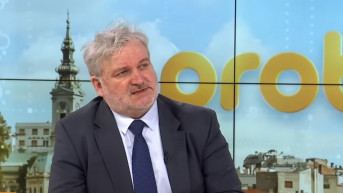
Writes for Kosovo Online: Dragan Bisenic, journalist
Little Banjska has become a major European challenge. The events in Banjska can be considered a turning point in the development of the situation in Kosovo, and its full consequences are neither visible nor immediate. Such turning points have been witnessed before. They pertain to the future purpose of the previous dialogue, the status of the Serbs in Kosovo, Serbia's future approach to Kosovo, and the UN and EU responses to this crisis. All of this constitutes a powerful blow to regional relations, which had started to progress and improve, as well as to the internal stability of countries in the region, including Serbia, Montenegro, Bosnia and Herzegovina, and North Macedonia. All these countries are in a kind of pre-election, post-election, or constitutional-legal "interlude". There are even suggestions to abandon the previous form of dialogue and turn it into a conference or have the US take over the dialogue. Albin Kurti recently publicly discredited Miroslav Lajcak, and earlier Gabriel Escobar, the US Envoy, and Secretary of State Blinken. However, Kosovo and Metohija are not in a legal vacuum; their status is governed by UN resolutions, and any change requires the approval of the UN. Moreover, the UN High Representative in Kosovo still formally holds the highest and broadest authority and de facto power in Kosovo and Metohija.
The European Union has gone furthest in characterizing the events in Banjska. Several EU member states demanded sanctions against Serbia at a meeting of the Political and Security Committee, composed of ambassadors from EU member states, should Serbia's involvement in the Banjska attack be proven. The spokesperson of Josep Borrell explained that the investigation would determine Serbia's involvement in the event, and sanctions against Serbia would depend on the findings. Manuel Sarrazin, Germany's Special Envoy for the Western Balkans, characterized the incident as a "criminal and terrorist attack." Spokesperson Peter Stano stated that the EU was clear that the events in Banjska constituted a "terrorist act". Immediately after this strong condemnation, Stano called for a full investigation into the event, targeting not only those who executed it but also those who planned and orchestrated it. This assessment is based on the indictment by the Kosovo prosecution against those arrested and currently in detention. Germany's Minister of Foreign Affairs, Annalena Baerbock, singled out Serbia, stating that Serbia "should unequivocally call for restraint from violence" in the aftermath of the attack on the police in Kosovo. She posted on social network X, "After the attack on the police in Kosovo, everyone must be aware of their role in peace. In the tense situation in the Western Balkans, responsibility is measured by what you do to de-escalate. Serbia, in particular, must unequivocally call for restraint from violence." A debate on the events in northern Kosovo is scheduled for October 3 in the European Parliament, and it can be inferred that a sharper tone toward Serbia may be heard.
Kosovo President Vjosa Osmani has announced "institutional decisions" against the Serb List, stating that "after the terrorist act in Banjska, it is undoubtedly clear that it was organized and orchestrated by Belgrade with the intention of destabilizing Kosovo and the entire region." In this regard, she announced that institutional decisions against the Serb List would be made soon.
After the statement, the Kosovo Assembly, attended by Prime Minister Albin Kurti, adopted a resolution condemning the attack on the Kosovo Police in Banjska on September 24. Kurti also requested that "partner countries" designate the organizations "Civil Defense" and the "Northern Brigade" as terrorist organizations, which the Government in Pristina had already declared as terrorist in June, even though the Serbs from northern Kosovo had stated that these two organizations did not exist at all.
The dialogue on the Franco-German plan started prematurely and without the necessary preparations, creating a gap in the expectations of the participants. Previous agreements were not fulfilled, such as the Brussels Agreement of 2013 on the Community of Serb-majority Municipalities, leading the Kosovo side to believe that it did not have to fulfill it at all, and if it did, the Community would have to be symbolic and exist only "on paper". On the Serbian side, this led to a loss of trust in the intentions of the EU and the US, even though Serbia had withdrawn its real and factual presence in Serbian municipalities in northern Kosovo based on their promises. After the events in May and police actions in northern Kosovo, there has been a continued drastic violation of previous agreements, and their guarantors have shown reluctance or unwillingness to preserve them. At the same time, there has been a strong push for solutions that would bring Kosovo to the brink of recognition of independence by Serbia, with no guarantees for the Kosovo Serbs, neither in terms of security nor existential concerns. All of this has been enabled by approving the holding of elections in northern Kosovo without the participation of the Serbs who boycotted them because nothing was done to establish the Community of Serb-majority Municipalities. This has been followed by a series of distortions of previous agreements and the ignoring of commitments, along with the tolerance of aggressive actions by Pristina.
The coincidence with the events in the Caucasus adds a new dimension to all of this. As we now see, the concept of autonomy and sustainability of minority communities is being undermined. This is the conclusion after the factual and real disappearance of Nagorno-Karabakh in Azerbaijan. The authorities of the self-proclaimed "Republic of Nagorno-Karabakh" sized to exist based on decisions of dissolution and self-dissolution from January 1, 2024. Diplomatic negotiations mediated by the US and the EU had announced success in a negotiated solution just a few months ago, but it all ended with military action and the relocation of the population. Nagorno-Karabakh has long been connected to the Balkans, but it is also a challenging and "poisoned fruit" if someone were to attempt to follow a similar path in Kosovo. First and foremost, it concerns the different legal status of these two entities. Kosovo is a part of Serbia in UN and EU documents. Even Kosovo Prime Minister Kurti acknowledges this, as he demands that Serbia recognize Kosovo as a state in his political and diplomatic demands. The example of Karabakh clearly favors state territories rather than quasi-state territories. Nevertheless, it is subject to different interpretations and viewpoints. For Pristina, there is no doubt that Kosovo is a "state," and this "state" has every right to establish territorial unity and defend its territorial integrity. The actions of the Kosovo police in Little Banjska are interpreted in exactly this way. Therefore, someone, not only in Kosovo but also in the international community, might be tempted to resolve the issue through military or police action, similar to Nagorno-Karabakh. Let's not be naive – behind beautiful words often lie harsh truths. Bernard-Henri Levy, considering the outcome of the conflict in Nagorno-Karabakh, pointed to the unreliable stance and empty promises of the West, leading to the conclusion that the "alliance with the West is more dangerous than desirable". Those who base their calculations on power dynamics and assessments of the sustainability of certain communities often disregard feelings and moral dimensions, focusing solely on cold calculations. Thus, solutions to armed conflicts in the Balkans were based on the belief that communities with less than 80% national homogeneity are not sustainable (Dayton Agreement for Bosnia and Herzegovina); that national enclaves without integration cannot survive (Srebrenica); and that homogeneous national minorities and communities can be relocated to their parent states (Srpska Krajina, Nagorno-Karabakh). All of this can create expectations or motivate plans for achieving full Kosovo statehood through the complete elimination of Serbian presence in Kosovo. Over 20 years ago, an influential Western expert who wrote strategic papers on the development of the situation in the Balkans, before the declaration of Kosovo's independence, went as far as to say that the Serbs should forget about Kosovo and that, if they care about it, they should dismantle all their churches and monasteries and rebuild them in Serbia.
To avoid temptations of this kind and the call for "shortcut paths" in Kosovo, proposals have been emerging for KFOR to take on a stronger role in northern Kosovo for several days. After talks with representatives of the "Quint", Serbian President Aleksandar Vucic requested that KFOR take over responsibility for all security matters in northern Kosovo instead of the Kosovo Police. Albanian Prime Minister Edi Rama made the same proposal. Rama stated at a press conference that he had also proposed this at the NATO summit because "things can go far and can go fast".
"In order to prevent this conflict in any way, which today seems more likely than ever, KFOR must take control of northern Kosovo. This is a proposal I have made before, even at the NATO summit, and I have extensively explained why," Rama said. Approval has come from Italian Foreign Minister Antonio Tajani, and Viola von Cramon, the EP rapporteur for Kosovo, has also called for a strong deployment of KFOR in the North.
If KFOR does indeed fill the "security vacuum" in northern Kosovo, further steps could be considered to overcome the current crisis, up to the point when the Community of Serb-majority Municipalities is established and Serbian police officers take their place, as agreed and signed in Brussels ten years ago. Without that, Kosovo will not be on the path to de-escalation and peace.
0 comments