
The outcome of the Athens meeting: Torpedoing of Kurti's platform "Kosovo = Ukraine: Serbia = Russia"
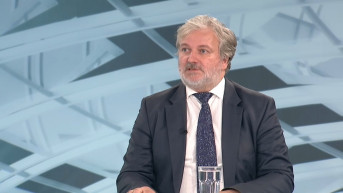
Dragan Bisenic, journalist, writes for Kosovo Online
The results of a somewhat unusual gathering marking two decades since the adoption of the Thessaloniki Declaration for the Western Balkans and Serbia represent a mixture of positive and questionable signals when it comes to the two topics that most concern Serbia. It is about membership in the European Union and the issue of Kosovo, and the outcomes in these two cases are divergent.
When it comes to the perspectives of the Western Balkans for EU membership, it can be said that by connecting them with Ukraine and Moldova, another dimension of uncertainty has been added, and the overall result cannot be considered encouraging.
Two decades ago, at the EU summit in Thessaloniki, which was organized by Greece as a part of its presidency, for the first time, on the initiative of the then President of the European Commission, Romano Prodi, and the Greek Minister of Foreign Affairs, George Papandreou, the policy of including the countries of the Western Balkans into the European Union was explicitly formulated, and then the EU practically for the first time publicly and declaratively assumed that obligation.
Now we are talking about the Declaration of Support for Ukraine, in which points 5 and 6 talk about the relations of these two regions with the European Union.
The fifth point begins by recalling the previous Summit and the conclusions on the Western Balkans, but it serves more as a prologue for the next point, as it states that the "war against Ukraine" opened the need "for a strong, resilient and inclusive European Union", without any indication of the state in which are the countries of the Western Balkans according to the European Union two decades later.
It moves on to the merger of the Western Balkans, Ukraine, and Moldova, as "geographically neighboring member states of the European Union" that have "a common European heritage, history and future defined by common opportunities and challenges", in order to emphasize that "it is important that these regions are accepted as full members of the European family".
It is clear that now the relationship of the Western Balkans towards the European Union is placed in the same context as Ukraine and Moldova, which were granted candidate status last year, without any special procedures. Since this kind of Ukraine hardly has the elementary conditions to become a member of the European Union, equalizing the perspectives of the Western Balkan countries for joining the EU is not an encouraging step at all. The document once again emphasizes that it is "important" to fulfill the "vision of the European Union which is enriched by the Western Balkans, Ukraine, and Moldova", which reinforces the position that the Western Balkans are now at the same level of waiting as Moldova and Ukraine.
North Macedonia, Montenegro, and Serbia have the status of candidates for EU membership for a long time. This significantly differs from the promises of German Chancellor Olaf Scholz, who during his Balkan tours promised a real shift in the European attitude towards the membership of the Balkan states in the European Union. Since these promises were made in connection with the dialogue between Belgrade and Pristina and although they are not explicitly stated in the Brussels Agreement that Belgrade and Pristina accepted at the beginning of this year, the question arises as to what is the attitude of the European Union towards the numerous supplementary statements that led to the conclusion of this agreement in relation to Serbia's membership in the European Union.
In addition to this, not only the adopted Declaration but also the entire meeting, provide a message that does not support the consolidation of the Kosovo independence policy. This dinner was the first direct event that directly connected the relationship to the integrity of the countries in the Balkans with Ukraine. The Thessaloniki Declaration from a decade ago emphasized that it was based on the principles of respect for sovereignty and territorial integrity, respect for existing borders, and deterrence from separatist tendencies and divisive ideologies, while at the same time actively promoting the establishment of democratic procedures, as well as the protection of human and minority rights.
EU countries violated all of these when in 2008 all but five of them recognized the independence of Kosovo and thereby renounced respect for the sovereignty and territorial integrity of states.
Now, this topic was not even mentioned in the Balkan context, but it is contained in a new form in Article 2 where "unwavering support for the independence, sovereignty and territorial integrity of Ukraine within its internationally recognized borders" is given. Based on what happened at the meeting, these formulations can also be applied to Kosovo, and the basis for such conclusions is the behavior of Ukrainian President Zelenskyy. Zelenskyy completely omitted Kosovo Prime Minister Albin Kurti from the list of officials he met, and as topics of conversation with Serbian President Aleksandar Vucic, he mentioned "respect for the UN Charter and the inviolability of borders" and pointed out that "mutual support for territorial integrity and sovereignty is an important part of Ukraine's partnership and Serbia".
This can be interpreted as a clear position of Ukraine that it will not recognize Kosovo. Such an attitude has immediate consequences in two ways. On the one hand, the process that was recently initiated by the letter of 56 MPs and Presidents of Parliamentary Committees for Foreign Policy, which had a completely different intonation in connecting Ukraine and the Balkans, was interrupted, and on the other hand, it strongly undermined Kurti's favorite political platform "Kosovo = Ukraine: Serbia = Russia".
In the letter, let's recall, taking a firm stance towards Serbia, "introduction of proportionality" in the relations with Kosovo and Serbia, and abandonment of the policy "directed towards Belgrade" was requested. Some commentators have assessed that it is particularly significant that among the signatories is the chairman of the Foreign Affairs Committee of the Ukrainian Verkhovna Rada, Oleksandr Merezhko, and that Ukraine is the most important country among the signatories of the letter because the recognition of Ukraine would also "serve" that the five countries of the European Union that do not recognize Kosovo change attitude.
If that's the case, then that opportunity was used at the dinner.
Merezhko is a respected international lawyer from Zelenskyy's party, who met with the President of Kosovo in June. The intonation of his statement, which he later gave explaining the Ukrainian position, indicated that he is not even predominantly on the side of those who want Ukraine to recognize Kosovo, because he is aware that supporting the principles based on which Kosovo's statehood should be established simultaneously represents the path to the destruction of Ukrainian statehood. Merezhko therefore said that the recognition of Kosovo's independence was still a disputed matter in Ukraine, that he himself only represented "parliamentary diplomacy" and that he "doesn't have the whole picture" of all the circumstances. He therefore pointed out that "there are still discussions" and that "it is not an easy matter", because "there are advantages and disadvantages" and that President Zelenskyy was now deciding on this.
According to everything that has been seen, the Ukrainian President has clearly distanced himself from Kosovo.
It will now be much more difficult for the Kosovo Prime Minister to mirror Ukrainian relations to the Balkans and identify himself with the Ukrainian President, which he regularly did before, calling the Serbian President "little Putin". “With Putin's friend in Republika Srpska, Bosnia and Herzegovina, and little Serbian Putin, peace and security in the Western Balkans have never been more threatened," Kurti said, repeating that Serbia was a threat to the region. "Again, in that sense, Serbia is like Russia, but their danger to us does not turn into fear of them, but into additional efforts for development and democracy," Kurti said.
It wasn't just Kurti who came out damaged from this gathering. A similar thing happened with Edi Rama, who was not even at the dinner because of the conflict regarding the elections in the city of Himare and the arrest of the representative of the Greek minority, which resulted in Rama's condemning open letter to Mitsotakis, so the latter did not even invite him to the meeting.
Rama withdrew and immediately publicly praised the Greek Prime Minister's decision to "take the lead" in the region when it comes to European integration and condemned those who wanted to "make a mountain out of a molehill" or "make an elephant out of a fly" in the latest dispute between Albania and Greece.
It is true that this unusual dinner, which ended with a kind of signing of a "solemn statement" in addition to everything else, added another weight to Mitsotakis' favorite scales in the increasingly strong speculations about his candidacy for the future President of the European Commission.
0 comments