
Aliu: Trials for war crimes in absentia are challenging, difficult to ensure effective defense for the accused
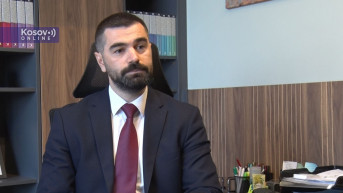
Lawyer and associate of the Humanitarian Law Center in Pristina, Amer Aliu, stated that the trial in absentia for war crimes committed in Meja will be the largest in terms of the number of defendants, but that legal professionals mostly criticize this type of trial due to the inability to ensure an effective defense.
“Legal experts have objections to trials in absentia because they are challenging. It is difficult to ensure an effective defense for accused persons who are not present, although such trials are not prohibited. They are used in Serbia and also in Croatia, where there are many such cases. For Kosovo, this is a new legal practice,” Aliu told Kosovo Online.
Aliu said that, as a lawyer, he personally has reservations about this type of proceeding.
“There must be equality between the parties in the trial. Also, there needs to be effective defense, which is difficult to secure in these proceedings,” he emphasized.
He added that judges and prosecutors in such trials are obligated to follow the law and proceed as prescribed.
“They conduct the investigation, then send a request for the suspect to appear before the prosecution to give a statement. If the suspect cannot be found, a warrant is issued and the process continues. Eventually, an indictment is filed and a summons is issued for a hearing. All this takes several months and must be publicly announced so that anyone with information about the case or the suspect can share it with the police or prosecution,” Aliu explained.
He added that in this specific case, if a final conviction is reached, it will be legally valid.
“According to the law, such judgments are legally binding. However, the court panel must issue the verdict based on strong and convincing evidence and ensure that the accused receive professional legal assistance during the proceedings,” Aliu noted.
He also added that the law provides that if a person convicted in absentia is later arrested, they have the right to request a retrial.
“They automatically have the right to be tried in their presence. That is guaranteed by law,” Aliu stated.
He pointed out that this legal solution—trials in absentia—came about due to the lack of cooperation between the judicial systems of Kosovo and Serbia.
“Kosovo’s institutions were forced to introduce trials in absentia because it is difficult to secure the presence of individuals suspected of war crimes who may be in Serbia. Serbia and Kosovo do not cooperate or exchange information. Because of this, these proceedings were rapidly initiated, and there are now more than 70 people indicted in absentia,” Aliu said.
He recalled that the possibility of trials in absentia was first introduced through amendments to the law in 2019.
“Two more amendments to the Criminal Procedure Code followed, and since 2023 the Kosovo Prosecution has begun filing indictments in absentia. So far, it has filed 17 indictments against more than 70 people for war crimes committed during the war in Kosovo. Among them is the indictment for Meja. It is one of the largest indictments filed in absentia, and one of the largest overall since the war in Kosovo. This indictment names 53 individuals suspected of participating in and committing the alleged crimes,” Aliu recalled.
The trial in absentia for the war crime in Meja is scheduled to begin on June 16. The list includes several generals of the former Yugoslav Army (VJ), many of whom were brigade commanders deployed in Kosovo during 1998 and 1999.

0 comments