
Pasic: According to international standards, verdicts in absentia have no legal effect
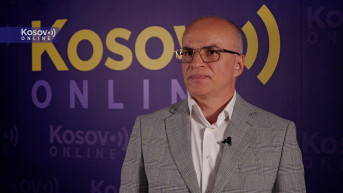
Former military prosecutor and lawyer Dragan Pasic stated that, under international legal standards, the outcome of trials in absentia for war crimes cannot have legal effect, a position also supported by the European Convention on Human Rights.
“If one observes the standards and principles of international law, such a verdict clearly cannot produce legal effect. I would remind that in cases involving war crimes, the presence of the accused is required. For example, the accused must have the right to cross-examine witnesses. There are 260 individuals expected to testify as witnesses, and if they are tried in absentia, as is the case here, that right will be violated,” Pasic told Kosovo Online.
Commenting on the upcoming trial in Pristina, scheduled to begin on June 16—the largest war crimes trial in absentia, related to the killing of civilians in Meja—Pasic noted that the rights of the accused are defined by numerous international legal instruments.
“Their rights are prescribed by the European Convention on Human Rights and Fundamental Freedoms, especially Articles 3, 6, and 8. While there is, in theory, a possibility for a conviction in absentia once the indictment has entered into legal force, the question remains whether such a verdict would stand,” Pasic said.
He views the trial against 53 former army and police officers as a form of “balance” in relation to the trials currently ongoing before the Kosovo Specialist Chambers in The Hague, as well as a reflection of the current political situation in Kosovo.
“Simultaneously, trials are being conducted in The Hague against leading figures of the so-called KLA. That is a relevant and ongoing process. There are also individuals who have been finally convicted by the International Criminal Tribunal for the former Yugoslavia, including military and police generals. We must not overlook the fact that the political situation in Kosovo and Metohija is far from ideal and that relations with Serbia are unsatisfactory. So, there are multiple contributing factors,” Pasic noted.
He argued that this process cannot be considered an objective trial.
“It is difficult to talk about an objective trial, especially considering the fact that all 53 accused are outside the territory of Kosovo and Metohija. We are talking about military and police generals, but also a significant number of police officers,” Pasic emphasized.
He reminded that the first accused is General Momir Stojanovic, who at the time in question served as the head of the Security Department in the Pristina Corps, while the last on the list is police officer Predrag Micunovic.
“They are charged with committing war crimes against the civilian population between April 27 and April 29, 1999, in 33 villages within the municipality of Djakovica. The indictment includes two counts—one for murder, and the other for deportation, destruction, and looting of property,” Pasic explained.
He added that the investigation into the crime in Meja, in which 370 Albanian civilians were killed, began in 2013, during the period when the justice sector was led by EULEX, and was interrupted several times.


0 comments