
Andric Rakic: A change in political messages that fuel ethnonationalism is needed
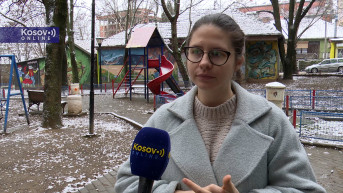
Milica Andric Rakic, Program Manager of the NGO Social Initiative, stated that residents in northern Kosovo have many reasons to be dissatisfied with the work of the police and that the only way forward is to change the political messages that fuel ethnonationalism and undemocratic approaches to the Serbian community.
"Since the Self-Determination Movement took power, governance in Kosovo has been characterized by nationalism and populism. This undermines the multiethnic nature of institutions and interethnic relations. It started at the top, and that is where change should begin. It is crucial to change the political messages coming from the top that incite ethnonationalism and an undemocratic approach to the Serbian community," Andric Rakic told Kosovo Online.
She points out that there have been numerous clear examples of mistakes in police conduct toward minority communities, as well as incidents.
She cites the recent accidental discharge of a police officer’s firearm in Zvecan, where the response was merely that "more training is needed."
"There were also shootings in Bistrica, twice in fact. A first-instance verdict was recently issued for one of these incidents. There are many reasons why distrust exists within the Serbian community regarding the conduct of the police. This distrust primarily stems from examples of police unprofessionalism, and secondly from the lack of timely institutional responses to such unprofessionalism, which creates the impression that there is a willingness to overlook police misconduct," Andric Rakic emphasized.
She explains that establishing a normal relationship between the Serbian community and the Kosovo Police has faced numerous challenges.
"This issue actually began with the Kosovo Police's inability to establish a normal relationship within the police force itself. Had there been a balanced relationship and trust between the Regional Police Directorate North and the Police Directorate in Pristina since September 2021, when the crisis began, we wouldn’t have reached the point where Serbs in the north left the Kosovo Police en masse," the activist said.
She adds that regardless of whether one believes Serbian police officers left the Kosovo Police due to political pressure, the facts show that, at a critical moment, the Kosovo Police as an institution was unable to defend its multiethnic character because trust between Serbian and Albanian officers had never been established.
"Of course, if you cannot establish a normal relationship of trust among colleagues, this inevitably extends to the community itself. There are also problems with selective practices in policing in minority areas, especially when the police are no longer practically multiethnic or have very few members from minority communities who are often not present in the field. They are either in the station or involved in traffic controls, but there are very few of them in urban areas. In this sense, there are significant issues with how the police carry out their duties in minority communities," Andric Rakic concluded.



0 comments