
Antic: Population census in the Balkans is a political issue because not all peoples are given the same rights
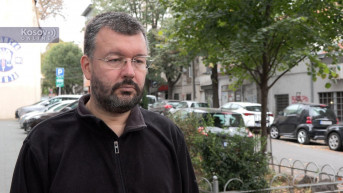
Historian Cedomir Antic says for Kosovo Online that the census in Balkan countries has turned from a technical issue into a political one because, in his view, NATO, as the "EU's representative in the Balkans," does not want democracy in the region but supports nationalisms. In such conditions, he adds, the census has become a "weapon."
The new government of Montenegro decided at its first session to postpone the census in the country to November 30, while the census process in Albania, which began on September 18, was supposed to last until the end of October but was extended by 15 days.
In recent weeks, the census in Montenegro has become the number one political issue.
"The census has become a political, not a technical issue because NATO, as the EU's sole representative in the Balkans, and the nationalisms it supports and works through here, do not want democracy in the Balkans. Therefore, if they wanted democracy, they would grant rights to all peoples, and they would not treat Serbs in Croatia differently from, let's say, Albanians in North Macedonia or Albanians in Kosovo, and Serbs in Bosnia and Herzegovina. Macedonians would not have a different status from Montenegrins or Croats, and it would not be allowed for Albanians to create a 'Greater Albania' before the eyes of the whole world, even though they have no support in a large part of the countries they would include in their borders," Antic says.
He explains that in such conditions, the census has become a "weapon."
"During communism, to which Albanians were extremely loyal, they were the only nation in Europe that was neither denazified nor 'decommunized,' meaning that communists did not confront anti-authoritarian laws in any country where Albanians lived in the majority. During that time, they created a fantasy about the number of Albanians. At one point, Albanians almost outnumbered Serbs in the Balkans," Antic explains.
He says that no matter how undemocratic society is in Kosovo or North Macedonia, the censuses still reveal reality.
"It is the same with Albania. Albania is the motherland of a very aggressive nationalism that seeks to create a huge state conceived from Austria-Hungary, Nazi Germany, and fascist Italy, not by the democratic will of Albanians or anyone else. On the other hand, they do not want to accept the equality of other nations, and it is known that they boycotted the census in Kosovo and Metohija. When it was carried out, it was shown that there were many fewer of them. In the Presevo area, Bujanovac, and as they claim Medvedja, what they inaccurately call 'the Presevo Valley,' they boycotted the census so that it would not show that the images of how many of them there are were false and have always been false. They counted the diaspora and colonized Serbian regions in Kosovo," Antic explains.
According to him, a similar situation occurred in North Macedonia regarding Albanians.
"Everything was made up after a rebellion, after which those who were attacked, the Macedonians, were held responsible. It was made up that they (Albanians) can have constitutional rights with a 25 percent share of the population. Then why don't Serbs in Montenegro have constitutional status? Should they take up arms? An American admiral talked about how the Serbian Orthodox Church is the enemy of NATO in the Balkans. So that's why it's like that, I'm primarily talking about Albanian nationalism, and we can see that Montenegrin chauvinism is copying Albanian. It is the same in Bosnia and Herzegovina. In Bosnia and Herzegovina, the Bosniaks have reported 150,000 people who will never again be residents of Bosnia and Herzegovina," Antic emphasizes.
He adds that this "completely disrupted the rules of the census."
"They did it all with the idea that when we talk about the census, one day Bosniaks will have 51 percent," Antic assesses.
0 comments