
Arifi: Kosovo in an undeclared state of emergency
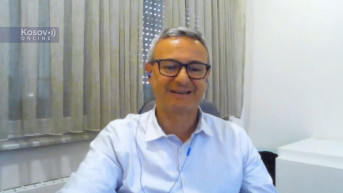
Political scientist Dritero Arifi emphasized that Kosovo is in an undeclared state of emergency due to the failure of the members of the Kosovo Assembly to conclude the constitution of the parliament by July 26, Radio Free Europe reports.
Arifi points out that the Kosovo Assembly ratifies every local law and international agreement and oversees other institutions, so its dysfunction places Kosovo in a problematic situation.
“The majority of all relevant institutions that keep the state functioning, especially a parliamentary republic, largely depend on the assembly. Without votes in the assembly, nothing works. The state of Kosovo is in a state of emergency, it just hasn’t been officially declared. That is the de facto situation,” Arifi emphasized in an interview with RFE.
Kosovo Democratic Institute associate Vullnet Bugaqku explained that the Kosovo Assembly is the main engine that drives all activities, overseeing the accountability of the executive branch, independent agencies, and other mechanisms, as well as passing laws and ratifying various international agreements.
As he noted, until the assembly is constituted, Kosovo will remain in institutional deadlock, with no clear way out.
“As a result of the assembly not being constituted, many issues remain unresolved. Without a functioning assembly, the state cannot operate normally in terms of the duties and responsibilities of each official, but also of each institution. The state of Kosovo is currently on pause, and there are no signs that the situation can be resolved,” Bugaqku emphasized.
According to him, in the absence of a constituted assembly, the current government of Kosovo, which has limited authority, has no one to report to or be held accountable by.
“When there is no assembly, a new and legitimate government cannot be formed. As a result, the chances increase that the government may make unlawful and unconstitutional decisions, creating a kind of chaotic situation regarding the implementation of the constitution and the rule of law in the country,” Bugaqku added.
Dritero Arifi believes the situation is unpredictable.
According to him, the failure to constitute the assembly due to political conflicts has placed Kosovo in an incomprehensible legal position, where institutions are left without legitimate oversight.
“Apart from the president, who has legitimacy, albeit very limited, since the president is elected by the assembly. So, it is an absurd situation in itself. The only institution responsible for accountability is the assembly, and we don’t have one,” Arifi said.


0 comments