
Baraliu: It’s good that Osmani reacted – I hope the Constitutional Court will be efficient
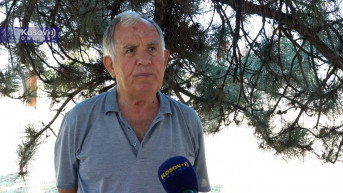
Mazlum Baraliu, professor of constitutional law, stated that it was a positive step that Kosovo President Vjosa Osmani reacted and appealed to the Constitutional Court to resolve the political crisis caused by the continued failure to constitute the Assembly.
“President Osmani, being a lawyer — and a good one — understands these relationships and knows the constitutional and political issues. She knows when to act. However, I believe that all of us — citizens, political parties, MPs, and institutions, including the president — should be more actively engaged in the constitution of the Assembly. There are numerous agreements, international treaties, and laws that institutions need to adopt,” Baraliu told Kosovo Online.
He added that Osmani is aware of this and clearly understands that action must be taken because time is running out.
“Still, perhaps she hoped, as we all did, that some agreement would be reached and that the parliament would be constituted — which didn’t happen,” Baraliu said.
He pointed out that there are now uncertainties about what will happen if the Assembly is not formed by July 26, which is the deadline set by the Constitutional Court.
“No one knows, because it is not defined in the Constitution or any other legal acts. There is no clear procedure on what to do in such situations, and this is the first time we are facing a blockage caused by a technical and procedural issue that should be resolved in a minute — yet our MPs have convened 50 times,” Baraliu noted.
Nevertheless, he has no doubt that Osmani’s reaction was a good move:
“We hope that the Constitutional Court will be efficient and respond to the two motions submitted by political parties, as well as the one submitted by the president. Hopefully, this blockage will finally end, so we can have a constituted Assembly, and after that, a new Government,” Baraliu stressed.
He believes that a response should be expected before July 26:
“The Constitutional Court must be efficient, as this is an urgent political case, but also a delicate legal matter, given that we have neither a parliament nor a government, which we should have. We have urgent obligations, and we hope the Court will be more efficient this time, because this is not a complicated legal, professional, or political issue — it is something that could be resolved in a matter of minutes, if the parties had the will to agree. But since they don’t, everything now lies in the hands of the Constitutional Court,” concluded Professor Baraliu.
President Vjosa Osmani formally requested an interpretation from the Constitutional Court on the legal consequences if the new parliament is not constituted within 30 days, as stipulated in the Court’s decision issued at the end of June.
That deadline expires on July 26, in just a few days. Nevertheless, despite time “running out,” MPs today, for the 51st time, failed to complete the process of constituting the Assembly. The session was interrupted by Chairman Avni Dehari after a verbal clash with PDK MP Ganimete Musliu, and the 52nd attempt was scheduled for the day after tomorrow — July 25.


comments