
Baraliu: Kosovo in a state of national emergency after the Hague decision
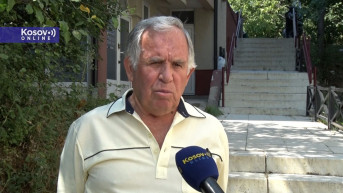
Constitutional law professor Mazllum Baraliu said that, following the decision of the Kosovo Specialist Chambers based in The Hague concerning the former KLA leaders, Kosovo is in a situation he described as a “national emergency”.
Baraliu called for mobilization and political unity, including convening the Assembly and engaging the government, and proposed establishing a fund to support the defense during the appeals process, as well as creating mechanisms to monitor the proceedings and conduct diplomatic lobbying.
“Serbia will certainly take advantage of this, because it has invested a great deal in this court, as well as continuously in other areas, in order to strike at, attack and criticize Kosovo, seeking everything from the withdrawal of recognition to the complete reversal of what has been achieved, with the ultimate goal of dismantling the state of Kosovo. Therefore, finding ourselves in a situation following this decision – which is extremely damaging to Kosovo's history, to the values of the KLA and to the KLA itself, which represents our greatest achievement in recent years, and even of the entire past century – we are faced with a state of national emergency,” he said, as reported by Ekonomia Online.
According to him, this situation requires urgent institutional decision-making and the unification of political entities.
“This situation calls for mobilization and unity. Serious, urgent mobilization and urgent decisions; a serious approach to the situation, which entails convening the Assembly – with the government and the Assembly first addressing unity and the unification of political parties – joining the Democratic Party of Kosovo's submission to the Constitutional Court regarding the claims presented there, the election of a deputy speaker of the Assembly from the ranks of the Democratic Party of Kosovo, the election of a president – ideally by a unanimous vote, with everyone ensuring a quorum – followed by the establishment of a state fund to be approved by all parties in parliament, regardless of whether they are in the governing coalition or in opposition. We should no longer be dealing with political games; people are already tired of them, because we are now in a state of national emergency. We must act concretely to preserve the state and protect the fruits of the liberation war,” he said.
He proposed that the government allocate a fund of 40 to 50 million euros to support the defense team during the appeals process.
“It is urgently necessary to mobilize resources – specifically, a state fund of around 40 to 50 million. This would create the conditions, opportunities and capacity to engage the best defense lawyers the progressive world can offer, together with local attorneys and other institutional representatives, in order to support the defense team during the appeals process before that court,” he said.
Baraliu also called for the establishment of a parliamentary working group to monitor the process and be responsible for allocating funds for this purpose.
“A working group should also be established to monitor this process – composed of representatives of the political parties in parliament, that is, a special working group or council with the authority and obligation to do so. This is particularly necessary given that the court is, otherwise, unfair, discriminatory and, I would say, criminalizing toward the KLA and our values, as well as in terms of the harm inflicted on our ‘four’ (defendants) and the sentences handed down to them. Such a working group should be responsible for monitoring and allocating funds for this purpose,” he said.
In the meantime, he also proposed establishing a working group within the Ministry of Foreign Affairs that would engage in diplomatic lobbying until the appeals process is concluded. Regarding the possibility of abolishing the Specialist Chambers, Baraliu said that such a move would be legally complex, while appealing for potential consequences for relations with international allies to be taken into account as well.
“Another option could be for MPs to schedule a session, given that the collection of signatures for the abolition of this court has begun. Nevertheless, I believe that the legal aspects of this issue are complex; at the very least, they should consider the political implications – particularly the potential impact on international diplomacy and a possible change in the position of our friends, allies and countries in Europe and beyond, including the United States, which have recognized us and supported our progress in state-building so far,” he said.



0 comments