
Bislimi: Transitional period for citizens, no punitive measures starting tomorrow
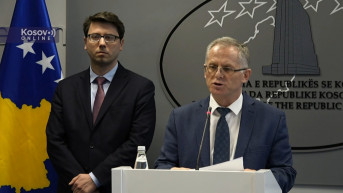
Deputy Prime Minister of Kosovo and Chief Negotiator for Pristina in dialogue with Belgrade, Besnik Bislimi, stated today that punitive measures related to the implementation of the Central Bank of Kosovo's regulation would not start from tomorrow, i.e., February 1. He also mentioned that the CBK, in collaboration with the National Bank of Serbia, should find a suitable mechanism to secure the transfers and donations that Serbia intends to send to the Serbian community in Kosovo.
At a press conference, Bislimi stated that the “euro was and will be the only official currency“.
The regulation comes into effect tomorrow, and as Bislimi noted, there is a commitment to ensuring that any transitional periods provide citizens with the opportunity to adapt quickly, easily, and without damage.
"No citizen has a reason to fear the implementation of the new CBK regulation. Every citizen should be happy when the integrity of the financial system is strengthened. The government will ensure that there is more information, and the CBK will ensure that citizens in every municipality have access to the country's banking system, including a greater presence of commercial banks with their branches. In collaboration with the National Bank of Serbia, a suitable mechanism will be found to secure transfers and donations that Serbia wants to send to the Serbian community in Kosovo," said Bislimi.
He noted that the implementation of the CBK regulation in dealing with cash could affect pensioners from the Serbian community because they did not have access to bank accounts. He reiterated that everyone should work on educating citizens.
"All of us together should ensure that the voices of those who inform and educate are heard louder than the voices of those who create panic and manipulate for political interests," Bislimi said.
He mentioned that the CBK had adopted a regulation on cash transactions, which will come into effect tomorrow, aiming to control both the quantity and quality of money in circulation.
"It aims to control the quantity and quality of money in circulation and protect the integrity of the country's financial system. This decision seeks to continue the fight against criminal activities in the financial market - counterfeiting, and money laundering. The ultimate goal is to protect consumers and the payment system in Kosovo," Bislimi stated.
He added that the CBK regulation should not be treated solely from the perspective of prohibiting a specific currency.
"The CBK has shown professionalism and a commitment to protecting Kosovo's monetary system, and in that context, the government is grateful to that institution. The regulation neither prohibits nor allows nor deals with the Serbian dinar, considering that the Serbian dinar was not allowed earlier. The implementation of the regulation may affect those citizens who received transfers from Serbia through illegal structures that operated illegally in the market, as well as those companies that conducted transactions in dinars and could not be registered in the national account system," Bislimi said.
He added that Serbia could deposit euros as it paid to citizens in neighboring countries, which could be achieved through an agreement.
Bislimi summarized the impressions from yesterday's meeting with the EU Special Representative for the Belgrade-Pristina dialogue, Miroslav Lajcak, emphasizing that the first topic had been the formalization of the agreement from Brussels in February of last year and the Implementation Annex from Ohrid.
He pointed out that the Prime Minister of Serbia, Ana Brnabic, and the President of Serbia, Aleksandar Vucic, called for the implementation of the signed agreements, and it was their obligation to proceed with the signing of the agreements from last year.
"At the meeting, we discussed several topics, with the first one being related to the need for the formalization of the agreement along with the implementation annex. There is a statement in Serbia that the signed agreements must be implemented. This statement calls for signing," Bislimi said.
The second topic of the meeting with Lajcak, he said, had been the necessity of lifting EU punitive measures towards Kosovo.
"We presented our arguments and explained why these measures harmed Kosovo's European path," he stated.
According to him, the meeting also addressed unresolved issues from the energy agreement with Serbia, the issue of unpaid electricity bills in the north, license plates on vehicles, and the decision of the CBK.
They had also discussed, as he said, the next steps in resolving the issue of mayors in the north, following the petition, illegal passports, and the operations of the MTS operator in Kosovo.


comments