
Blagojevic: European powerlessness in the Belgrade-Pristina dialogue
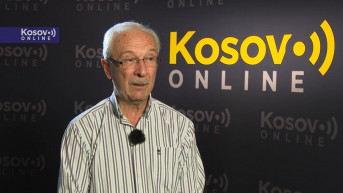
Recent former correspondent of the Beta agency from Brussels, Dragan Blagojevic, assesses that the outgoing European administration's impact on the Western Balkans and the dialogue between Belgrade and Pristina amounted to "considerable powerlessness" as essentially nothing has been achieved, and he says that future decisions, regardless of the upcoming European Parliament elections, would depend primarily on the results of the November presidential elections in the US.
"Everything the European administration, primarily the European Commission, but also the EU governments, has done regarding the Western Balkans ultimately boiled down to considerable powerlessness," Blagojevic told Kosovo Online.
He says that there are several arguments to support this claim, the first being the promises of European officials about substantial financial aid to the Western Balkans.
"Miroslav Lajcak and Oliver Varhelyi, particularly Commissioner Varhelyi, talked about some 30 billion in aid. They have been talking about it for three years, but it has remained just a promise. Now, there are some additional funds of six billion, but the condition for that is that each country must meet the basic conditions, such as rule of law criteria. However, this has already been a key issue in the EU membership negotiations," Blagojevic said.
He adds that a similar summary, that nothing substantial has been done, can be drawn regarding the region's EU accession progress, as well as the Kosovo issue.
"My belief is that a lot of time has been wasted without anything substantial being done regarding the Western Balkans. Now, the war in Ukraine has occurred. The geopolitical component, reasons, or perspectives, depending on how one views it within the European Union, have prevailed, and now it is said that this must be done urgently. How? It can't be done overnight. First, Ukraine is a country at war. It is the one that should first join the European Union. Belgium, which presides over the EU, proposes to start membership negotiations with Ukraine and Moldova in June. The Western Balkans are no longer mentioned. The issue of Kosovo is completely frozen. Actually, it’s more than frozen, nothing is being done there anymore," Blagojevic emphasized.
Commenting on the results of key European actors regarding the region, this experienced journalist says that the only one who tried to do something was the chief European negotiator for Belgrade and Pristina, Miroslav Lajcak.
"In the past month and a half, the high European representative Josep Borrell has been traveling the world, with the war in Gaza erupting, and he has simply forgotten what he should be doing concerning Kosovo. I'm not saying he shouldn't be dealing with those other major global issues and problems, but he's simply nowhere to be found anymore. The only one who remains and is saying and trying something, albeit unsuccessfully, is Miroslav Lajcak. All attempts to find a solution for the issue of the dinar in Kosovo have failed. The authorities in Pristina simply refuse it," Blagojevic noted.
When asked if the future European administration will have a different approach and what the Western Balkans can expect, Blagojevic says that it is "a million-dollar question" and that everyone is waiting for "November" – the US presidential election.
"I think everyone is waiting, both here in the Balkans and in the EU, to see what will happen in America in November. The US presidential election will likely be crucial for the entire EU policy towards Ukraine, the Western Balkans, and the overall relations between Europe and America. It will take a lot of time for the European Commission and EU governments to think through and clarify what can concretely be done to realize what is 'on paper.' We must not forget that a war is raging in Ukraine. Absolutely no one knows what the political goal of that war is when it comes to Europeans, or even Americans," Blagojevic emphasized.
Commenting on the possibility of Ursula von der Leyen getting another term, Blagojevic says there is resistance to this idea in Brussels and that one of the most serious challengers is Nicolas Schmit from the Party of European Socialists.
"Some believe that she hasn't led the European Commission well. Some remind us that she didn't have great results as a minister in Germany either. But she had strong support from Chancellor Angela Merkel. We don't know how things stand within her party, the CDU, but we see that she is trying to form an alliance with Giorgia Meloni, the Italian Prime Minister, who has proven to be a skilled politician and leader. However, the distribution and movement of forces within the European Parliament suggest that socialists would find it hard to expect to get the head of the European Commission," Blagojevic concluded.


0 comments