
Bocevski: A critical period for the region, every gathering of leaders contributes to calming tensions
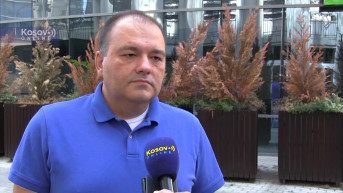
Every high-level meeting between the presidents and prime ministers of the Balkans contributes to the further development of the region, peace, and European integration, and the purpose of the Brdo-Brijuni Process, including tomorrow's summit in the capital of North Macedonia, is precisely to speed up the European integration of the Western Balkans, Ivica Bocevski, diplomatic advisor at the Center for Research and Applied Policy in Skopje says.
He especially points out that it is good that the representatives of Serbia and Kosovo will meet at the same table tomorrow, just a few weeks after the meeting between Aleksandar Vucic and Albin Kurti in Athens.
"We hope that this will contribute to the further reduction of tensions in the north of Kosovo," Bocevski said.
He also expects that there will finally be a "talk" about the possible acceleration of the European path of the countries of the region, which could come before the European Union with a common position, because, it appears, the region is in a critical period, since the focus is on Ukraine and Moldova, while the Western Balkans seem to be somewhat forgotten in Brussels.
When it comes to 2030, as the year in which the countries of the region could become members, which was mentioned by the President of the European Council, Charles Michel, Bocesvki admits that he is a bit skeptical when officials talk about dates that are not within their mandate, but that he hopes that Michel's successor will also confirm that deadline.
He notes, however, that Michel's statement was followed by a "cacophony" in the Union.
"First, after that statement, Emmanuel Macron poured cold water on us all, when he said that it was not on the table now. And when France, one of the engines of the EU, has some skepticism towards a certain date, then I don't believe that it is something we can talk about," Bocesvki added, who is also the former Ambassador of North Macedonia to Brazil.
Nevertheless, he believes that all the countries of the region are prepared not only for the start of negotiations but also for joining the European Union, given that the process is taking a long time, that it has dragged on, and that the citizens are tired of the talk about the Union.
"And the meeting in Greece was a big disappointment for all of us. Of the 15 countries that signed the Thessaloniki Declaration 20 years ago, only Greece was there, and the other 14 were not. The gathering itself was more of a sad memory of times gone by, instead of something that will happen tomorrow or the day after tomorrow," is Bocevski's impression.
From this, he concludes that at the moment there is no consensus on the matter, but although he is not too optimistic, he hopes that things will change.
When asked if the Brdo-Brijuni Process could fulfill its purpose, he answered that, despite the humorous rule that the more initiatives - the less good spirit there was in the region, every summit meeting contributed to the reduction of tensions and regional cooperation.
"In that sense, we have to welcome this initiative, and it is up to the hosts to do something that has a content dimension of the gathering. European integration is the thread that continues to connect the countries of the region, and I hope that North Macedonia and President Pendarovski will put it on the table, so that the countries that are in the EU, Slovenia and Croatia, as well as others, will get something from this summit, and represent himself in Brussels," Bocevski said.
When asked whether the meeting in Skopje would be an opportunity for Vjosa Osmani and Stevo Pendarovski to talk about Albin Kurti's recent visit to North Macedonia, during which the flags of "Greater Albania" had also been flying, he says that it is good that the President of Kosovo will be in Skopje, because she maybe explains what the purpose of that visit was.
"That visit remains controversial, as does the meeting in Tetovo and, especially, the attitude of the Macedonian authorities because Kurti received all the escort required by the protocol. They must explain to the citizens of North Macedonia what happened around that visit, before and after. That is why it is good that Osmani is here and we hope that she will explain the purpose of that meeting in Tetovo and the declaration of Kurti as the President of all Albanians in the region," Bocevski said.
He noted that such messages in the Balkans always created unnecessary tensions and a bad image of the entire region, and reflected particularly badly on Macedonian-Albanian relations within North Macedonia, which was crucial for that country.
"We hope to close that case, in a way that befits Macedonia and Kosovo, in a way that befits our relations... All the unnecessary tensions and stretching of big-state ideas are unnecessary for the region. In the Balkans, there is a rule that whoever started some large-state project – was left hanging and with great tragedies, in the region, and especially in his people. It is a great lesson and it is unnecessary to repeat it," Bocevski concluded.


0 comments