
Brnabic represents Serbia at the United Nations Security Council session
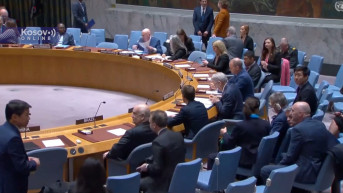
The Prime Minister of Serbia, Ana Brnabic, will represent Serbia at the United Nations Security Council meeting on Monday, Politika learns, and the session will most likely, as in previous years, be open to the public.
According to diplomatic sources, there are slim chances that it will be closed, as such a decision would require the agreement of at least nine UN Security Council members, and without compromise with Russia and China, this is not possible.
This means that the media will be able to live-stream the speeches of the Serbian and Pristina representatives, as well as diplomats from the East and the West, who hold diametrically opposing views on the situation in Kosovo, a territory under international supervision since 1999.
UN Secretary-General Antonio Guterres has hinted that this session could be different from previous ones and potentially closed. While the decision has only been suggested, Guterres advised Brazil, which will chair the session, to consider closing it. He justified this request by stating that tensions between Belgrade and Pristina were visible during the previous UN Security Council meeting on April 27, and both sides used the open session to promote narratives that encouraged instability in the region.
However, many believe that behind this request lies the concern of Kosovo's main sponsors about the consequences for Pristina. Serbian President Aleksandar Vucic has recently stated that the idea of closing the UN Security Council session is aimed directly at him because they do not know what he might say on October 23. He referred to his previous speech at the UN and emphasized that he had spoken so that everything he had said would go down in history, and everything he had said was the truth.
The main protectors of Kosovo's independence are certainly not interested in President Vucic speaking again on the topic of Kosovo, as the whole world would hear it. Despite the strong influence of China and Russia, efforts to close the session in case of President Vucic's address would persist because of the significant stakes at risk for Kosovo's sponsors. However, there is no doubt that Serbian Prime Minister Ana Brnabic will convey Belgrade's positions clearly and loudly, regardless of whether many will like what they hear. The moment in which all of this is happening is too crucial and of paramount importance for the entire world to hear Serbia's arguments.
Long-time Ambassador of the Federal Republic of Yugoslavia to the UN and former Foreign Minister Vladislav Jovanovic believes that some Western states suggested to Guterres to change the format of the UN Security Council session on Kosovo to make it a closed one. He emphasizes for Politika that the intention behind this is to prevent the discussion from escalating. He adds that if the session were closed, the media would receive a brief public statement that would simply fill a gap on a newspaper page and would go almost unnoticed. Jovanovic dismisses the reason Guterres provided for the need for this format of the Kosovo UN Security Council session, which is specifically for a "more candid discussion of the challenges in implementing the EU agreement from February, which was supposed to lead to the de-escalation of the conflict in northern Kosovo". He notes that some Western states do not want the rest of the world to hear again about the consequences of their violations of international public law, as the Serbian President recently spoke about at the UN, and to draw attention to the situation in Kosovo, where the only victims are the Serbs, and to what the political West is mostly silent or turns a blind eye.
Former Foreign Minister of the Federal Republic of Yugoslavia, Zivadin Jovanovic, states for Politika that such sessions are very rare. He says that the initiative behind this comes from the Anglo-American factor, which has been advocating for years to marginalize the UN Security Council regarding Kosovo, which is in line with the policy of a fait accompli, as the United States and Great Britain were among the first countries to recognize the illegal secession of Kosovo.
"The UN Security Council session on Kosovo and Metohija is an excellent opportunity for Serbia to unequivocally demand the fulfillment of all outstanding obligations from UN Security Council Resolution 1244. When I say that, I primarily mean respecting Serbia's sovereignty and territorial integrity, guaranteeing equal security and basic human rights for all citizens, including the Serbs in Kosovo, the free, safe, and dignified return of 250,000 displaced Serbs and other non-Albanians from a quarter of a century ago. I also expect up to 2,000 soldiers and police officers to return to Kosovo and Metohija, which is the correct translation, not a thousand as some think," Zivadin Jovanovic concluded.

0 comments