
Crnobrnja: Kosovo Post gave a series of incorrect information, another attempt at forceful identity creation
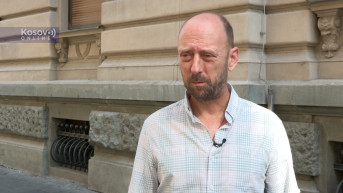
The President of the Serbian Archaeological Society, Adam Crnobrnja, tells Kosovo Online that Kosovo Post issued a series of incorrect information yesterday when they released a series of postage stamps featuring the "Bronze Goat" figurine. He expressed astonishment at the "sheer amount of dilettantism" and warned that this was just "a drop in the ocean of attempts to forcefully create an identity."
Crnobrnja points out that the Kosovo Post's announcement stated that the bronze goat was found in Kosovo, specifying the exact location and the year 1939 as the year of discovery, and that the figurine is housed in the National Museum in Vranje. However, he notes that no one had verified these facts, which, as he says, would have taken less than half an hour.
"That artifact was found in the late 19th or early 20th century somewhere in the vicinity of Prizren, meaning the exact location is unknown, so they got both the place and time wrong. It is known that it was in the possession of a Turkish pasha until 1913, then it passed into the hands of the postmaster in Prizren. In 1973, when the bronze goat figurine was published in the Vranjski Glasnik, the journal of the National Museum in Vranje, the author, an ethnologist working at the National Museum in Vranje, clearly stated that the figurine was in his private possession. So, it is not in the Museum in Vranje. All the information they provided is incorrect," Crnobrnja emphasized.
On the other hand, he also suspects that the photograph on the postage stamp itself might be a montage.
"An almost identical black-and-white photograph was published in 1973 in Vranjski Glasnik. On the other hand, they obviously don't know where the artifact is located and couldn’t take a new photograph. If I were in the position of the National Museum in Vranje, I would sue them for copyright infringement, just as anyone else in the world would if this happened to them," the archaeologist stated.
He adds that such things are very dangerous because, little by little, a "pyramid" of incorrect information is being built.
"This stamp with the goat figurine is just a drop in the ocean of attempts to forcefully create an identity that Albanians would like to stretch not only from the Illyrians but from the Neolithic period to the present day. How dangerous this is can be seen in the greatly falsified histories of the Balkans from the modern period, which appear from prominent publishers in the West. It starts small, then you build a pyramid, and it becomes difficult to dismantle," Crnobrnja warned.
According to him, people do not realize the significant consequences pseudo-science in archaeology and history can have, especially if it has the support of certain structures, "which is evidently happening in Kosovo today."
However, such situations also present an opportunity to highlight something useful, he added.
"The National Museum in Vranje, where a lot of money was invested in renewing the exhibits and which is located at the southernmost point of our country, should have good and comprehensive museum exhibits, but it hasn't had an archaeological exhibit since 2017. You can't see archaeology there, and indeed no layperson can check whether that goat is there. On the other hand, I always wonder, why don’t we in Serbia have, for example, a complete set of Vinca figurines on stamps as a regular issue? Our rich cultural heritage should be showcased on such things," Crnobrnja concluded.



0 comments