
Dacic: Without great expectations from the dialogue, because of the behavior of Kurti and the international community
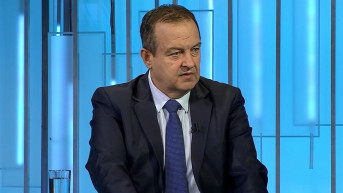
It would be good if there was some progress in tomorrow's dialogue in Brussels, but our hopes were not too high, precisely because of Albin Kurti, but also because of the reluctance of the West to put additional pressure on him to start the path of further normalization of relations, the Minister of Foreign Affairs of Serbia, Ivica Dacic said today.
"We have to talk, Serbia will, as before, be a constructive part of the dialogue. We always want to talk and we haven't taken any step that would lead to aggravation of the situation," Dacic told B92.
He pointed out that the problem was that the West did not understand that Kurti's and his accomplices' method of action was to violently implement their goals, regardless of what the West thought.
"They have been saying since the 90s that neither the US nor the EU will bring them independence, only weapons. They want the issue to be resolved by force so that there will be no Serbs in Kosovo. That is why they are asking the international community to pressure Serbia to recognize Kosovo. They do not accept that dialogue is status-neutral. They take it completely differently. That is why there is no successful dialogue because there is always a new escalation," Dacic noted.
He stated that the international community did not want to treat Pristina more harshly and that symmetry of guilt was artificially created, which did not exist.
Roth's statements are not surprising; he is one of the main promoters of Pristina
Commenting on the statements of the President of the Foreign Policy Committee of the German Bundestag, Michael Roth, Dacic said that his statements were not surprising, because he was a man who had been speaking in support of Kosovo's independence for a long time, which, he recalled, he had even done in Belgrade.
"Roth belongs to the circle of people who are the main promoters of Pristina and accordingly serves to elaborate and justify everything that Pristina does and to devise attacks on the Government in Serbia and on the Serbs in Kosovo and Metohija. He should not hear such statements," Dacic said.
He stated that with such messages, Western politicians were not only defending Pristina but also defending themselves and the policy that they had pursued in the 90s, recalling Germany's role in the disintegration of SFRY and the change of borders.
"Now they pretend that it doesn't exist and want to say that it was logical and justified; that it is different from some other examples... Today they say that Kosovo is a 'sui generis' case and that it has nothing to do with separatism around the world," the head of Serbian diplomacy explained.
When asked if Roth's position was also the position of official Berlin, Dacic pointed out that such statements were always said to have been made by a member of parliament and that it was not the official position of a country, but the problem was that there were no following messages that said the opposite.
"The Foreign Office says the same about Alicia Kearns' statements about the SOC, but after that, there is no official statement saying the opposite. And, they told me in the Foreign Office that they have no confirmation of what she is saying..." he says.
That's why, he says, Roth's statements cannot be said to be Berlin's official position, but rather a reflection of German politics.
No move by Serbia will be against the interests of the Serbs in Kosovo
Speaking about certain statements that Vucic could "betray Kosovo" by implementing the Ohrid Agreement, "which neither Tadic nor Kostunica did", Dacic said that such allegations were nonsense.
"If we say so, during the time of Tadic and Kostunica, the independence of Kosovo was proclaimed. If you remember in the first or in the first few years, more than 80 countries recognized Kosovo. That happened during the time of the then government. Nothing after 2011 led to the deterioration of Serbia's position and foreign policy position, which was particularly bad after the advisory opinion of the International Court of Justice, which Pristina uses to legitimize independence," Dacic said.
Everything that had been undertaken after 2012 had been to put that story back on the table, Dacic added.
"In the beginning, no one spoke about status issues, and now everyone says that the Ohrid Agreement is not about recognition but about the normalization of relations. The alternative to talks is for us to be declared partly guilty, which is not good for the Serbs in Kosovo," he said.
Dacic emphasized that no move would be against the vital interests of the Serbs.
"If we wanted to betray Kosovo, you know how many opportunities there were for such a thing..." Dacic said.
That is why, he says, it is important that in the changed international circumstances, with the war in Ukraine, and the regrouping in international relations, when Serbia is under pressure to make a decision, Kosovo does not feel powerful, but that Serbia be asked.
"It's a completely different framework in which the talks are held, and those accusations that someone has to fulfill something and there will be or won't be an election are ridiculous," Dacic said.



0 comments