
Dautovic: Damascus doesn’t need the Kosovo headache unless they receive something significant from the West
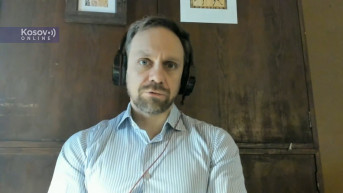
Foreign policy analyst Mirko Dautovic tells Kosovo Online that the new authorities in Damascus have far more pressing issues than deciding whether or not to recognize Kosovo. He believes this issue might only arise if Western countries decide to invest significantly by offering Damascus substantial financial aid or if the EU and the US condition the lifting of sanctions on Syria upon its recognition of Kosovo.
Dautovic considers the statement by former Kosovo Foreign Minister Enver Hoxhaj, that the fall of Bashar al-Assad’s regime opens opportunities for Kosovo to gain new recognitions, to be overly optimistic, adding that he does not believe Damascus will be incentivized to recognize Kosovo.
As an important factor, Dautovic emphasizes that Damascus faces an even greater problem than Serbia does with Kosovo, which unilaterally declared independence, a move that the International Court of Justice determined was not in violation of international law, as there have been previous instances where new states emerged from existing ones.
“Damascus has the Golan Heights, as well as the zone south and west of the city, including Quneitra, which Israel occupied in the last two weeks. They have territories that Israel has not only occupied but also annexed, which is a blatant violation of international law. Even if you argue that new states can emerge from old ones, you cannot annex the territories of other countries, which is what Israel did in 1980 with the Golan Heights,” Dautovic explains.
He also notes that the new authorities in Damascus have retained much of the same administration, with the Ministry of Foreign Affairs still functioning as it did under Assad.
“The management has changed, but the organization remains the same. Diplomats in Syrian embassies worldwide didn’t even wait 24 hours before hoisting the new Syrian flags and removing Assad’s. Essentially, the bureaucratic and expert apparatus of these institutions remains intact, and they will likely provide a clear, unbiased assessment: if we recognize Kosovo, which is a murky case in international relations, we will legitimize Israel’s annexation of the Golan Heights,” Dautovic states.
He reminds that Israel recognized Kosovo’s independence, and Kosovo reciprocated by recognizing Jerusalem as Israel’s capital in 2020 under the Washington Agreement. This move, he says, aligned Kosovo against most Muslim-majority countries that had previously recognized it.
“This was a duplicitous move by Pristina, which is not uncommon in international relations, to initially lobby for Muslim support for its independence and then, 12 years later, recognize the country that is the greatest thorn in the side of the Muslim population: Israel, with Jerusalem as its capital. In this sense, Syrian recognition of Kosovo could lead to accusations that the new regime in Damascus is working for Israel, the West, and US allies. They don’t need this headache unless they receive something substantial, such as the lifting of sanctions,” Dautovic said.
Regarding the change in Syria’s government, Hoxhaj described it as a strategic opportunity for Kosovo to overcome Iranian influence in Lebanon and Iraq. However, Dautovic argues that Lebanon, Iraq, and Iran share the same challenges as Syria, if not to an even greater extent, because certain provinces in these countries also wish to secede and join other states.
“Iran has South Azerbaijan, which might want to join the state of Azerbaijan, as well as the Balochistan and Khuzestan provinces, the latter inhabited by Arabs. Both Iran and Iraq, as well as Syria, have Kurdish areas that would gladly secede or seek autonomy. Lebanon, too, is paralyzed by its internal political structures and cannot make decisions on anything, they haven’t been able to elect a president for two years. In this context, I think the former Kosovo foreign minister’s assessment is very optimistic from their perspective, but I see no basis for what he envisions, especially since Serbia enjoys significant presence and strong ties in all these countries,” Dautovic emphasizes.
He adds that he is confident Serbian ambassadors are far more informed and have far more contacts than any potential Kosovo envoys.


0 comments