
Dencic: Vucic's message from the UN important for the international community, Serbia consistent in respecting international law
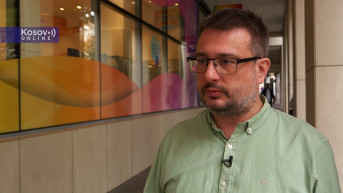
Nikola Dencic, editor of the foreign policy section at Radio Belgrade's First Program, assessed that Serbian President Aleksandar Vucic's message from the United Nations General Assembly carries particular weight because it was addressed to the entire international community, especially to countries which, as he noted, violated international law in Serbia's case in various ways but today invoke international norms and the UN Charter.
Speaking about Vucic's address to the UN General Assembly, Dencic said that the Serbian president had previously announced the topics he would address and that his message was therefore expected.
“The message was certainly addressed to the entire international community, particularly to those countries he singled out, that is, countries that violated international law in Serbia's case in one or more ways, and now invoke the application of international norms and the United Nations Charter when it comes to other countries or territories or current conflicts around the world,” Dencic said.
He assessed that Serbia, regardless of who represents it, has for years consistently maintained the position that it respects the territorial integrity and sovereignty of other states.
“Serbia has its own position toward a large number of countries that have certain territorial disputes, that is, it absolutely respects their territorial integrity and sovereignty. This foundation, on the one hand, in international law and the United Nations Charter, as well as the fact that Serbia's position regarding our country does not change, certainly gives official Belgrade legitimacy in any kind of talks,” Dencic said.
According to him, this is particularly important when it comes to the Belgrade-Pristina dialogue, which has been at a standstill for some time.
“Especially in talks concerning Kosovo and Metohija, which have been at a considerable standstill for the past, by now, more than a year, or however long, two years, but, of course, their continuation is expected at some point. Serbia's position, which has genuinely remained unchanged for many years, is something that gives both legitimacy and strength to Serbia's arguments, both in relations with other countries and before international forums such as the United Nations,” Dencic said.
Speaking about the messages of other world leaders during the UN General Assembly and their references to the principles of the United Nations, Dencic said it is important that there is increasing discussion about the need to restore a more significant role to the organization in international relations.
“When world leaders speak about respecting the principles of the United Nations, when they speak about the need for the United Nations perhaps to return, for it to regain a certain status that it may have had in previous decades, for it to truly once again become the largest international forum with legitimacy, that is, where decisions can be made that can also be implemented, that is, in fact, what is most important,” he said.
Nevertheless, he added, references to UN principles are not always accompanied by their consistent application.
“It is never separate from their particular positions or from the policies they pursue. Precisely in this sense, certain remarks that all our representatives regularly make, and which President Vucic now presented in his address to the General Assembly, concern the fact that international law is often interpreted selectively, that it is always adapted to the domestic or foreign policy of certain countries or blocs of countries, and that, no matter how strong these messages may be, it is clear that they are not being implemented in the way they are declared,” Dencic assessed.
He believes that this year there were noticeably more messages about the need for the United Nations to regain a more significant role, particularly given the large number of current crises and conflicts around the world.
“Perhaps we can see a slight shift, given that we may actually have the largest number of crises and conflicts in the world since the establishment of the United Nations,” Dencic said.
As one of the reasons for this development, he also cited the way the role of the United Nations is discussed today, including the positions of the current US administration.
“We have the position of the current administration in Washington. Specifically, President Donald Trump has in a way been quite critical of what the United Nations are today, and all of this has somehow led a large number of other world leaders to understand that strengthening the mechanism, that is, multilateralism, which is certainly one of the principles on which the world organization is based, could help reach certain solutions at a time of major conflicts,” he said.
Dencic also pointed out that claims that the United Nations have not been successful do not provide a complete picture of their role since their establishment.
“To say that the United Nations have never been successful is simply not true, and they have served a purpose. Perhaps their main role is increasingly emerging as something that can serve as an international forum where it is possible to mediate in various conflicts around the world,” Dencic concluded.
0 comments