
Milivojevic: Vucic sent a strong message on Kosovo and violations of international law at the UN
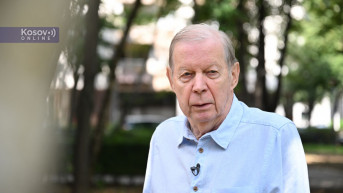
Career diplomat Zoran Milivojevic said that, in his speech at the United Nations, Serbian President Aleksandar Vucic clearly reminded the world “where it all began” when it comes to violations of international law, referring to the case of Serbia, the NATO aggression and the 2013 Brussels Agreement. Milivojevic stressed that three of Vucic's messages are important – reaffirming the role of the UN, confirming that Serbia remains committed to a principled position of protecting its state and national interests, and the issue of Kosovo.
Milivojevic said that Vucic's first message was global in nature, a snapshot of the state of international relations and a call for the world to return to its original principles, including reaffirming the role of the United Nations, the Security Council and the principles of international law.
The second was confirmation that Serbia remains committed to a principled position, that it will protect its state and national interests without calling into question either its European path or its relations with traditional friends. The third, which, as he added, was “perhaps even the first”, was the position on the key state and national interest, Kosovo.
Milivojevic told RTS that the president directly reminded the world where it all began, referring to the NATO aggression, the violation of international law and the consequences it continues to cause today.
“At least I do not remember hearing, for example, a message to other countries about what they should take into account when considering their own interests,” Milivojevic said.
He assessed that the room for action available to small states has been completely narrowed, adding that this is one of the observations reflecting the current state of international relations.
“It is simply the dominance of force and unilateral interests, I would say, disregard for norms and standards. This is an urgent necessity. It needs to be said, but also, if you like, this is the direction in which we should look toward the future, because without it there can be no peace and stability in the world,” Milivojevic said.
He warned that the world is entering the era of artificial intelligence and possible abuses of it, which pose an increasingly serious threat not only to rights and freedoms, but also to the sovereignty and interests of small countries. According to Milivojevic, the example of Serbia is not merely unfortunate, which would be “a milder expression”, but obvious, and it serves as a warning and a message to others.
“The way Serbia was treated when it comes to trampling on international law, which is also happening now. The mention of Resolution 1244, the mention of the 2013 Brussels Agreement. These are direct and clear messages,” Milivojevic said.
He said that, in his view, some countries did not feel particularly comfortable, especially the United States and European countries that became involved, including the 19 countries the president spoke about. Milivojevic stressed that the call to return to the UN Charter and the principles of international law carries particular weight because two-thirds of humanity share that position.
“I think that message to the Global South and to that large majority that was sitting there and that normally sits there was one of the most important messages delivered yesterday,” Milivojevic said.
He stressed that such messages delivered at the world's largest forum are important because they create broader space for understanding not only Serbia's positions, but also the overall situation.
“The arguments and their strength grow when we defend our state and national interests, when we speak about Kosovo and Metohija in a way that leads us toward understanding how it came to this and what was violated,” Milivojevic said.
As confirmation of the world's multipolarity, Milivojevic cited a meeting between two of the most powerful people outside the United Nations and the absence of Chinese President Xi Jinping from the conference. He assessed that this was clear confirmation that the world is multipolar, as well as that the unipolar world has definitively come to an end.
“Now, at the very least, you have some support on the other side, and it is expanding with multipolarity,” Milivojevic said, noting that Serbia's advantage is that it has communication with all the most important actors in the world.
In his speech last night before the UN General Assembly, Vucic said that an order based on respect for the United Nations Charter and international law no longer exists. He stressed that the countries that recognized the “unilaterally declared independence of the so-called Kosovo” participated, as he put it, in trampling on the UN Charter, and that Serbia has for years faced pressure to abandon the full implementation of the Brussels Agreement. He said that Serbia would defend its territory, territorial integrity, the United Nations Charter and UN Security Council Resolution 1244.
“You have a triangle that dictates the pace and content of global relations. You have two wars whose outcome will serve as a platform for a new order. And in that triangle of Moscow, Beijing and Washington, what is most important in international relations is being determined. The fact that Serbia has communication with all three of these centers is Serbia's advantage at this moment,” Milivojevic said.
He added that relations with the United States are on an upward trajectory and that the message from US Secretary of State Marco Rubio in his New York speech was very clear – America has no intention of abandoning strategic dialogue and recognizes its strategic interest in it.
Regarding European integration, Milivojevic said that Vucic sent a message that it is now up to the European Union to say what its actual interest is when it comes to Serbia.
“Is there really an interest there, or does this remain, how should I put it, a dead letter on paper,” Milivojevic said.
He assessed that the EU, as well as Europe without Russia, are no longer factors of global significance. Milivojevic recalled that the EU was founded on the issues of peace and the economy, while it now advocates geopolitics and a war option, which has pushed it “down a rung”.
0 comments