
Dizdarevic: MCC project in Kosovo recognized as strategic by Biden administration, unclear what Trump will say
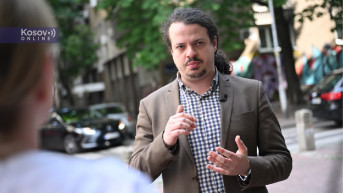
Damir Dizdarevic, Program Coordinator at the BFPE Foundation for a Responsible Society, told Kosovo Online that if the U.S. Millennium Challenge Corporation (MCC) is shut down as announced, the agreement signed with Kosovo in 2022 on the construction of energy storage batteries will either be terminated or undergo revision, so that the new U.S. administration can determine whether it serves America’s vital national interests and its foreign policy goals in the Western Balkans.
He considers the MCC agreement with Pristina—worth $236.7 million—a highly important investment for a territory the size of Kosovo.
"Investments in the energy sector typically range from tens and hundreds of millions to several billions of dollars. According to a World Bank report, about $37 billion is needed to decarbonize the Western Balkans region by 2050. If we compare that to the amount allocated to Kosovo, it may not seem very large, but for Kosovo alone, it's a huge sum," Dizdarevic noted.
He explained that the project MCC was supposed to finance is highly significant for Kosovo’s energy system because it ensures grid stability and energy security.
"The project involves batteries that would help balance consumption peaks. Batteries are extremely important for integrating renewable energy sources into the system. When there's no wind or sunlight, energy is simply released from the batteries to compensate, since electricity production and consumption must always be balanced on the grid. Batteries are charged when there’s a surplus—when there’s a lot of sun or wind," said Dizdarevic.
He added that Kosovo plans to increase the share of renewable energy in its total consumption to 35% by 2030, up from the current 6%. This project was recognized as strategic by the previous administration of President Joe Biden, but it remains to be seen what the administration of Donald Trump will decide.
He added that energy security and supply reliability—as well as energy policy overall—are high on the agenda of the new Trump administration, but that Trump places little emphasis on climate change and plans to increase fossil fuel production.
"From that perspective, the MCC project likely won't rank high on the list of priorities. But if we view it from the perspective of energy security—and we know Kosovo’s system is outdated, with thermal power plants over 50 years old and prone to breakdowns, which will only increase in the future—then there is still a strong chance the project remains viable. Everything will depend on how the U.S. administration perceives the project: as a climate initiative or as one that enhances the energy security of Kosovo and the broader Western Balkans region. I would probably lean toward the latter, although there are other ways to ensure energy security without batteries, if the energy comes from fossil fuels," Dizdarevic assessed.
He emphasized that the U.S. was once known for honoring its contracts—something that forms the basis of the current international order—but that this is slowly but surely changing in light of shifting geopolitical dynamics.
"The real precedent is the situation with USAID, where employees were first notified via email that they would lose their jobs, that major cuts were coming, and that only a few would remain in the offices. Then all contracts were reviewed to determine whether they would continue or not, and many were terminated," Dizdarevic pointed out.



0 comments