
Djukic: Whoever comes to Lajcak's position will have to change the methodology of the negotiations between Belgrade and Pristina
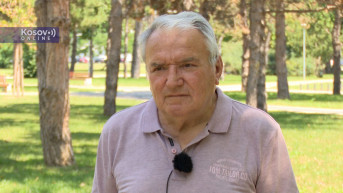
A member of the Forum for International Relations and former ambassador Srećko Djukic emphasized for Kosovo Online that Borut Pahor, or anyone else who comes to the position of EU mediator for the dialogue between Belgrade and Pristina, must change the methodology of negotiations, as the diplomatic method used so far by Borrell and Lajcak "has not yielded sufficient results".
Commenting on the fact that Pahor was "sidelined" and Lajcak's mandate extended, Djukic assesses that there is "obviously some politics" involved, but it is difficult to determine what kind and to what extent.
"What is clear is that the European government, the European Commission, has not yet been formed; those positions are not yet secure, although three or four key positions are clear. Personally, I think that Borut Pahor would stand out if appointed. Another thing, he would be appointed by the old Commission, as part of the new administration in Brussels. Maybe that's one explanation, and it is possible that there is also some substantial political matter, although I doubt it," our interlocutor states.
He reminds that Pahor has a high rating in Europe and the region.
"He has no negative marks behind him; on the contrary, he was well-received everywhere, led a reasonable and balanced policy, and clearly fulfilled his role as the President of Slovenia. He is not a politician from any extreme, so I think he is a man of dignity who can respond to that very challenging position. We have seen how challenging it is, as Lajcak and Borrell struggled in that position for years, achieving certain results but not finishing the job," Djukic says.
According to him, Pahor or anyone else, if they become the EU envoy for dialogue, should change the methodology of negotiations between Belgrade and Pristina, as Lajcak and Borrell have long used a diplomatic method that has not yielded sufficient results.
"It is some mixed method. It is neither shuttle diplomacy nor negotiation diplomacy in one place; it is diplomacy when negotiations are conducted on two tracks, once a month, then the next month, then in two months, then in three, and Belgrade and Pristina have the opportunity to negate everything, to evolve, to withdraw from it, etc. We saw that when intensive negotiations were held between Belgrade and Pristina, when Quint's mediators were still there, along with Borrell and Lajcak, the Brussels Agreement 2 and the Ohrid Agenda were reached in a relatively short period of two or three months. Excellent results were achieved, two major documents, and I think that method should have continued," Djukic assesses.
He emphasizes that Pristina has achieved a lot so far, but it still has a major obligation that it does not fulfill, which is the formation of the Community of Serb Municipalities (CSM), from which, he notes, "Kosovo cannot escape in any form, with or without Kurti".
He points out that Kurti's stubbornness has backfired as Kosovo could not implement other provisions of the Ohrid Agenda.
On the other hand, Djukic believes that Belgrade has been behaving for a year as if nothing has been agreed upon, "as if there was no Ohrid, no Brussels 1, no Brussels 2, nor dozens of their meetings," and as if negotiations between Belgrade and Pristina are yet to take place.
"Belgrade is always in some hope, or presents it to the public this way, that a new geopolitical and international situation will arise, new circumstances, and that everything agreed upon will fall through overnight," our interlocutor concludes.


comments