
Djuric: Albanians no longer have blank support, only Kurti doesn't understand that
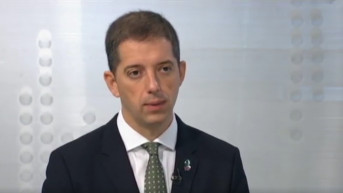
Serbian Ambassador to the US, Marko Djuric, said today that the announced visit of a high American delegation was extremely important for the entire region and an opportunity for Serbia, together with the US, to demand from Kosovo Prime Minister Albin Kurti a return to the situation before February 2022.
Djuric told TV Pink that the US delegation visiting Belgrade would be led by the State Counselor at the State Department, Derek Chollet, and would be accompanied by the Special US Envoy for the Western Balkans, Gabriel Escobar, representatives of the National Security Council and the Pentagon.
"Their visit to Belgrade, Skopje, and some other places in the Western Balkans is a good opportunity to push things forward and show that the cycle of escalation and conflicts that Kurti's regime is pushing is not acceptable. This is an opportunity to demand from Kurti, together with the US, a return to the situation before February 2022, which he chose not by chance to form illegal bases in the north, in an attempt to turn Serbia to one side, and repeat 1999," Djuric said.
He pointed out that Kurti, in fact, by implementing such an idea, was undermining stability in this part of Europe and trying to cause chaos.
Djuric said that the Serbs in Kosovo had spent the Christmas holidays in fear and tears, and the shocking pictures and videos of wounded Serbian boys had brought tears to the faces of all the Serbs and that the understandable reaction of everyone was anger and the desire to change such a situation.
Djuric pointed out that in the hours after the attack, Serbia had become, intensified, the target of a special propaganda operation by Pristina institutions, which had tried to distort the essence of the attack on Serbian boys on Christmas Eve, with a series of spins and pressures, including people close to the victims, in order to amortize and had changed the essence of the attack.
He stated that certain politicians, close to the former KLA and Kurti, had come out with claims that they had allegedly provoked the victims, that the boys had not been shot, but that they had been injured by ricocheting bullets.
"Our competent authorities found out a few hours before all these falsehoods that the Pristina authorities were planning to market them. And, apart from the fact that Kurti contributed to the climate that led to it with his anti-Serb propaganda, it is even more pathetic that they ventured into that kind of horribly hypocritical damage control", Djuric said.
He pointed out that it was no coincidence that the attacker of the boys near Strpce was a member of the Kosovo Security Forces, which he said was a highly militarized formation, illegal by nature, but they had continued with training, arming, and, obviously, with ideological indoctrination.
"Few people noticed that, in the “crocodile” condemnation, neither Kurti nor many other high-ranking officials of Self-Determination could not even say that they were talking about Serbian boys, but used the term 'two Kosovar citizens'. Kurti, who does not fail to say that he is not a Kosovar, but an Albanian, brags and is proud of his Albanian passport, to others, even when the victims are children, he does not acknowledge the origin and denies the motive, reason, and cause of the attack," Djuric said.
He noted that the head of the Self-Determination parliamentary group, Mimoza Kusari-Lila, had gone a step further, calling the injured "Slavic Orthodox Kosovars", which, according to her, illustrated the high level of chauvinism in Kosovo.
She also pointed to the beating of a Serbian young man in Klokot, stating that Serbs lived hard in Klokot, and they have little left except financial support from the state of Serbia and highlighted the engagement of the Office for Kosovo and Metohija and director Petar Petkovic, who intensified investments in Kosovo's Morava region sector.
"Apart from going to church for the holidays, these people have no social life. If in those conditions of isolation, you can't even send a child to a church without fearing that he will be beaten," Djuric noted.
He stated that, in addition to the reaction of a part of the international community, EULEX, the ambassador, there had been no reaction from the high-ranking EU official in charge of foreign policy and security.
"For the shock grenade attack on Eulex, which had no consequences and for which there is no evidence that it was done by people from the barricades, he immediately ran - that it was the Serbs as a collective, and now the reaction, in a much more drastic sense, was absent, except the spokesperson. It is regrettable, but it is indicative of the kind of treatment Serbs enjoy", Djuric said.
He indicated that the citizens of Serbia might not sufficiently understand how the politics of the great powers were subjected to the influence of the broadest public opinion, nor that an active cyber war was being waged against Serbia on social networks, and that everyone should use some of their time and energy on Facebook and Instagram. , to Twitter, for fighting for Serbia in virtual space.
"Let's raise our voices, fill the accounts and inboxes of relevant addresses in the world, about what is happening in Kosovo and Metohija, let's answer the people who are trying to denigrate Serbia," Djuric said.
He noted that Kurti, cunningly and skilfully, was trying to draw Serbia into the conflict in Ukraine and to portray the events in Kosovo as an extension of that war, and the Serbs as "bad guys" from 1999, creating a false image and pushing Serbia to the other side of the current political, ideological divisions on the European continent.
"We must not fall into that trap. We have to say that Serbia is an independent country, which freely conducts its own politics, chooses its own priorities, protects its own interests, does not serve anyone, does not participate in anyone's conflict", Djuric emphasized.
When it comes to the detention ordered for the attacker of Serbs, Djuric says that decades have shown that crimes against the Serbs go unpunished, because no one was held accountable for either March 17, 2004, or the expulsion in 1999.
Commenting on KFOR's response to Serbia's request for the return of security forces to Kosovo, he says that the delivery of that response on Christmas Eve is a message, but that Serbia's constitutional obligation to protect Serbs in Kosovo does not end with anyone's position and response.
"Serbian state authorities will continue to take all measures within their competence to deter everyone from committing violence against the Serbs and to implement diplomatic steps to strengthen Serbia's position and understanding of what Serbia is seeking. And, it is seeking a fair 'deal' for our people, in where one side will get everything and the other nothing, because that is not fair, and it is not politically sustainable", Djuric said and added that there was an increasing number of those who understood that Serbia was the key to the formula for integration and improvement in the region.
He added that the scandal was the ban on Serbian Orthodox Church Patriarch Porfirije from going to the Serbian sanctuary, which had been the seat of the patriarch for 800 years, which would be heard, because, as he added, he would also speak every day in Washington about what had been done to the boys and the patriarch as well as what are the goals of Serbia.
He also pointed out that the Albanians no longer had blank support, but Kurti lived in a delusion, in 1999.
"My impression is that he is waging personal and internal wars. We are talking about a man who is too personal to be a constructive actor in building peace and improving relations. Interlocutors in the US administration are aware that he is trying to manipulate events in Eastern Europe," Djuric said.


0 comments